Aloo pitika Recipe
Assamese mashed potatoes with raw mustard oil, onion and green chilli.
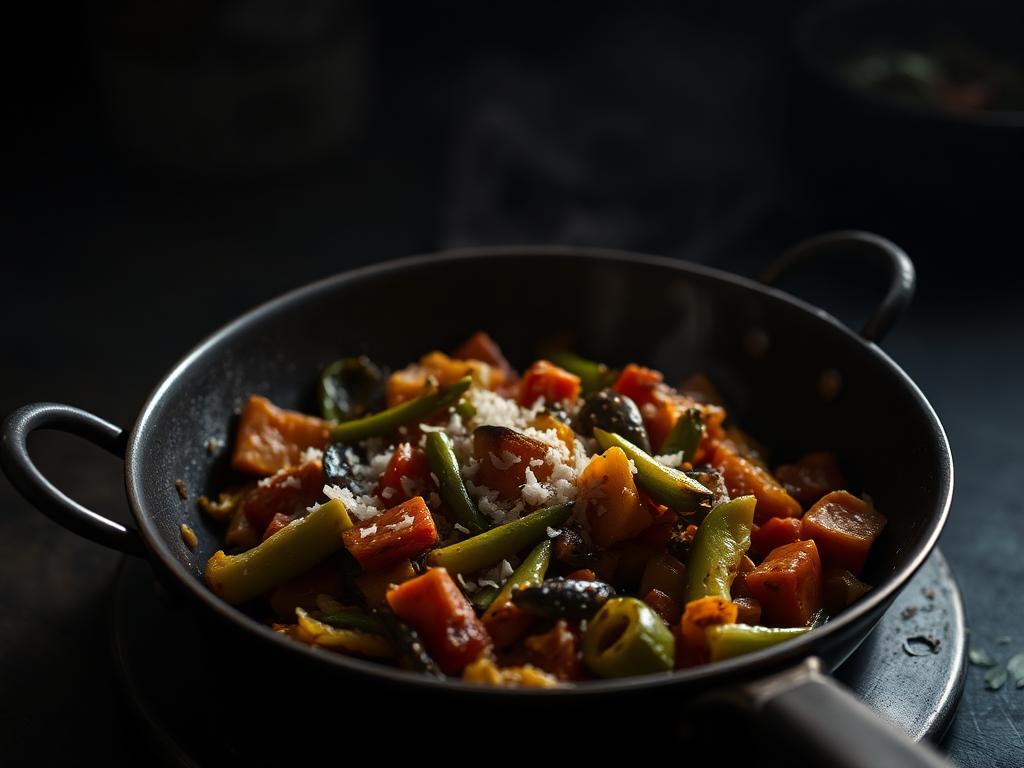
About this dish
Aloo pitika belongs to Assam's broad family of mashed preparations known as pitika. Boiled potato is combined with a few assertive ingredients, particularly raw mustard oil, rather than butter or cream. It is everyday home food, eaten with rice and dal or alongside a light fish curry. Onion, chilli and coriander proportions vary from household to household.
Ingredients
Potatoes
- 700 g medium potatoes, scrubbed and left whole (about 4 medium; approximately 4 cups after cooking and peeling)
- 1500 ml water, for boiling (6 1/4 cups)
Pitika seasoning
- 80 g onion, very finely chopped (about 1/2 cup)
- 2 green chillies, finely chopped (about 6 g; 2 teaspoons)
- 10 g fresh coriander leaves and tender stems, finely chopped (about 1/3 cup loosely packed)
- 20 ml edible mustard oil (1 tablespoon plus 1 teaspoon)
- 5 g salt (about 3/4 teaspoon), or to taste
Method
- 1
Select even-sized potatoes
Choose potatoes of similar size so they cook evenly. Scrub them under cool running water for 2–3 minutes, removing soil from the eyes. Leave the skins on to limit water absorption during boiling.
- 2
Bring the potatoes to a boil
Place the potatoes in a saucepan with the measured water, using a pan in which they remain submerged. Bring to a boil over high heat for about 6–8 minutes. Reduce the heat as soon as steady bubbling begins.
- 3
Simmer until tender
Cook over medium-low heat for 18–22 minutes, with the lid slightly ajar. Test the largest potato with a thin knife; it should slide into the centre without resistance. Avoid a violent boil, which can split the skins before the centres are cooked.
- 4
Chop the aromatics
While the potatoes simmer, finely chop the onion, chillies and coriander for about 5 minutes. Make the onion pieces small enough to distribute through the mash without dominating each bite. Keep the chopped ingredients uncooked so their fresh crunch and aroma remain.
- 5
Drain and steam-dry
Drain the potatoes thoroughly and return them to the warm, empty saucepan. Leave off the heat, uncovered, for 3 minutes so surface moisture evaporates. The skins should look dry rather than glossy with water.
- 6
Peel while warm
When the potatoes are cool enough to handle safely, peel them using a small knife or your fingers. Work for about 4 minutes, holding hot potatoes with a clean cloth if needed. Put the peeled flesh into a wide bowl while it is still warm.
- 7
Mash to a rustic texture
Mash the potatoes with a fork or hand masher for 1–2 minutes, off the heat. Break up large lumps but retain a little unevenness rather than making a whipped purée. Do not use a blender, which can turn the potatoes gluey.
- 8
Fold in the seasoning
Add the onion, green chillies, coriander, salt and mustard oil. Fold and press together for 2 minutes until the aromatics are evenly distributed. The warm potatoes should release the mustard oil's pungent aroma without cooking away the onion's freshness.
- 9
Rest and portion
Let the pitika stand off the heat for 3 minutes, then taste for salt. Spoon into a shallow bowl or shape gently into four loose mounds. Serve warm or at room temperature, with a soft texture and clearly perceptible onion crunch.
Notes & variations
- Cup measures use a 240 ml cup; the potato cup quantity refers to cooked, peeled pieces before mashing.
- Use mustard oil labelled edible and permitted for culinary use where you live, not oil labelled for external use.
- For less heat, remove the chilli seeds and inner membranes or use only one chilli.
- Refrigerate leftovers within 2 hours and eat within 2 days; the raw onion tastes best on the day of preparation.
Serve with
Steamed rice and plain dal, or rice with masor tenga.
Cook's note
Mix the mustard oil into warm rather than piping-hot potatoes to preserve its fresh pungency.