Jonna rotte Recipe
Hand-patted sorghum flatbreads with earthy flavour and soft, lightly charred folds.
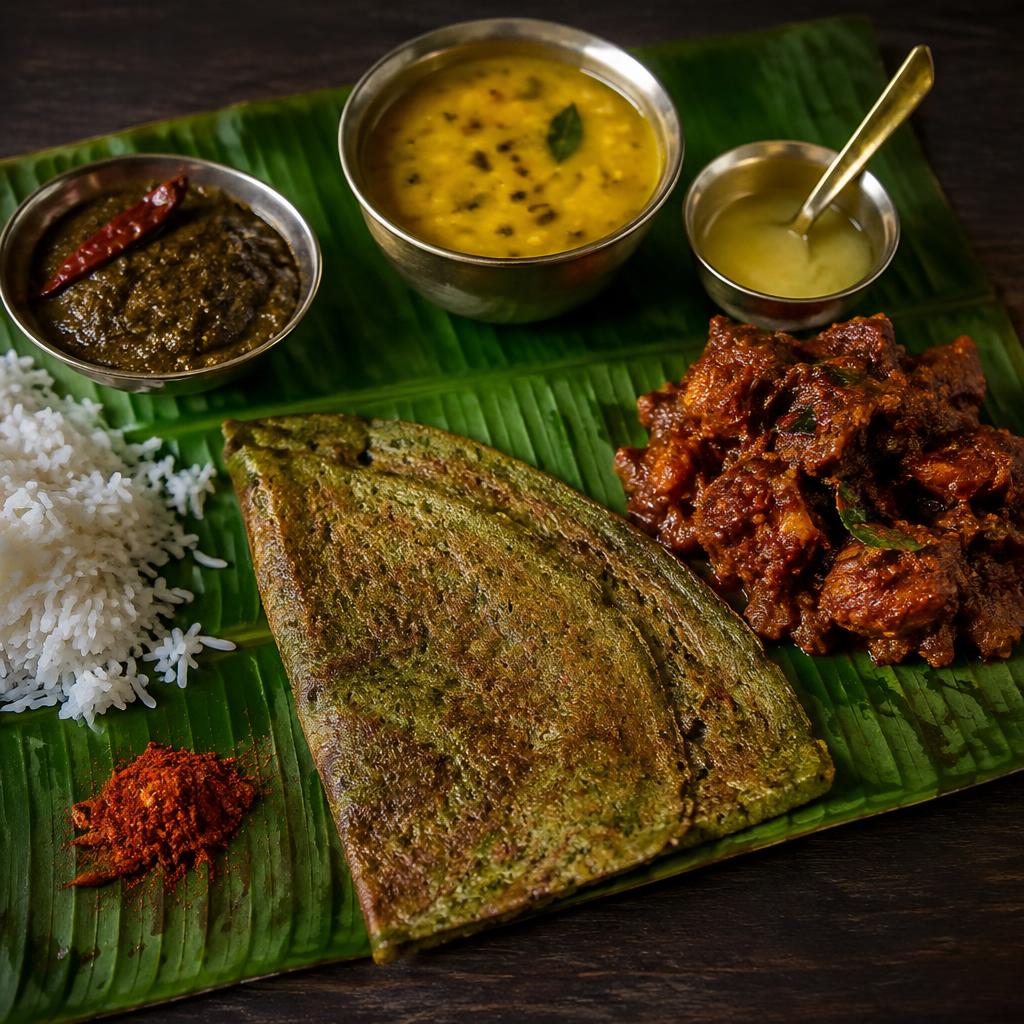
About this dish
Jonna rotte is a sorghum flatbread rooted in the dryland food traditions of Andhra Pradesh, especially Rayalaseema. Similar breads are shared across neighbouring Deccan regions, with local differences in patting and griddle cooking. In Andhra homes it is served fresh for a daily meal alongside pappu, greens, chutneys or robust gravies.
Ingredients
Dough
- 300 g fine jowar flour, also called sorghum flour (2½ cups)
- 360 ml water (1½ cups)
- 4 g fine salt (⅔ teaspoon)
Patting and cooking
- 30 g fine jowar flour for dusting (¼ cup)
- 120 ml water for moistening the breads (½ cup), not all incorporated
Method
- 1
Prepare the flour
Sift the 300 g dough flour into a wide, heatproof bowl and mix in the salt. Set aside the dusting flour separately so it is not accidentally worked into the dough. Spend about 2 minutes breaking up lumps without heat, checking that the flour feels fine rather than sandy.
- 2
Heat the water
Bring the 360 ml dough water to a rolling boil in a small saucepan over high heat. This should take about 3–4 minutes, depending on the pan. Remove it from the heat as soon as it boils so evaporation does not noticeably reduce the quantity.
- 3
Scald the flour
Pour 300 ml of the hot water over the flour while stirring with a sturdy spoon. Mix off the heat for 1–2 minutes, adding the reserved 60 ml a little at a time only as needed. The mixture should form moist clumps with no large patches of loose flour, though different flours may not need all the water.
- 4
Knead while warm
Cover the rough dough for 3 minutes, then check that it is cool enough to handle safely. Knead off the heat for 4–5 minutes, pressing firmly with the heel of your hand until it becomes smooth and cohesive. A pinched piece should flatten without deep cracks around its edge.
- 5
Divide and preheat
Divide the dough into eight equal portions and keep them covered with a barely damp cloth. Heat a heavy tawa over medium heat for 3–4 minutes. The surface should be evenly hot but not smoking, since excessive heat hardens the bread before the centre cooks.
- 6
Pat the first bread
Dust a board lightly and knead one portion briefly in your palm until smooth. Flatten and pat it outward with your fingers, rotating often, for 1–2 minutes until it is about 15–17 cm wide and 2–3 mm thick. Work off the heat and mend small edge cracks immediately with damp fingertips.
- 7
Set the first side
Lift the bread carefully with a broad spatula or over your palm and lay it on the tawa. Immediately brush the upper surface with about 1–2 teaspoons of the moistening water, then cook over medium heat for 45–60 seconds. The wet shine should fade and the edges should begin to look set rather than raw.
- 8
Turn and finish
Flip gently and cook the second side over medium to medium-high heat for 60–90 seconds, until scattered brown spots appear. Turn once more and press lightly around the edges with a broad spatula for 20–30 seconds to encourage pockets of steam. The finished bread should have no raw flour patches and should bend while hot, even if it does not fully puff.
- 9
Cook the batch and hold briefly
Transfer the bread to a cloth-lined container and cover loosely while shaping and cooking the remaining portions. Keep the tawa at medium heat between breads, increasing it briefly only when browning is slow. Cook each for about 2–3 minutes and serve the batch promptly, before the breads cool and become firm.
Notes & variations
- Cup measures use a 240 ml cup; sorghum flour absorbs water differently depending on freshness and milling.
- Fresh, finely milled flour makes more pliable rotte than coarse or long-stored flour.
- The dough is naturally gluten-free and needs warm kneading rather than a long resting period.
- Full puffing is welcome but not essential; cooked centres, brown spots and a flexible hot texture are better guides.
Serve with
Gongura pachadi, brinjal curry, leafy pappu or a Rayalaseema-style groundnut chutney.
Cook's note
Keep unused dough covered and shape one bread at a time; exposed dough quickly dries and cracks.