Palappam and Vegetable Ishtu
Lacy fermented rice crepes served with a creamy coconut milk vegetable broth.
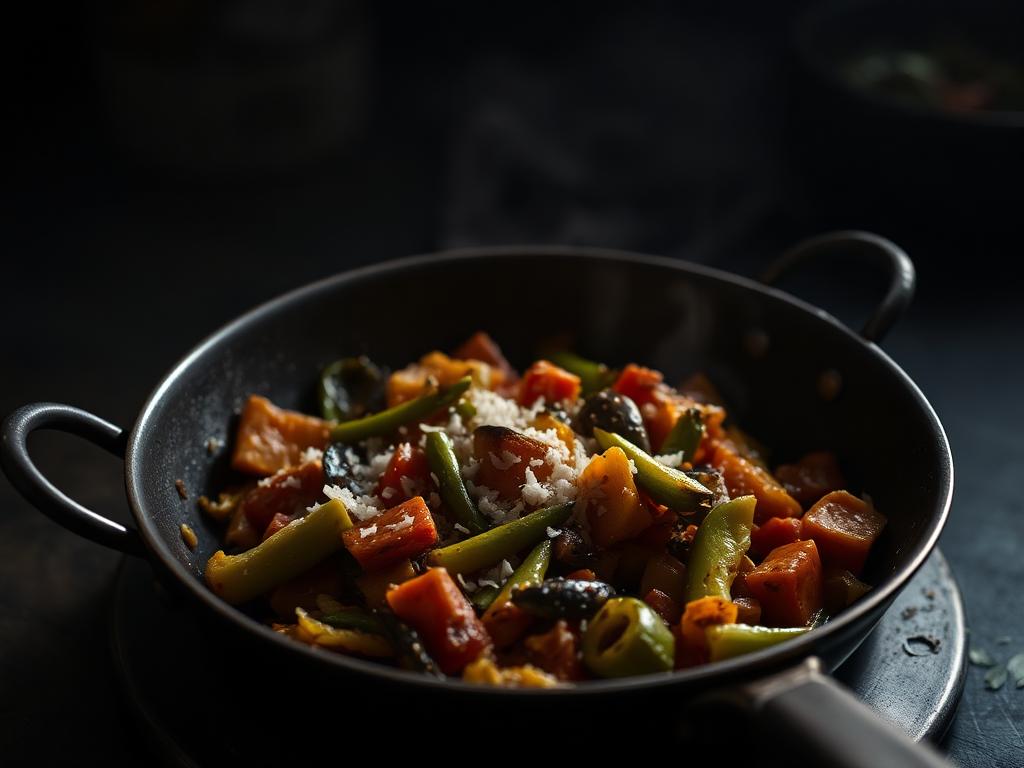
About this dish
Palappam is a quintessential breakfast dish of the Syrian Christian community in Kerala, often served during Easter or Christmas mornings. These fermented rice and coconut pancakes are known for their lace-like crispy edges and a thick, spongy center. The accompanying Vegetable Ishtu is a mild, sophisticated stew that highlights the purity of fresh coconut milk without the interference of heavy spices.
Ingredients
For the Appam Batter
- 2 cups (400g) Sona Masuri or Raw Rice, soaked for 4 hours
- 1 cup (90g) Freshly grated coconut
- 1/2 cup (100g) Cooked rice (matta or white rice)
- 1/2 tsp (2.5g) Active dry yeast
- 2 tbsp (25g) Sugar
- 1 tsp (5g) Salt
- 1.5 cups (350ml) Water for grinding
For the Vegetable Ishtu
- 2 cups (300g) Mixed vegetables (cubed potatoes, carrots, green peas)
- 1 large (100g) Red onion, thinly sliced
- 1 inch Ginger, julienned
- 4-5 Green chilies, slit lengthwise
- 1 cup (240ml) Thin coconut milk (second extract)
- 1/2 cup (120ml) Thick coconut milk (first extract)
- 10-12 Fresh curry leaves
- 1 tbsp (15ml) Coconut oil
- 2 whole Cloves and 1 piece Cinnamon
Method
- 1
Prepare the Fermented Batter
Grind the soaked rice, grated coconut, and cooked rice with water until it forms a very smooth, silky paste. Dissolve yeast and sugar in 2 tablespoons of warm water and let it bloom for 5 minutes before adding to the batter. The consistency should be pourable, thinner than idli batter; let it ferment in a warm spot for 6 to 8 hours until it rises and smells slightly tangy.
- 2
Temper the Stew Base
Heat coconut oil in a heavy-bottomed pot over medium heat and add cloves, cinnamon, and cardamom until they release a woody aroma. Add the sliced onions, ginger, and green chilies, sautéing until the onions are translucent but not browned. It is crucial not to color the onions as the stew must remain white and pristine.
- 3
Simmer the Vegetables
Add the cubed potatoes and carrots along with the thin coconut milk and a pinch of salt. Cover and simmer on low-medium heat for about 10-12 minutes until the vegetables are tender when pierced with a fork. If the liquid reduces too much, add a splash of water to keep the vegetables submerged.
- 4
Finish with Thick Milk
Lower the heat to the absolute minimum and pour in the thick coconut milk and fresh curry leaves. Stir gently for 1-2 minutes until heated through, but do not let it boil, or the milk will curdle and separate. The stew should have a rich, velvety mouthfeel and a creamy white appearance.
- 5
Swirl the Appam
Heat an Appachatti (a small curved wok) over medium heat and lightly grease with an oil-dipped cloth. Pour a ladleful of batter into the center, immediately lift the pan by both handles, and swirl it in a circular motion so the batter coats the sides thinly while leaving a pool in the center. The edges should look like lace while the middle remains thick.
- 6
Steam and Serve
Cover the Appachatti with a lid and cook for about 2 minutes on low-medium heat. You will know it is done when the edges turn golden and crispy and pull away from the pan, while the center is soft and steamed. Carefully slide a spatula under the appam to remove it, and repeat with the remaining batter.
Notes & variations
- Use fresh coconut for both the batter and the milk for the most authentic flavor.
- If the batter is too thick after fermentation, thin it with a little coconut water or milk.
- For a non-veg version, add bone-in chicken pieces to the stew base.
- Leftover batter can be refrigerated for up to 2 days, but bring it to room temperature before cooking.
Serve with
Serve hot appams immediately with the warm vegetable ishtu poured over the soft centers.
Cook's note
To get a perfect honeycomb texture in the center, ensure your yeast is fresh and the batter has visible tiny bubbles before cooking.