Malabar Avial
A medley of local vegetables in a coarse coconut and cumin base.
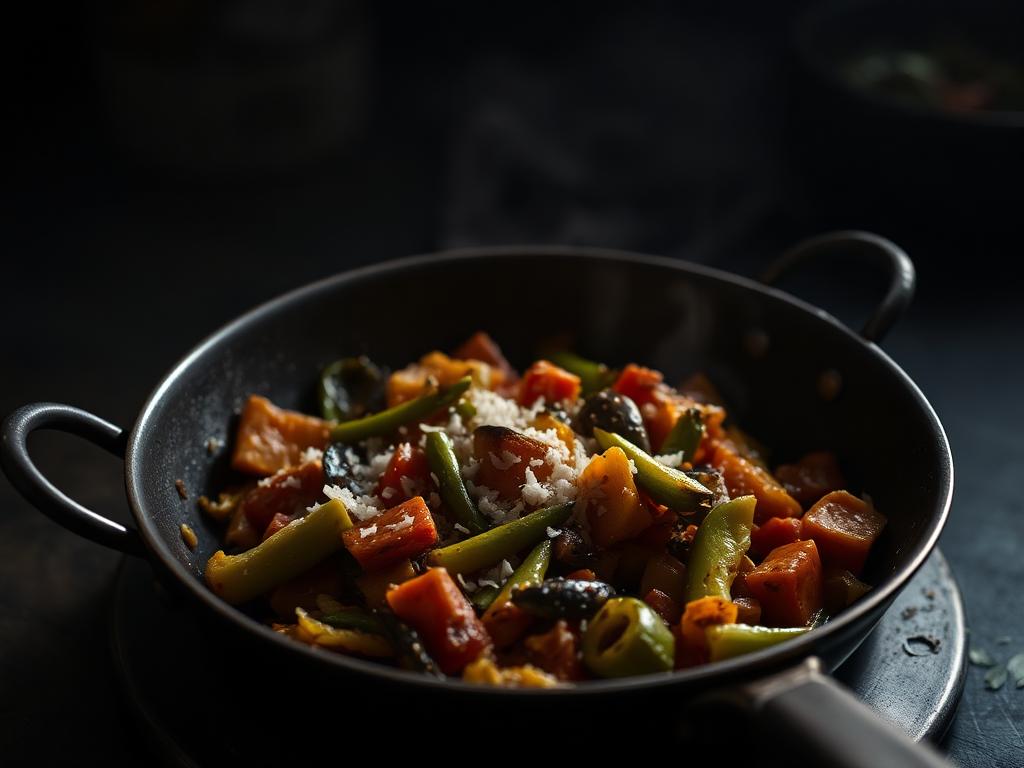
About this dish
Originating from the myth of Bhima in the Mahabharata, Avial is the cornerstone of the Kerala Sadya (feast). The Malabar version is distinguished by its thicker, drier consistency compared to the Travancore style and a generous tempering of curry leaves. It relies on the natural sweetness of local tubers and the tartness of raw mango or curd to balance the rich coconut base.
Ingredients
Vegetable Medley
- 100g Elephant Foot Yam (Chena), cut into 2-inch batons
- 100g Ash Gourd (Kumbalanga), cut into 2-inch batons
- 100g Snake Gourd (Padavalanga), cut into 2-inch batons
- 2 medium Carrots, cut into 2-inch batons
- 2 Raw Bananas (Nendran), peeled and cut into 2-inch batons
- 6-8 Long Beans (Achinga), cut into 2-inch pieces
- 1/2 tsp Turmeric powder
- 1 tsp Salt
- 1/2 cup Water
Coconut Paste
- 1.5 cups Freshly grated coconut
- 1 tsp Cumin seeds (Jeerakam)
- 4-5 Green chilies, slit
- 1/2 cup Sour curd (yogurt) whisked, or 4 pieces of Raw Mango
Finishing
- 2 tbsp Virgin Coconut oil
- 2 sprigs Fresh Curry leaves
Method
- 1
Prepare the Vegetables
Cut all vegetables into uniform 2-inch long, 1/2-inch thick batons to ensure even cooking. Soak the yam and raw banana in water for 10 minutes to prevent oxidation and remove excess starch. Drain and rinse thoroughly before cooking.
- 2
Initial Boiling
In a heavy-bottomed clay pot (Manchatti) or wide pan, add the firm vegetables first—yam and raw banana—with 1/2 cup water, turmeric, and salt. Cover and cook on medium heat for 5-7 minutes until they are 50% tender.
- 3
Add Soft Vegetables
Add the carrots, beans, ash gourd, and snake gourd to the pot. If using raw mango for sourness, add it now; these vegetables release water, so do not add extra liquid unless the pot is bone dry. Cover and simmer for another 6-8 minutes.
- 4
Grind the Masala
While vegetables simmer, pulse the grated coconut, cumin, and green chilies in a blender. Do not add water; the goal is a coarse, crumbly texture, not a smooth paste. The coconut should still have a distinct bite.
- 5
Incorporate Coconut
Once the vegetables are fork-tender but not mushy, create a well in the center of the pot. Add the coarse coconut mixture, cover with the vegetables, and steam for 2 minutes on low heat to take the raw edge off the cumin.
- 6
Mix Gently
Using a flat spatula, gently fold the coconut into the vegetables from the sides. Avoid vigorous stirring, as the goal is to keep the vegetable batons intact. The mixture should look moist but not watery.
- 7
Add the Sour Element
If you didn't use mango, pour in the whisked sour curd now. Turn the heat to the lowest setting and stir for just 1 minute. Do not let the curd boil, or it will split and ruin the creamy texture.
- 8
The Raw Oil Finish
Turn off the heat immediately. Drizzle 2 tablespoons of fresh, cold-pressed coconut oil over the top and scatter the hand-torn curry leaves. This provides the signature Malabar aroma.
- 9
Resting Period
Cover the pot tightly with a lid and let it rest for at least 10-15 minutes before serving. This 'dum' effect allows the flavors of the raw oil and curry leaves to permeate the vegetables deeply.
Notes & variations
- Avoid using a pressure cooker as it turns the vegetables into a mash.
- If the curd is not sour enough, add a squeeze of lemon juice at the very end.
- Traditionalists insist on using 'Nendran' variety raw bananas for the best texture.
- Leftovers can be refrigerated for 2 days, but reheat gently to avoid curd splitting.
Serve with
Serve as part of a traditional Sadya with steamed Matta rice and Sambar.
Cook's note
Cut all vegetables to the same size; uniformity is the mark of a skilled Kerala chef.