Avoli Athippathichathu
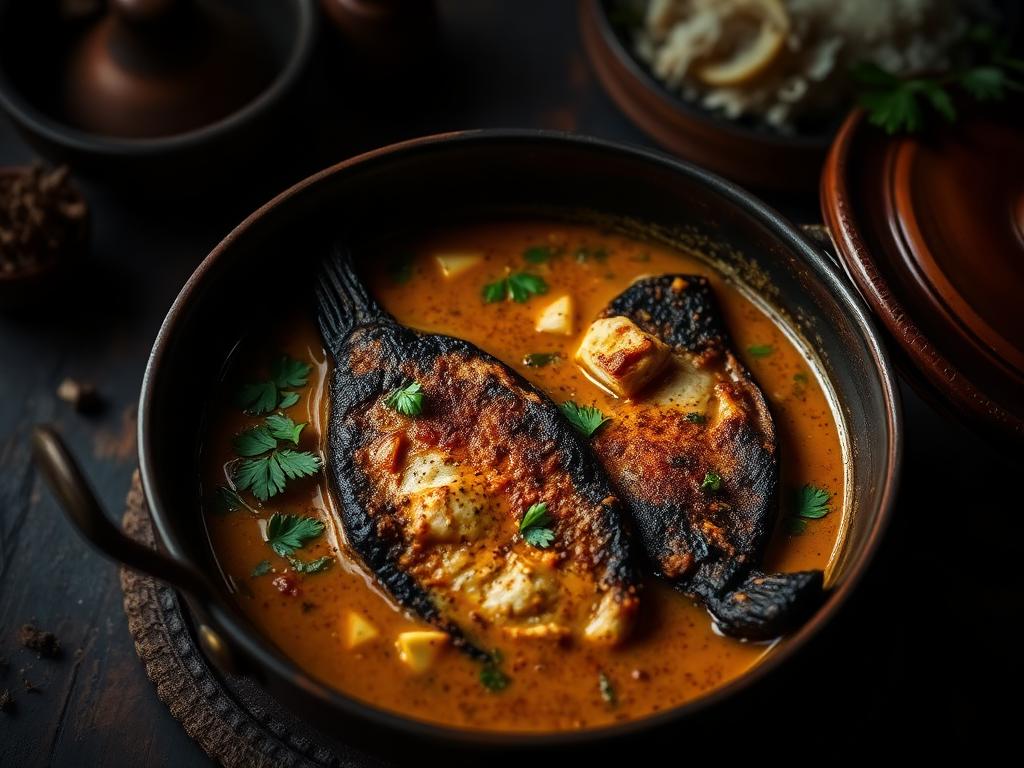
Pomfret slow-cooked in a banana leaf with a thick onion-tomato masala.
About this dish
Originating from the coastal Malabar region, this preparation is the pinnacle of slow-cooked seafood artistry. Unlike a standard Pollichathu, 'Athippathichathu' implies a deeper, more caramelized reduction where the masala clings tightly to the pomfret. Traditionally served at grand Sunday feasts or weddings, it is defined by the smoky aroma imparted by the charred banana leaf wrapper.
Ingredients
The Fish
- 2 whole Black Pomfret (Avoli), 300g each, cleaned with deep gashes
- 1 tsp Turmeric powder
- 1 tbsp Kashmiri chili powder
- 1 tbsp Lemon juice
- 1 tsp Salt
The Masala Base
- 3 tbsp Coconut oil
- 2 cups (200g) Shallots, finely sliced
- 1 tbsp Ginger-garlic paste
- 3 Green chilies, slit
- 2 medium Tomatoes, finely chopped
- 1 sprig Curry leaves
- 1 tsp Fennel seeds, crushed
- 1/2 tsp Black pepper powder
Wrapping
- 2 large Banana leaves, wilted over a flame
- Kitchen string for tying
Method
- 1
Marinate the Fish
Mix the turmeric, chili powder, lemon juice, and salt into a thick paste. Rub this generously into the gashes of the pomfret and let it rest for at least 20 minutes. This ensures the seasoning penetrates the dense flesh of the Avoli.
- 2
Shallow Fry
Heat 1 tablespoon of coconut oil in a wide pan over medium-high heat. Sear the fish for 2 minutes on each side until the exterior is firm but the inside remains raw; this prevents the fish from breaking during the final steaming.
- 3
Sauté Aromatics
In the same pan, add the remaining oil and the shallots. Sauté over medium heat for 8-10 minutes until they turn a deep golden brown. The caramelization of shallots is the secret to the dish's sweetness.
- 4
Build the Masala
Add ginger-garlic paste and green chilies, sautéing until the raw smell disappears. Add the tomatoes and cook until they turn mushy and the oil starts to separate at the edges of the pan.
- 5
Spice Reduction
Stir in the fennel powder, black pepper, and remaining chili powder. Cook for 3 minutes on low heat until the masala becomes a thick, dark maroon paste that holds its shape.
- 6
Prepare Banana Leaves
Pass the banana leaves quickly over an open flame until they turn glossy and pliable. This prevents them from cracking when you fold them around the fish.
- 7
Layering
Place a portion of the masala in the center of a leaf, lay the fish on top, and cover the fish with another layer of masala. Add a few fresh curry leaves for extra aroma.
- 8
The Wrap
Fold the leaf tightly to create a rectangular parcel and tie it securely with kitchen string or a banana fiber strip. Ensure there are no gaps where steam could escape.
- 9
Final Slow Cook
Heat a heavy-bottomed Tawa or cast iron skillet on low heat. Place the parcels on it and cover with a lid to trap the moisture.
- 10
Searing and Smoking
Cook for 8-10 minutes on each side. The banana leaf should slightly char, releasing a smoky fragrance that infuses the fish.
- 11
Resting
Turn off the heat but leave the parcels on the Tawa for another 5 minutes. This allows the juices to redistribute and the masala to fully 'set' on the fish.
Notes & variations
- If banana leaves are unavailable, parchment paper can be used, though you will lose the smoky flavor profile.
- Ensure the shallots are sliced paper-thin for even browning.
- The masala can be made a day in advance and refrigerated.
- For a tangier version, add a teaspoon of thick tamarind pulp to the masala.
Serve with
Kerala Matta rice or hot Appams to soak up the thick gravy.
Cook's note
Always use black pomfret for this dish as it has a higher oil content and holds up better to slow cooking than white pomfret.