Badanekayi Gojju
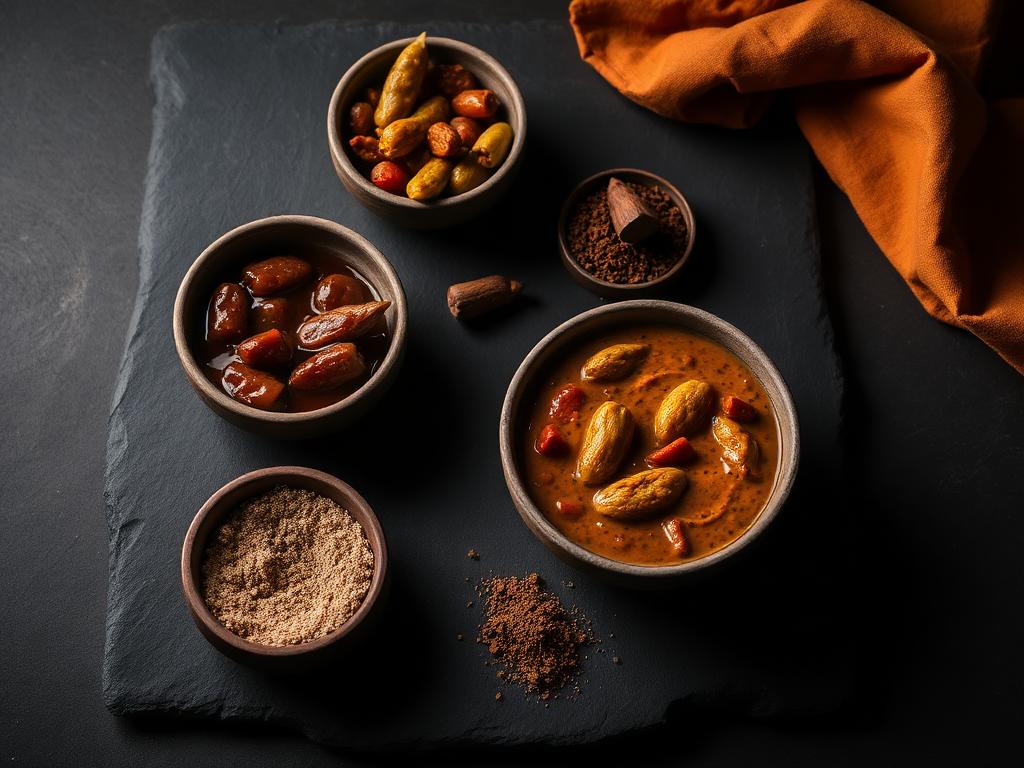
A sweet, tangy, and spicy eggplant relish from Mysore.
About this dish
A classic 'Havyaka' and 'Mysore-Bangalore' Brahmin specialty, this gojju is a multi-dimensional relish. It balances the bitterness of methi, the heat of chilies, the tang of tamarind, and the sweetness of jaggery. It is often served at weddings and festivals as a palate cleanser or side dish.
Ingredients
Main Vegetable
- 300 grams Small purple eggplants, cubed
- 1/2 teaspoon Turmeric powder
- 1 cup Water
- 1 teaspoon Salt
Gojju Masala Powder
- 2 tablespoons Chana dal
- 1 tablespoon Urad dal
- 1 tablespoon Coriander seeds
- 1/2 teaspoon Cumin seeds
- 1/4 teaspoon Fenugreek (Methi) seeds
- 6-8 Dried Byadagi chilies (for color and mild heat)
- 1/2 cup Grated fresh coconut
- 1 pinch Asafoetida (Hing)
Tang and Sweet
- 1 small lemon-sized Tamarind ball, soaked in 1/2 cup warm water
- 3 tablespoons Powdered jaggery
Tempering
- 1 tablespoon Coconut oil
- 1 teaspoon Mustard seeds
- 1 sprig Curry leaves
Method
- 1
Roast Spices
In a small pan, dry roast chana dal, urad dal, coriander seeds, cumin, methi, and red chilies on low heat. Roast until the dals turn golden brown and the spices become highly aromatic, roughly 4-5 minutes. Add hing at the very end.
- 2
Grind the Masala
Once cooled, grind the roasted spices with the fresh coconut and a splash of water to form a smooth, thick paste. The coconut adds body and helps balance the intensity of the spices.
- 3
Cook the Eggplant
In a heavy-bottomed pot, add the cubed eggplant, turmeric, salt, and water. Cover and cook on medium heat for 8-10 minutes until the eggplant is tender but not completely mushy. You should be able to press a cube easily with a spoon.
- 4
Extract Tamarind
Squeeze the soaked tamarind to extract all the pulp. Discard the seeds and fiber. Pour this extract into the cooked eggplant pot.
- 5
Add Masala and Jaggery
Add the ground coconut-spice paste and the jaggery to the pot. Stir well to combine. The mixture will immediately look rich and dark.
- 6
Simmer the Gojju
Simmer the mixture on low heat for 10-12 minutes. This is the crucial stage where the eggplant absorbs the tangy, sweet, and spicy flavors. The sauce should thicken to a gravy-like consistency.
- 7
Adjust Seasoning
Taste the gojju. It should be a perfect harmony of sweet, sour, and spicy. Add more jaggery or salt if needed. The raw smell of the tamarind should be completely gone.
- 8
Prepare Tempering
Heat coconut oil in a small tadka pan. Add mustard seeds and let them splutter. Add the curry leaves and fry for 5 seconds until crisp.
- 9
Final Garnish
Pour the tempering over the simmering gojju. Turn off the heat and cover immediately to trap the aroma. Let it sit for 5 minutes before serving.
Notes & variations
- Byadagi chilies are preferred for their deep red color without excessive heat.
- You can substitute eggplant with okra (bhindi) or bitter gourd (karela).
- Store in the refrigerator for up to 3 days; the flavor improves the next day.
- If the gojju becomes too thick, dilute with a little warm water and simmer for 2 minutes.
Serve with
Serve with hot steamed rice and a dollop of ghee, or with curd rice.
Cook's note
Roast the methi seeds carefully; over-browning them will make the dish unpleasably bitter.