Bas Saaru
A unique strained-water broth made from lentils and greens.
About this dish
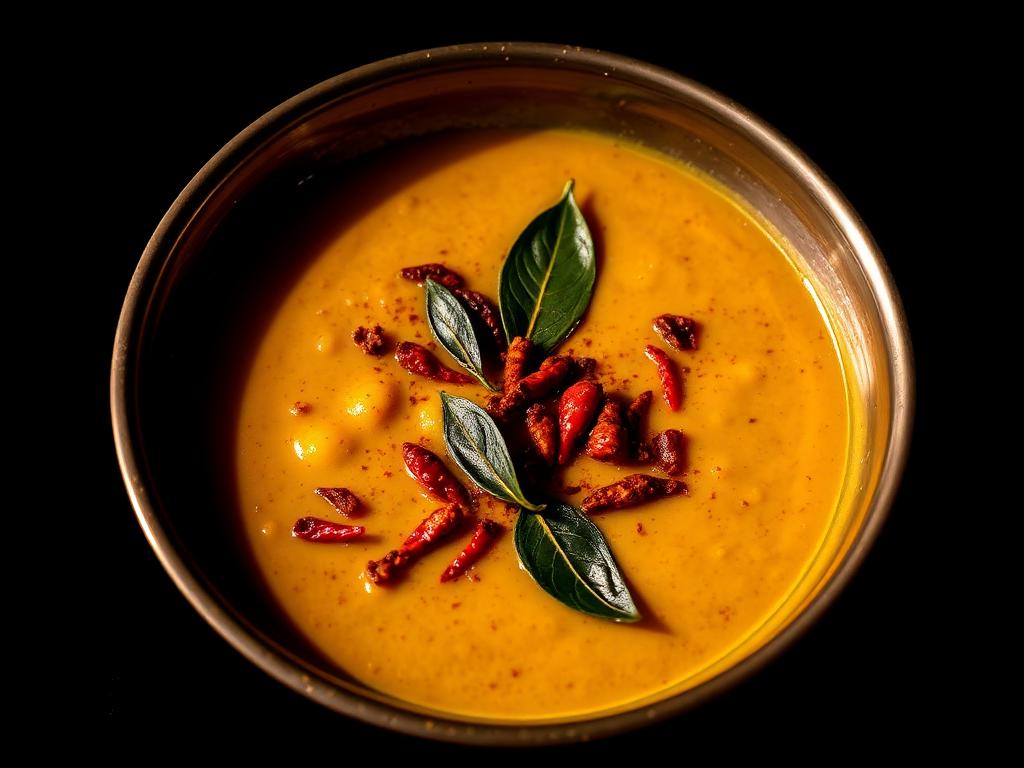
Bas Saaru (literally 'strained broth') is a testament to the resourcefulness of the Old Mysore agrarian community. It is a two-part dish: the liquid used to boil lentils and greens is converted into a spicy, thin rasam (Saaru), while the solids are sautéed into a dry side dish (Palya). This zero-waste approach creates a highly nutritious, comforting meal that is the hallmark of rural Karnataka.
Ingredients
The Base (Lentils and Greens)
- 100g (1/2 cup) Horse gram (Kollu/Huruli) or Toor dal
- 250g Mixed greens (Dill, Amaranth, or Spinach), finely chopped
- 750ml (3 cups) Water
- 1/2 tsp Turmeric powder
The Masala Paste
- 1 tbsp Coriander seeds
- 1/2 tsp Cumin seeds
- 1/2 tsp Peppercorns
- 4-5 Dried red chilies
- 1 small Onion, roughly chopped
- 1 bulb Garlic (10-12 cloves)
- 1 tbsp Tamarind paste
- 1/4 cup Fresh coconut, grated
- 2 tbsp Cooked lentils (reserved from the base)
The Tempering
- 1 tbsp Oil
- 1/2 tsp Mustard seeds
- 1 sprig Curry leaves
- Salt to taste
Method
- 1
Cook the lentils and greens
Pressure cook the horse gram (or toor dal) with 3 cups of water and turmeric until soft (about 4-5 whistles for horse gram). Open the lid, add the chopped greens, and cook for another 5 minutes without the weight until the greens are wilted and cooked.
- 2
Strain the mixture
Using a colander, strain the mixture over a deep pot. The liquid collected is the 'Basu' (broth) used for the soup. The solid lentils and greens are the 'Palya' base. Set aside 2 tablespoons of the cooked lentils for the masala.
- 3
Roast the spices
In a small pan, dry roast coriander seeds, cumin, peppercorns, and red chilies until fragrant. Be careful not to burn the cumin, which happens quickly.
- 4
Grind the masala
In a blender, combine the roasted spices with raw onion, garlic, coconut, tamarind, and the 2 tablespoons of reserved cooked lentils. The lentils act as a thickening agent for the thin broth.
- 5
Make the masala paste
Add a little of the strained broth to the blender and grind into a very smooth, fine paste. The aroma should be pungent from the raw garlic and onion.
- 6
Simmer the Saaru
Add the ground masala paste to the pot of strained broth. Add salt and more water if needed to reach a thin, rasam-like consistency. Bring to a rolling boil on medium heat.
- 7
Flavor development
Allow the saaru to simmer for 8-10 minutes. The raw smell of the onion and garlic must disappear, and a layer of froth should form on top. Do not over-boil or the aromatics will dissipate.
- 8
Final tempering
Heat oil in a small pan, crackle mustard seeds and curry leaves. Pour this over the boiling saaru and turn off the heat immediately. Cover to trap the flavors.
- 9
Prepare the Palya (Side)
Optional but traditional: Sauté the remaining strained lentils/greens with a tempering of mustard, urad dal, onion, and green chilies. Serve this alongside the soup.
Notes & variations
- Greens: Dill leaves (Sabsige Soppu) provide the most authentic and intense aroma for this dish.
- Lentil choice: Horse gram is traditional and medicinal, especially during monsoons, but Toor dal is a milder alternative.
- Consistency: The Saaru should be thin enough to pour over rice, not thick like a sambar.
- Storage: The saaru stays fresh for 2 days in the fridge and tastes better as the spices steep.
Serve with
Serve hot with Ragi Mudde (Finger millet balls) or steamed rice and a dollop of ghee.
Cook's note
The secret to a great Bas Saaru is the raw garlic in the masala; don't fry the garlic beforehand, let it cook in the boiling broth.