Nadan Beef Ularthiyathu
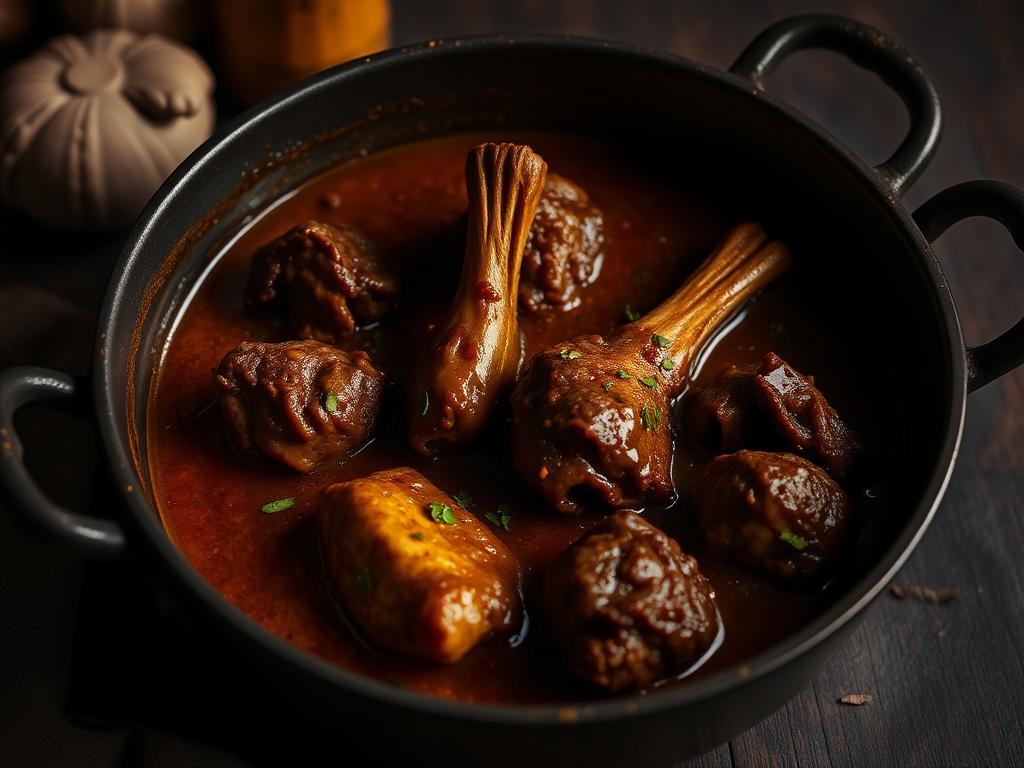
Slow-roasted beef chunks with coconut slivers and cracked black pepper.
About this dish
Originating from the Syrian Christian community of Central Travancore, this dish is the soul of Kerala's toddy shops and celebratory feasts. It is defined by 'Ularthal', the slow-roasting process where meat is cooked in its own fat until dark and intensely flavored. The interplay of fiery black pepper, pungent curry leaves, and crunchy 'thenga kothu' (coconut slivers) makes it a definitive masterpiece of the region.
Ingredients
The Meat and Marinade
- 1 kg Beef (chuck or brisket), cut into 1-inch cubes
- 1 tbsp Ginger-garlic paste
- 1/2 tsp Turmeric powder
- 1.5 tbsp Coriander powder
- 1 tbsp Kashmiri chili powder
- 1 tsp Black pepper powder
- 1 tsp Garam masala
- 1 tsp Salt
- 1 sprig Curry leaves
For the Roast (Ularthiyathu)
- 4 tbsp Coconut oil (mandatory for authenticity)
- 1/2 cup Coconut slivers (thenga kothu)
- 2 cups Small onions (shallots), sliced thin
- 1 tbsp Ginger, finely chopped
- 1 tbsp Garlic, finely chopped
- 3-4 Green chilies, slit lengthwise
- 2 sprigs Curry leaves
- 1 tsp Crushed black peppercorns (freshly ground)
Method
- 1
Pressure Cook the Beef
Mix the beef cubes with all the marinade ingredients and 1/4 cup of water in a pressure cooker. Close the lid and cook on medium-high heat for 4-5 whistles, then reduce to low for 10 minutes until the meat is 90% tender. The meat should be soft but still holding its shape; do not let it turn into a mushy paste.
- 2
Fry the Coconut Slivers
In a heavy-bottomed cast iron pan or 'uruli', heat 2 tablespoons of coconut oil over medium heat. Add the coconut slivers and fry until they turn a deep golden brown and become crunchy. Remove them with a slotted spoon and set aside to maintain their texture.
- 3
Sauté Aromatics
In the same oil, add the sliced shallots, ginger, garlic, green chilies, and one sprig of curry leaves. Sauté on medium heat for 8-10 minutes until the shallots turn a translucent light brown. The smell of frying shallots in coconut oil is the foundation of the dish's flavor profile.
- 4
Incorporate the Cooked Beef
Add the pressure-cooked beef along with any remaining cooking liquid into the pan with the aromatics. Increase the heat to medium-high to evaporate the excess moisture. Stir frequently to ensure the spices coat each piece of meat evenly.
- 5
The Slow Roasting Phase
Once the water has mostly evaporated, add the remaining 2 tablespoons of coconut oil. Lower the heat to medium-low and begin the slow roasting process. This step requires patience; stir every 3-4 minutes to prevent burning while allowing a dark crust to form on the beef.
- 6
Spice Adjustment
Sprinkle the freshly crushed black peppercorns and the remaining curry leaves over the beef. The fresh pepper adds a sharp, aromatic heat that differs from the cooked-in pepper powder. Continue roasting for another 5 minutes until the beef turns a dark, rich brown, almost black.
- 7
Final Texture Finish
Add the fried coconut slivers back into the pan. Toss well so the crunchy bits are distributed throughout the dark, oily meat. The final dish should be dry (olathiyathu) with the oil just coating the meat, not swimming in it.
- 8
Resting the Dish
Turn off the heat and cover the pan for 5 minutes. This allows the residual heat to set the spices and makes the meat even more tender. The color should be a deep mahogany, achieved through the slow caramelization of shallots and spices.
- 9
Final Quality Check
Taste for salt and pepper; the heat should be prominent but balanced by the sweetness of the fried shallots and coconut. Ensure no water remains at the bottom of the pan. The meat should have a slight exterior tug but yield easily when bitten.
Notes & variations
- Small onions (shallots) are non-negotiable; large red onions lack the specific sweetness required.
- Use a seasoned cast iron pan or 'Uruli' for the best dark color and even heat distribution.
- Leftovers taste even better the next day as the spices penetrate deeper into the fibers.
- If the beef is too lean, add a small piece of fat during pressure cooking for better mouthfeel.
Serve with
Best served with Malabar Porotta, Appam, or steamed Matta rice and moru curry.
Cook's note
Never skip frying the coconut slivers separately; adding them raw to the beef results in a rubbery texture rather than a crunch.