Chemmeen Theeyal
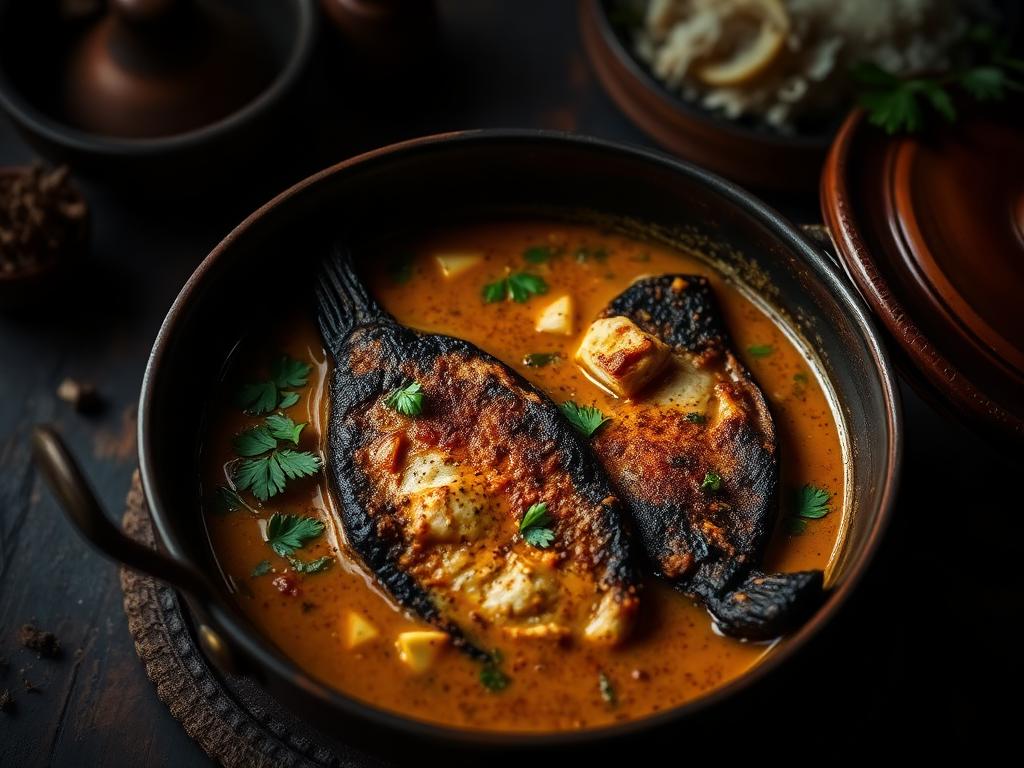
Prawns cooked in a dark, roasted coconut and tamarind gravy.
About this dish
Theeyal, meaning 'burnt dish', is a sophisticated gravy from the Travancore region defined by the deep roasting of coconut to a dark chocolate brown. While vegetable theeyals are common, the prawn (chemmeen) version is a luxury preparation typically served at lunch. The balance between the smoky coconut, sharp tamarind, and the sweetness of shallots creates a complex flavor profile unique to Kerala.
Ingredients
The Main Proteins
- 500g Large Prawns, deveined and cleaned
- 1/2 tsp Turmeric powder
- 1/2 tsp Salt
The Roasted Coconut Base
- 1.5 cups Grated fresh coconut
- 8-10 Small shallots, sliced
- 2 sprigs Curry leaves
- 1 tbsp Coriander seeds
- 4-5 Dried red chilies
- 1/2 tsp Fenugreek seeds (Uluva)
The Gravy and Tempering
- 1 cup Shallots, halved
- 1 small Lemon-sized ball of Tamarind, soaked in 1 cup warm water
- 2 tbsp Coconut oil
- 1 tsp Mustard seeds
- 2 Dried red chilies, broken
Method
- 1
Marinate the Prawns
Toss the cleaned prawns with turmeric and salt. Set aside for 15 minutes. This helps remove any 'fishy' odor and ensures the salt penetrates the prawn meat before it hits the sour tamarind base.
- 2
Roast the Coconut
In a heavy pan, dry roast the grated coconut, sliced shallots, and curry leaves on medium-low heat. Stir incessantly for 12-15 minutes until the coconut turns a deep, dark brown. It must look like roasted coffee bits but must not smell burnt; this is the most critical stage for flavor.
- 3
Add Spices to Roast
Once the coconut is dark brown, add the coriander seeds, dried chilies, and fenugreek seeds. Roast for another 2-3 minutes until the spices become aromatic. Turn off the heat immediately to prevent the fenugreek from becoming bitter.
- 4
Grind the Masala
Allow the roasted mixture to cool completely, then grind it in a blender with a splash of water. Aim for a very smooth, oily, dark paste. The oil from the coconut should start to release, giving the paste a glossy sheen.
- 5
Sauté the Aromatics
Heat 1 tablespoon of coconut oil in a clay pot (manchatti). Add the halved shallots and sauté until they turn translucent and slightly golden. The sweetness of the shallots will provide the necessary counterpoint to the sour tamarind.
- 6
Simmer the Gravy Base
Extract the tamarind juice and pour it into the pot with the shallots. Add the ground coconut paste and an extra cup of water. Bring to a boil, then lower the heat and let it simmer for 5 minutes until the raw smell of tamarind vanishes.
- 7
Cook the Prawns
Gently slide the marinated prawns into the simmering gravy. Cover and cook for exactly 5-7 minutes. Prawns cook very quickly; overcooking will make them rubbery and dry. They should be curled into a 'C' shape and opaque.
- 8
Final Tempering
In a small pan, heat the remaining coconut oil. Splutter mustard seeds, dried chilies, and a few curry leaves. Pour this sizzling tempering over the hot curry and cover immediately to trap the smoky aroma.
- 9
Resting Period
Allow the curry to sit for at least 20 minutes before serving. Theeyal is one of those dishes that tastes significantly better as the prawns absorb the complex, smoky, sour notes of the gravy over time.
Notes & variations
- If you don't have shallots, use red onions, but the flavor will be less sweet.
- The coconut must be dark brown (tobacco color); if it's light brown, the dish will taste like a regular curry, not a theeyal.
- Store in the fridge for up to 2 days; the flavors intensify overnight.
- Adjust tamarind levels based on the sweetness of your coconut.
Serve with
Serve hot with steamed Matta (red) rice and a side of papadum.
Cook's note
Never grind the coconut while hot; the heat from the blender will make the oil go rancid.