Chena Erissery
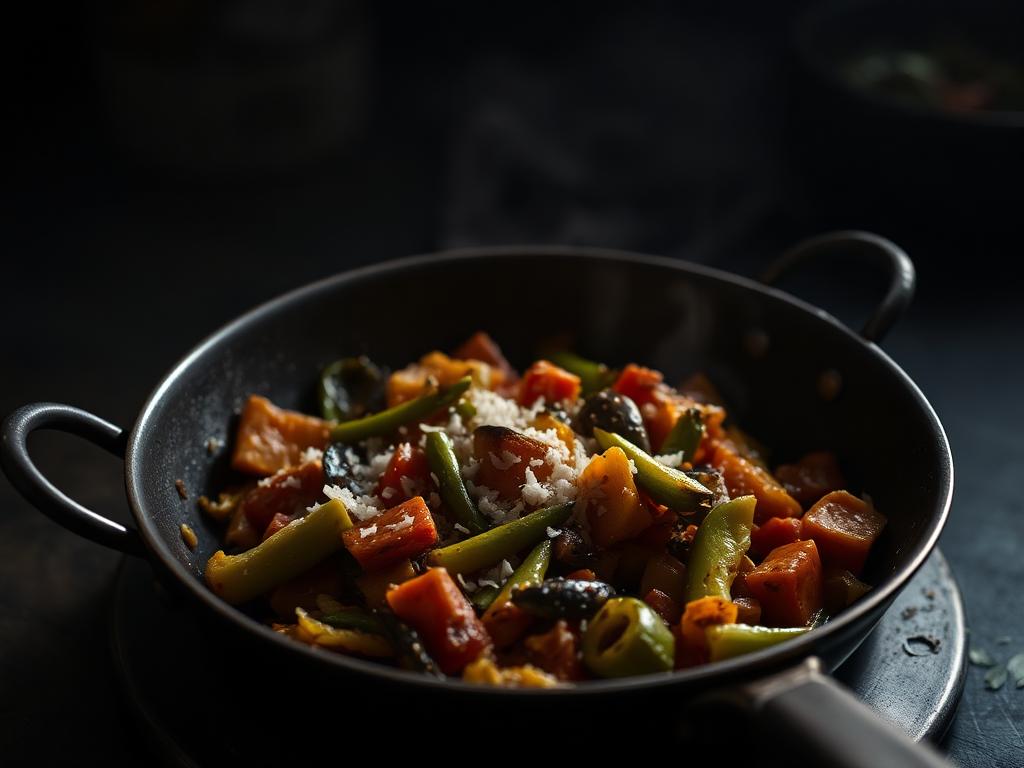
Yam and cowpeas in a toasted coconut gravy.
About this dish
Chena Erissery is a traditional centerpiece of the Onam Sadhya, representing the harvest of the land. It combines Chena (Yam) and Vanpayar (Red Cowpeas) in a thick, earthy gravy. The soul of this dish is the dual-use of coconut: one part ground into a paste with cumin, and the other toasted to a deep chocolate brown as a crunchy topping.
Ingredients
The Pulse and Tuber
- 250g Elephant Foot Yam (Chena), peeled and cubed into 1-inch pieces
- 1/2 cup Red cowpeas (Vanpayar), soaked for 4 hours
- 1/2 tsp Turmeric powder
- 1 tsp Black pepper powder
- 1 tsp Salt
Coconut Paste
- 1 cup Grated coconut
- 1/2 tsp Cumin seeds (Jeerakam)
- 2 Green chilies
The Toasted Finishing
- 1/2 cup Grated coconut (for roasting)
- 2 tbsp Coconut oil
- 1 tsp Mustard seeds
- 2 Dried red chilies
- 2 sprigs Curry leaves
Method
- 1
Cook the cowpeas
Drain the soaked cowpeas and place them in a pressure cooker with 2 cups of water. Cook for 4-5 whistles until they are soft but still holding their shape. Do not overcook into a mush.
- 2
Prepare the yam
While the peas cook, place the yam cubes in a separate pot with turmeric, pepper powder, salt, and just enough water to cover them. Boil over medium heat for 12-15 minutes until the yam is fork-tender.
- 3
Mash slightly
Once the yam is cooked, drain any excess water if it's too liquid. Use the back of a spoon to lightly mash about 1/4 of the yam cubes; this gives the Erissery its characteristic thick, chunky texture.
- 4
Combine and simmer
Add the cooked cowpeas to the pot of yam. Stir gently to combine over low heat, allowing the flavors to integrate.
- 5
Grind the paste
Grind 1 cup of coconut with cumin seeds and green chilies into a very smooth, thick paste using minimal water. The cumin should be fully pulverized to release its oils.
- 6
Add the coconut paste
Stir the coconut paste into the yam and pea mixture. Simmer for 3-5 minutes on low heat. The raw smell of the coconut must disappear, and the gravy should become thick and creamy.
- 7
Temper the spices
Heat coconut oil in a small frying pan. Add mustard seeds, red chilies, and curry leaves. Once the mustard stops popping, add the remaining 1/2 cup of grated coconut to the oil.
- 8
Toast the coconut
This is the most critical step: Fry the coconut on medium heat, stirring constantly, until it turns a deep, uniform golden-brown. It should be fragrant and crunchy, not burnt.
- 9
Final tempering
Pour the entire toasted coconut and oil mixture over the Erissery. Do not stir it in completely; just a light fold to keep the toasted bits visible on top for texture.
Notes & variations
- If you can't find Yam, Pumpkin (Mathanga) is a popular alternative for a sweeter version.
- Ensure the cowpeas are soaked well, or they will take very long to cook and remain tough.
- The dish should be quite thick, not runny; reduce any excess water before adding the coconut paste.
- The roasted coconut topping can be made in bulk and stored, but it is best when fresh.
Serve with
Serve as a side dish with steamed rice and a spicy sambar or pulissery.
Cook's note
The secret to a great Erissery is the color of the toasted coconut; aim for the color of a dark copper penny.