Idiyappam Recipe
Fine steamed rice-flour strands, tender enough for coconut milk or a savoury side.
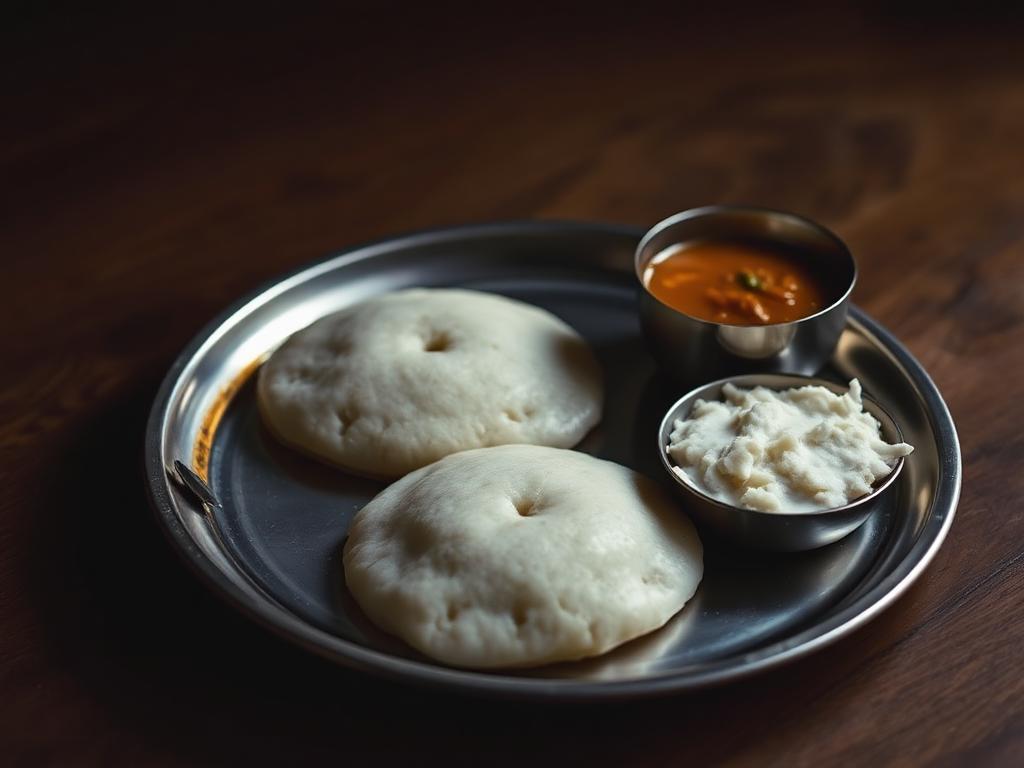
About this dish
Idiyappam is shared across Tamil Nadu, Kerala and Sri Lanka, and has a well-established place in Chettiar cooking. In Karaikudi homes, the fine steamed strands appear at breakfast, festive tiffin and meals for guests. They may be served with sweet coconut milk or loosened and seasoned for a savoury preparation. Carefully prepared rice flour and pressing the dough while warm give Chettinad-style idiyappam its delicate texture.
Ingredients
Rice dough
- 260 g finely milled raw-rice idiyappam flour, lightly roasted and cooled (2 cups)
- 360–420 ml water for the dough (1 1/2–1 3/4 cups)
- 4 g fine salt (3/4 teaspoon)
- 5 ml gingelly oil or neutral oil (1 teaspoon)
Steamer preparation
- 5 ml gingelly oil or neutral oil for greasing (1 teaspoon)
- 1.5 litres water for the steamer, or the amount required by the vessel (6 1/4 cups)
Optional sweet coconut-milk accompaniment
- 360 ml fresh coconut milk (1 1/2 cups)
- 30 g granulated sugar (2 tablespoons plus 1 teaspoon)
- 0.25 g ground green cardamom (1/8 teaspoon)
Method
- 1
Check and sift the flour
Sift the idiyappam flour into a wide heatproof bowl, discarding any coarse particles. If the flour is not already roasted, stir it in a dry pan over low heat for 3–4 minutes until warm and free-flowing, without changing its colour, then let it cool briefly. The flour should feel very fine, because coarse flour can block the press and make rough strands.
- 2
Prepare the steamer and press
Lightly grease idli plates or flat steaming trays and fit an idiyappam press with its fine-holed disc. Add the steamer water below the tray level and heat over medium-high heat for 5–7 minutes. Keep the press ready before mixing the dough, since warm dough is easier to extrude than cooled dough.
- 3
Boil the dough water
Bring 420 ml water to a full boil in a saucepan over high heat, allowing about 3–4 minutes. Add the salt and 1 teaspoon oil, then reduce the heat to low to keep it very hot. You will use only as much as the flour needs, rather than automatically adding all of it.
- 4
Scald the rice flour
Pour 360 ml of the hot water into the flour and stir firmly with a wooden spoon for 1–2 minutes off the heat. Cover and leave for 3 minutes so the flour hydrates. The mixture should gather into moist clumps with no loose powder; add the reserved hot water a tablespoon at a time only if it remains dry.
- 5
Knead while warm
When the dough is cool enough to handle safely but still warm, knead it for 2–3 minutes on a clean surface. It should become smooth, soft and pliable, without dry cracks or sticky smears. Keep it covered with a damp cloth off the heat to prevent a skin forming while you work.
- 6
Press the first batch
Place a portion of warm dough in the lightly greased press and close it securely. Press in steady circles over a prepared tray for 1–2 minutes, making loose nests rather than tightly packed mounds. Keep the steamer at a lively simmer over medium-high heat, and stop to adjust the dough if the strands repeatedly snap or require excessive force.
- 7
Steam gently until set
Place the filled tray in the steaming vessel and cover with a well-fitting lid. Steam over medium to medium-high heat for 5–7 minutes for shallow nests, or up to 8 minutes for thicker ones. The strands should look slightly glossy and feel set, with no chalky flour taste; prolonged steaming can make them sticky.
- 8
Lift out and repeat
Remove the tray carefully and let the idiyappam stand off the heat for 2 minutes before lifting with a broad spoon. Press and steam the remaining dough in the same way, checking the water level between batches and replenishing with boiling water if needed. Keep finished nests loosely covered so they remain soft without collecting heavy condensation.
- 9
Prepare the accompaniment and serve
If using the sweet accompaniment, warm the coconut milk, sugar and cardamom over low heat for 2–3 minutes, just until the sugar dissolves. Do not boil it, and remove it from the heat as soon as it is pleasantly warm. Serve the idiyappam immediately with the coconut milk alongside, or let it cool briefly before gently separating the strands for a savoury preparation.
Notes & variations
- Cup measures use a 240 ml cup; rice-flour packing varies, so the 260 g weight is the more dependable measure.
- Use flour specifically intended for idiyappam or fine homemade processed raw-rice flour, not coarse rice meal or glutinous rice flour.
- Traditional homemade flour is often prepared from soaked, drained raw rice that is dried until surface moisture is gone, finely milled, sieved and gently roasted.
- Water absorption varies by flour and processing; follow the warm dough's texture, and never force a press containing stiff, dry dough.
Serve with
Sweet cardamom coconut milk, vegetable kurma, or a Chettinad savoury accompaniment of your choice.
Cook's note
Work in small batches and keep the unpressed dough warm and covered for fine, unbroken strands.