Chettinad Karuvadu Thokku
Intense dry fish pickle-style gravy with shallots and garlic.
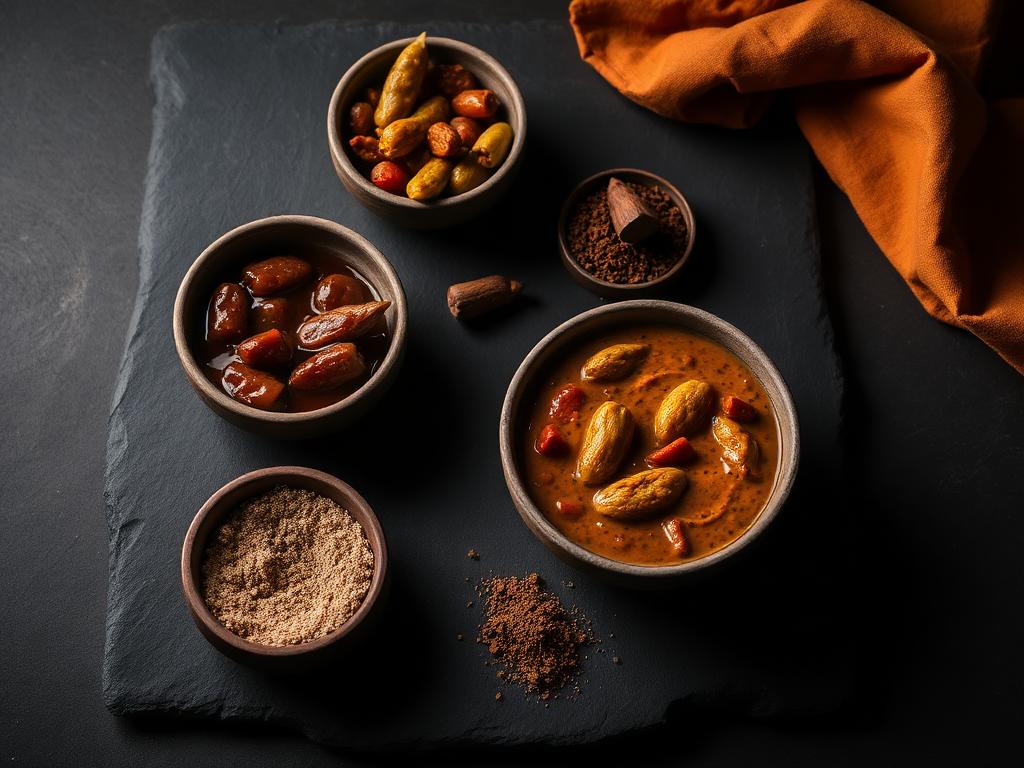
About this dish
Originating from the Karaikudi region, this dish is a testament to the Chettiar community's mastery of spice and preservation. Traditionally prepared using sun-dried Vanjaram (King Fish) or Nethili (Anchovies), it serves as a long-lasting accompaniment for travelers. The dish is distinctive for its use of gingelly oil and a high ratio of garlic and shallots, which balance the intense salinity and pungency of the dried fish.
Ingredients
The Dried Fish
- 200g Dried Vanjaram or Nethili fish, cleaned and cut into 2-inch chunks
- 500ml Hot water for soaking
- 1/2 tsp Turmeric powder
The Base
- 100ml Cold-pressed gingelly oil (Til oil)
- 1/2 tsp Mustard seeds
- 1/4 tsp Fenugreek seeds
- 2 sprigs Fresh curry leaves
- 150g Small onions (shallots), peeled and halved
- 50g Garlic cloves, peeled and slightly bruised
Spice Paste and Tang
- 3 tbsp Chettinad Kulambu Milagai Tool (or 2 tbsp red chili powder + 1 tbsp coriander powder)
- 1/2 tsp Turmeric powder
- 1 small lemon-sized ball Tamarind, soaked in 150ml warm water and strained
- 1/2 tsp Salt (use sparingly as fish is salty)
Method
- 1
Clean the Karuvadu
Soak the dried fish in hot water with 1/2 tsp turmeric for 15 minutes to remove excess salt and impurities. Gently scrub the scales or grit, rinse 3-4 times in cold water until the water runs clear, and pat them dry thoroughly. This step is crucial to prevent the final dish from becoming overly salty or having a gritty texture.
- 2
Temper the Spices
Heat 100ml of gingelly oil in a heavy-bottomed kadai or clay pot over medium heat until it shimmers. Add mustard seeds and let them splutter, then add fenugreek seeds and curry leaves. Be careful not to burn the fenugreek, as it turns bitter; it should just turn a deep golden brown.
- 3
Sauté Aromatics
Add the halved shallots and bruised garlic to the hot oil. Sauté on medium-low heat for 8-10 minutes until the onions turn translucent and slightly caramelized, and the garlic becomes soft. The high volume of oil is necessary to preserve the thokku and mellow the pungent aromatics.
- 4
Incorporate Spices
Reduce heat to low and add the turmeric and Kulambu Milagai Tool. Stir constantly for 2 minutes until the raw smell of the spices disappears and the oil starts to separate. Do not let the spices scorch; if the pan looks too dry, add a teaspoon of water.
- 5
Simmer with Tamarind
Pour in the strained tamarind extract and a pinch of salt. Bring to a vigorous boil, then reduce heat and simmer for 5-7 minutes until the liquid reduces by half and the mixture thickens into a paste-like consistency. The sauce should be dark and glossy.
- 6
Sear the Fish
Gently fold in the cleaned dried fish pieces into the simmering masala. Ensure each piece is well coated; avoid over-stirring to prevent the fish from breaking apart. Cover the pot and cook on low heat for 10 minutes.
- 7
Oil Separation (Thokku Stage)
Remove the lid and continue cooking for another 5 minutes, stirring occasionally. The thokku is ready when the oil completely separates from the masala and floats on top (Thokku padham). The fish should be firm yet infused with the spicy, tangy gravy.
Notes & variations
- Adjust salt only at the end; dried fish releases significant salt during cooking.
- Store in a dry glass jar; it stays fresh for up to 10 days at room temperature if only oil is used.
- Use Nalla Ennai (gingelly oil) exclusively for the authentic Chettinad flavor profile.
- If you don't have Chettinad masala, use a mix of Kashmiri chili and roasted coriander powder.
Serve with
Hot steamed rice and a side of mild curd to balance the heat.
Cook's note
Adding a small piece of jaggery at the end balances the intense salt and spice levels.