Chettinad Palkatti Masala
Paneer cubes tossed in a fiery, freshly ground Chettinad spice paste.
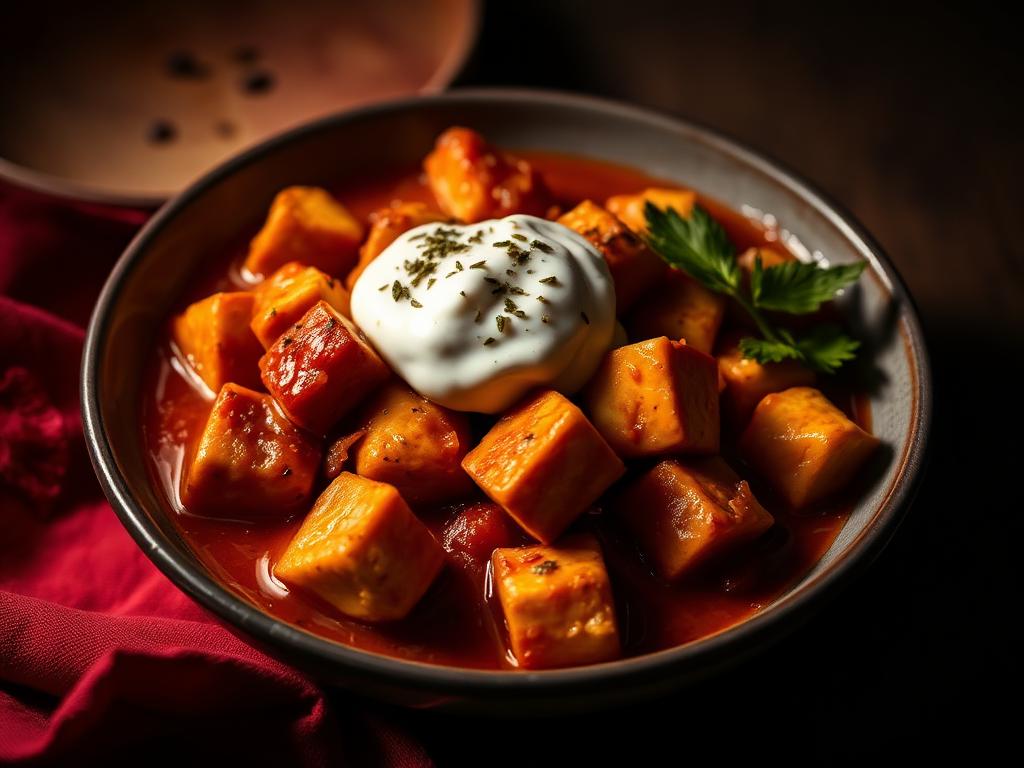
About this dish
Hailing from the Karaikudi region of Tamil Nadu, this dish showcases the Chettiar community's mastery over complex spice blends. While traditionally known for meat dishes, 'Palkatti' (Paneer) is treated with the same fiery aromatics like kalpasi (stone flower) and marathi mokku (kapok buds). It is typically served during festive luncheons, distinguished by its dark, oil-separated gravy and intense peppery kick.
Ingredients
Chettinad Masala Paste
- 1 tbsp Coconut oil
- 2 tbsp Coriander seeds
- 1 tbsp Black peppercorns
- 1 tsp Fennel seeds (Saunf)
- 1 tsp Cumin seeds
- 6-8 Dried Guntur red chillies
- 2 pieces Kalpasi (Stone flower)
- 2 tbsp Grated fresh coconut
- 1 inch Cinnamon stick
The Base
- 400g Paneer (Palkatti), cut into 1-inch cubes
- 2 tbsp Gingelly oil (Sesame oil)
- 15 Shallots (Sambar onions), finely chopped
- 2 medium Tomatoes, pureed
- 1 tbsp Ginger-garlic paste
- 1 sprig Fresh curry leaves
- 1/2 tsp Turmeric powder
- Salt to taste
- Fresh coriander for garnish
Method
- 1
Roast the spices
Heat 1 tablespoon of coconut oil in a small heavy-bottomed pan over low-medium heat. Add coriander seeds, peppercorns, fennel, cumin, cinnamon, and red chillies; roast for 3-4 minutes until the coriander turns a deep golden brown and the chillies become crisp. Add the kalpasi and coconut at the very end, tossing for 60 seconds until the coconut smells toasted but not burnt.
- 2
Grind the masala
Transfer the roasted spices to a plate and cool completely to prevent the oils from turning bitter. Grind into a smooth, thick paste using minimal water (about 2-3 tablespoons). The texture should be velvety, as coarse spices will ruin the mouthfeel of the final gravy.
- 3
Sauté the aromatics
In a heavy kadai, heat 2 tablespoons of gingelly oil until shimmering. Add the curry leaves and shallots; sauté on medium heat for 8-10 minutes until the shallots reach a deep translucent pink and start browning at the edges. Do not rush this, as caramelized shallots provide the essential sweetness to balance the heat.
- 4
Build the flavor base
Add the ginger-garlic paste and sauté for 2 minutes until the raw pungent smell vanishes. Stir in the tomato puree, turmeric, and salt. Cook on medium-high heat for 5-7 minutes, stirring occasionally, until the oil (rogon) starts separating from the sides of the tomato mixture.
- 5
Integrate the ground masala
Add the prepared Chettinad masala paste to the pan. Fry the paste with the onion-tomato base for 3-4 minutes to cook off any remaining moisture. The mixture will darken significantly and become highly aromatic, filling the kitchen with the scent of roasted pepper and fennel.
- 6
Simmer the gravy
Pour in 1.5 cups of warm water and stir well to combine. Bring the gravy to a gentle boil, then reduce the heat to low and simmer for 5 minutes. The gravy should thicken slightly and a thin layer of oil should rise to the surface.
- 7
Add the Palkatti
Gently slide in the paneer cubes. If using store-bought paneer, soak them in hot water for 10 minutes beforehand to ensure they stay soft. Gently fold the paneer into the masala, ensuring every cube is coated, and cook for exactly 3-4 minutes. Overcooking at this stage will make the paneer rubbery.
- 8
Final finish
Turn off the heat and garnish generously with chopped coriander leaves. Cover the pan with a tight lid and let it rest for 10 minutes before serving. This 'resting' allows the paneer to absorb the intense spice flavors deep into its core.
Notes & variations
- Use gingelly oil (untreated sesame oil) for the most authentic flavor profile.
- If you cannot find Kalpasi, do not substitute it; just omit it, though the woody aroma will be missed.
- For a creamier version, add 1 tablespoon of cashew paste during step 5.
- Store leftovers in the fridge for up to 2 days; the flavor actually improves overnight.
Serve with
Serve hot with Malabar Parotta, Kal Dosa, or Jeera Rice.
Cook's note
Always roast spices on low heat; if they smoke, the oils have scorched and the masala will taste metallic.