Ethakka Erissery
Raw plantains cooked with black-eyed beans and toasted coconut.
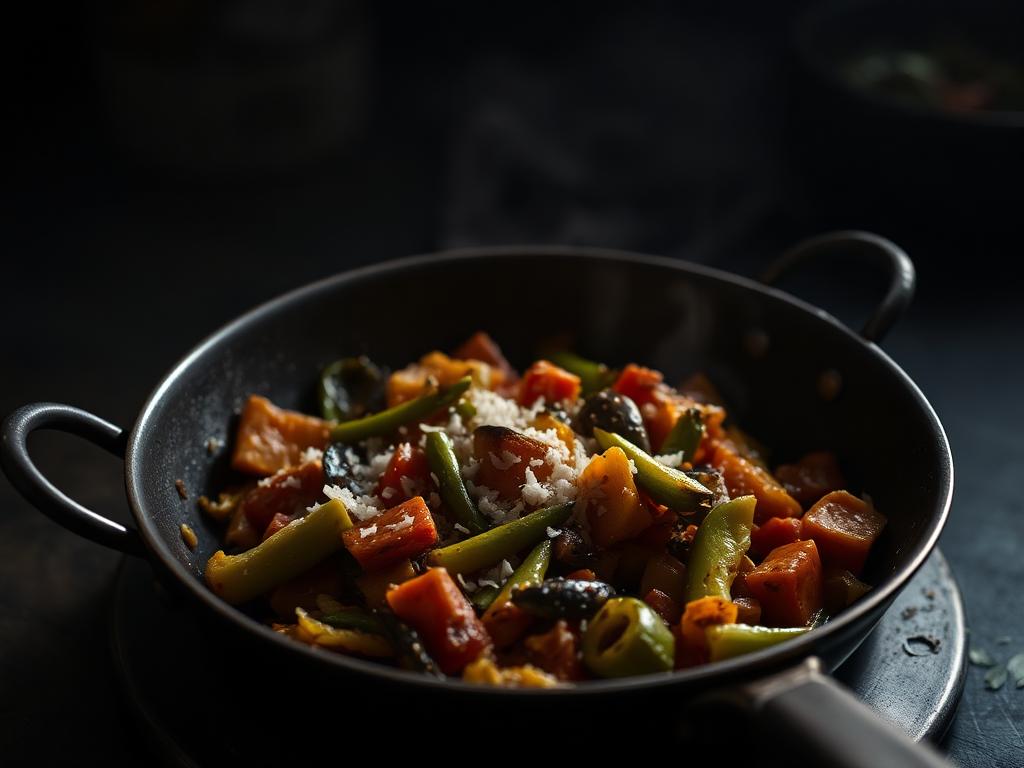
About this dish
Ethakka Erissery is a cornerstone of the traditional Kerala Sadhya (feast), particularly during the harvest festival of Onam. Originating from the central Travancore region, it balances the earthy starchiness of raw plantains with the protein of black-eyed beans. The dish is defined by 'Varutharacha'—a technique where coconut is roasted until dark brown to provide a nutty depth and gritty texture.
Ingredients
The Base
- 2 large Raw Plantains (Nendran), peeled and cubed into 1-inch pieces
- 1/2 cup Black-eyed beans (Vanpayar), soaked for 4 hours
- 1/2 tsp Turmeric powder
- 1 tsp Black pepper powder
- 2 cups Water
- 1 tsp Salt
Coconut Paste
- 1 cup Freshly grated coconut
- 1/2 tsp Cumin seeds (Jeerakam)
- 2 Green chilies, slit
Tempering and Garnish
- 2 tbsp Coconut oil
- 1 tsp Mustard seeds
- 2 Dried red chilies, halved
- 2 sprigs Curry leaves
- 1/2 cup Freshly grated coconut (for roasting)
Method
- 1
Cook the beans
Drain the soaked black-eyed beans and place them in a pressure cooker with 1.5 cups of water. Cook for 3-4 whistles on medium heat until tender but not mushy. If cooking in an open pot, this will take about 25 minutes; ensure the beans hold their shape when pressed.
- 2
Simmer the plantains
Add the cubed plantains to the cooked beans along with turmeric, pepper powder, salt, and another 1/2 cup of water. Cover and simmer on medium-low heat for 10-12 minutes until the plantains are fork-tender and have absorbed the yellow hue of the turmeric.
- 3
Prepare the coconut paste
In a blender, grind 1 cup of coconut, cumin seeds, and green chilies with a splash of water. Aim for a coarse, thick consistency rather than a smooth puree. The cumin should be crushed just enough to release its fragrance.
- 4
Combine and thicken
Add the ground coconut paste to the cooked plantain and bean mixture. Stir gently to avoid smashing the plantains and simmer for 3-4 minutes on low heat until the raw smell of the coconut disappears and the gravy thickens.
- 5
The first tempering
Heat coconut oil in a small frying pan over medium heat. Add mustard seeds and wait for them to fully splutter, then add dried red chilies and curry leaves until the leaves turn crisp and vibrant.
- 6
Roast the garnish coconut
In the same tempering pan, add the remaining 1/2 cup of grated coconut. Lower the heat and stir constantly for 5-7 minutes. This is the most critical stage; the coconut must turn an even, deep golden brown without burning.
- 7
Final assembly
Pour the toasted coconut and oil mixture directly over the simmering erissery. Turn off the heat immediately. The toasted coconut provides a crucial crunch and smoky aroma that defines the dish.
- 8
Resting period
Cover the pot and let the dish rest for at least 10 minutes before serving. This allows the toasted flavors to permeate the starchy plantains, resulting in a cohesive, thick consistency.
- 9
Adjusting texture
If the dish looks too dry, add a tablespoon of hot water; if too runny, mash a few pieces of plantain against the side of the pot to naturally thicken the base.
Notes & variations
- If you cannot find Nendran plantains, use green unripe bananas, though the texture will be slightly softer.
- Soaking the beans is essential for even cooking and easier digestion.
- Always use coconut oil for the authentic 'Sadhya' flavor profile.
- Store leftovers in the fridge for up to 2 days; the flavor often improves overnight.
Serve with
Serve hot as a side dish with steamed Matta rice and a simple yogurt-based Pulissery.
Cook's note
Do not rush the final coconut roasting; a deep mahogany brown is the difference between a good and a great Erissery.