Huli Tovve (Mysore Style Dal)
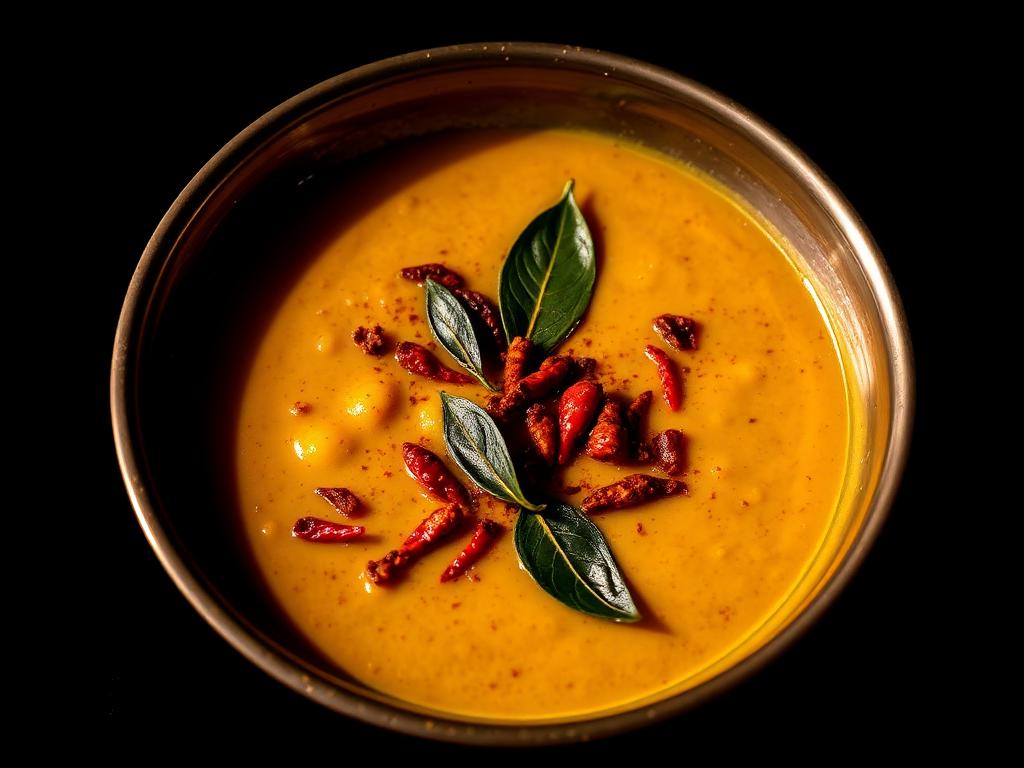
Huli Tovve is a sophisticated, mildly sweet, and tangy dal preparation unique to the Mysore-Bangalore region.
About this dish
Huli Tovve is a sophisticated, mildly sweet, and tangy dal preparation unique to the Mysore-Bangalore region. Unlike the fiery sambars of the North or the thin rasams, Huli Tovve has a thick, creamy consistency and features a specific blend of vegetables like ridge gourd or pumpkin. It is a quintessential part of 'Madve Oota' (wedding feasts), representing the subtle balance of flavors cherished by the Brahmin community.
Ingredients
The Base
- 1 cup (200g) Toor dal (Split pigeon peas)
- 2 cups (300g) Ridge gourd (Heerekayi), peeled and chopped
- 1/2 tsp Turmeric powder
- 1 tsp Ghee
The Masala Paste
- 2 tbsp Fresh coconut, grated
- 1 tbsp Bisi Bele Bath powder or MTR Sambar powder
- 1/2 tsp Cumin seeds
- 1 small piece Ginger
Seasoning & Finish
- 1 tbsp Tamarind paste
- 1.5 tbsp Jaggery, grated
- 1 tsp Mustard seeds
- 1/4 tsp Hing (Asafoetida)
- 2 Dried red chilies
- 8-10 Curry leaves
- Salt to taste
Method
- 1
Cook the Dal and Veg
Pressure cook the toor dal with 3 cups of water, turmeric, and a drop of ghee for 4-5 whistles until completely mushy. In a separate steamer or pot, cook the chopped ridge gourd until tender but not falling apart.
- 2
Mash the Dal
Once the pressure releases, whisk the dal thoroughly with a balloon whisk or traditional 'mathu' until it reaches a cream-like, homogenous consistency. There should be no visible whole grains of dal.
- 3
Grind the Masala
Grind the fresh coconut, cumin, ginger, and sambar powder with a little water to form a smooth, fine paste. This coconut base is what distinguishes Tovve from regular Huli (Sambar).
- 4
Combine and Simmer
In a large pot, combine the mashed dal and the cooked ridge gourd. Add the ground masala paste, tamarind extract, jaggery, and salt. Adjust the consistency with water; it should be thick yet pourable.
- 5
The Flavor Infusion
Bring the mixture to a gentle boil over medium heat. Let it simmer for 5-7 minutes. You will see a light froth appearing on top; this indicates the raw smell of the masala has dissipated.
- 6
Check the Balance
Taste the tovve. It should have a prominent sweetness from the jaggery, a mild tang from the tamarind, and a creamy finish from the coconut. Adjust salt or jaggery as needed to balance the profile.
- 7
Prepare the Tempering
Heat ghee in a small pan. Add mustard seeds and wait for them to pop. Add the dried red chilies, curry leaves, and a generous pinch of hing. The hing aroma should be strong and toasted.
- 8
The Final Temper
Pour the hot tempering over the simmering dal. Immediately cover the pot with a lid to trap the aromatic oils of the mustard and curry leaves. Let it sit for 2 minutes before stirring.
- 9
Garnish
Turn off the heat. Garnish with a handful of freshly chopped coriander leaves. The color should be a warm, pale yellow-orange.
Notes & variations
- Ridge gourd is traditional, but you can use cucumber or yellow pumpkin as substitutes.
- The sweetness is intentional; do not skip the jaggery as it defines the Mysore style.
- If you don't have Bisi Bele Bath powder, a mix of coriander and cinnamon powder works in a pinch.
- Freshly grated coconut is essential; desiccated coconut will make the tovve grainy.
Serve with
Serve with hot steamed rice and a teaspoon of ghee, accompanied by Happala (papad).
Cook's note
Whisk the dal while it is boiling hot to get that signature 'velvety' Tovve texture that coats the back of a spoon.