Hyderabadi Chakna
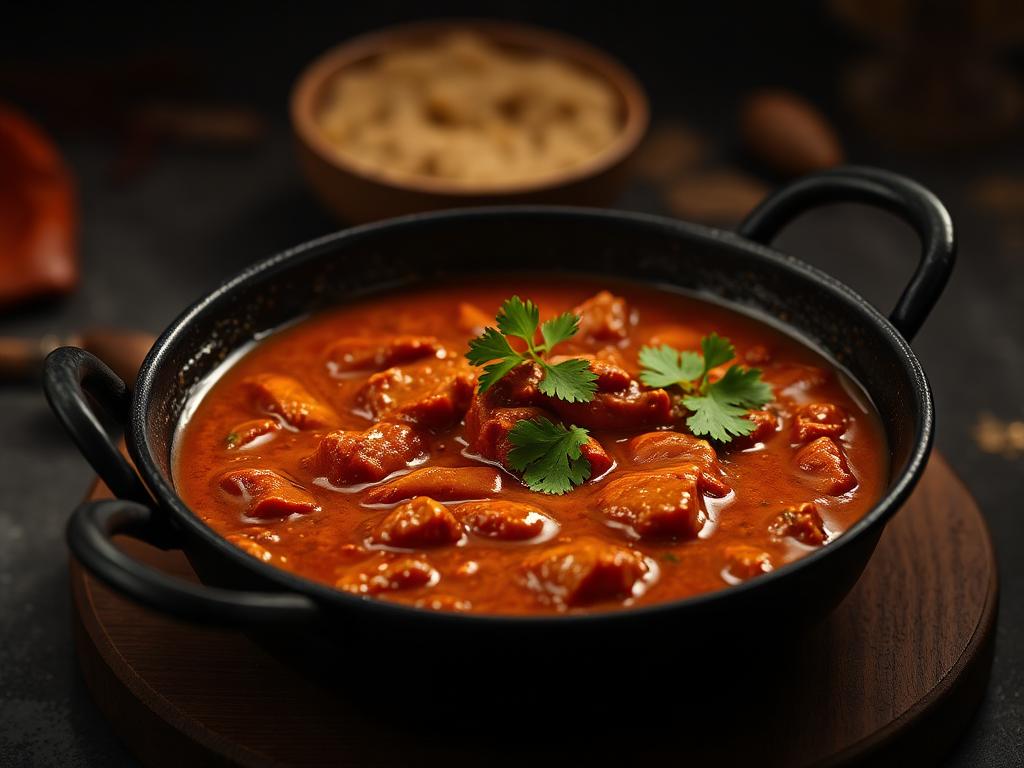
A spicy Nizami specialty tripe stew thickened with roasted flour.
About this dish
Hyderabadi Chakna is a legendary street-side delicacy hailing from the old city of Hyderabad, particularly associated with the Muslim community. It is a slow-cooked, spicy stew made from goat tripe and intestines, thickened with a special roux of roasted sorghum (jowar) or wheat flour. Historically eaten as a restorative breakfast or a late-night snack, its hallmark is the fiery 'red oil' (tari) that floats on top and its unique, gelatinous texture.
Ingredients
The Offal
- 500g Goat Tripe (Ojhri), cleaned and cut into 1-inch pieces
- 250g Goat Intestines (Boti), cleaned thoroughly and chopped
- 1 tsp Turmeric powder for washing
- 1 tbsp Rock salt for cleaning
Pressure Cooking Aromatics
- 1 large Onion, thinly sliced
- 2 tbsp Ginger-garlic paste
- 1 tsp Turmeric powder
- 1 tbsp Salt
- 500ml Water
The Thickening Paste
- 4 tbsp Jowar flour (Sorghum) or Wheat flour
- 100ml Water to make a slurry
Spices and Tempering
- 4 tbsp Vegetable oil
- 3 tbsp Hyderabadi Potli Masala or (1 tsp Garam masala + 1 tsp Coriander powder)
- 2 tbsp Red chili powder (high heat)
- 1/2 cup Fresh cilantro, chopped
- 2 tbsp Mint leaves, torn
Method
- 1
Rigorous Cleaning
Scrub the tripe and intestines with rock salt and turmeric under running water at least 5-6 times. This is crucial to remove the strong odor and debris; the tripe should look pale and feel less slimy before you proceed to cooking.
- 2
Initial Pressure Cook
In a pressure cooker, combine the cleaned offal, sliced onions, ginger-garlic paste, turmeric, and salt with 500ml of water. Close the lid and cook on medium-high heat for 6-8 whistles until the tripe is tender but not falling apart.
- 3
Roasting the Flour
While the meat cooks, place a small pan over low heat and roast the jowar flour for 3-5 minutes. Stir constantly until the raw smell disappears and it turns a light golden brown, then whisk it with water to form a smooth, lump-free slurry.
- 4
Developing the Base
In a heavy-bottomed pot (Degh), heat oil and add the red chili powder and garam masala on low heat for 30 seconds. Quickly add a splash of water to prevent the spices from burning, creating a vibrant red base.
- 5
Combining Meat and Spices
Transfer the cooked offal along with its stock into the pot with the spices. Increase heat to medium and bring to a vigorous boil for 5 minutes to let the flavors infuse into the meat.
- 6
Thickening the Stew
Slowly pour the flour slurry into the boiling pot while stirring continuously. You will see the consistency change from a thin soup to a glossy, thick gravy that coats the back of a spoon.
- 7
The Slow Simmer
Reduce heat to low, cover the pot, and simmer for 15-20 minutes. This 'Dum' process allows the oil to separate and rise to the top, forming the signature red layer known as 'tari'.
- 8
Herb Infusion
Add the freshly chopped cilantro and mint leaves. Stir gently, ensuring the herbs are submerged so they release their oils into the thick gravy.
- 9
Final Adjustments
Check the salt and spice levels; the stew should be aggressively spicy. If it is too thick, add a little boiling water; if too thin, simmer uncovered for another 5 minutes.
Notes & variations
- Jowar flour is traditional for its earthy flavor and better thickening properties compared to wheat.
- Potli masala is a bouquet garni of 20+ herbs; if unavailable, use a mix of stone flower (pathar phool) and cardamom.
- Leftovers taste better the next day as the collagen in the tripe sets the gravy.
- Ensure the intestines are turned inside out during cleaning to ensure absolute hygiene.
Serve with
Serve hot with Hyderabadi Naan or soft Kadak Paon to soak up the thick gravy.
Cook's note
Adding a piece of raw papaya skin during pressure cooking can help tenderize particularly tough tripe.