Hyderabadi Kacha Gosht ki Biryani
Authentic raw-marinated meat layered with long-grain basmati and saffron.
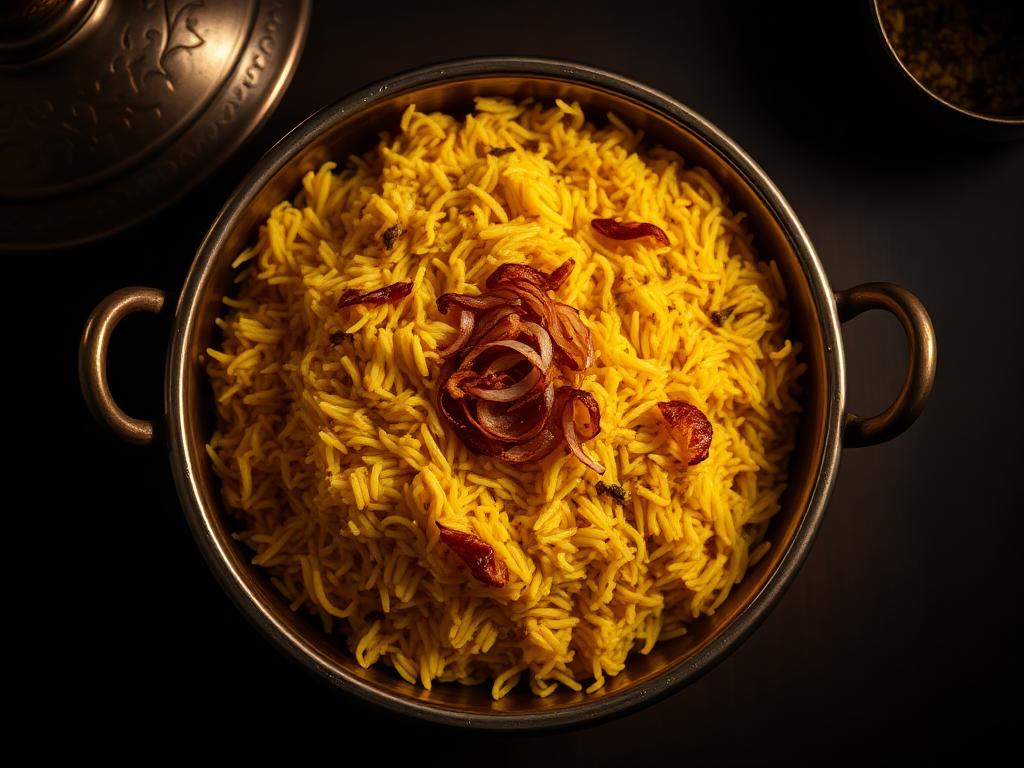
About this dish
This is the crown jewel of Nizami cuisine, where 'Kacha' refers to the technique of layering raw, marinated meat with parboiled rice. Originating in the royal kitchens of the Asaf Jahi dynasty, it relies on 'Dum' cooking—slow steaming in a sealed vessel. The meat tenderizes in its own juices and papaya paste, creating a fragrant, non-greasy masterpiece distinct from the sautéed 'Pakki' versions.
Ingredients
The Meat Marination
- 1 kg Bone-in Mutton (lamb or goat), 2-inch chunks
- 2 tbsp Raw Papaya Paste (with skin)
- 3 tbsp Ginger-Garlic Paste
- 1 cup Thick Curd (Yogurt), whisked
- 2 tbsp Red Chili Powder (Kashmiri or Reshampatti)
- 1 tsp Turmeric Powder
- 1.5 tsp Shahi Jeera (Caraway Seeds)
- 1 cup Barista (Deep fried onions), crushed
- 1/2 cup Fresh Mint Leaves, chopped
- 1/2 cup Fresh Cilantro, chopped
- 4 tbsp Ghee (Clarified Butter)
- Salt to taste
The Rice and Aromatics
- 750 g Long-grain Basmati Rice, soaked for 40 mins
- 4 liters Water for boiling
- 4 Green Cardamoms, 2 Black Cardamoms
- 2 inches Cinnamon stick
- 6 Cloves
- 1 pinch Saffron strands soaked in 1/4 cup warm milk
- 2 tbsp Lemon Juice
- Atta (Dough) for sealing the pot lid
Method
- 1
Marinate the Mutton
In a heavy-bottomed copper pot (Handi), mix mutton with papaya paste, ginger-garlic, spices, half the fried onions, herbs, and curd. The papaya is crucial for tenderizing raw meat; massage it in well for 5 minutes. Let this marinate for at least 4-6 hours, or overnight in the refrigerator, to allow enzymes to break down tough fibers.
- 2
Prepare the Scented Water
Bring 4 liters of water to a rolling boil with whole spices (cardamom, cinnamon, cloves) and generous salt—the water should taste like sea water. Adding salt here ensures the rice grains are seasoned from within. Add lemon juice to keep the rice grains pearly white and separate.
- 3
Parboil the Rice in Stages
Add soaked rice to boiling water. This recipe requires three stages of doneness: remove 1/4 of the rice after 3 minutes (50% cooked) to layer at the bottom where moisture is highest. Remove the next 50% after 5 minutes (70% cooked) for the middle layer. The remaining rice should be 90% cooked for the top layer.
- 4
Layering the Handi
Spread the 50% cooked rice directly over the raw meat marination. Layer the 70% cooked rice over it, then the 90% cooked rice. Between layers, sprinkle the remaining fried onions, mint, and cilantro. Pour the saffron-infused milk and extra ghee over the top layer in a circular motion.
- 5
Sealing for Dum
Place the lid on the Handi and seal the edges airtight with a long rope of wheat flour dough (Atta). This prevents steam from escaping, which is vital for the 'Dum' process. Ensure there are no gaps where steam can whistle out.
- 6
High Heat Phase
Place the Handi on high heat for 10-12 minutes. You will hear the liquids inside beginning to sizzle and the dough seal will start to harden. This initial heat creates the intense steam required to start cooking the raw meat.
- 7
Slow Cooking on Tawa
Lower the heat to minimum and place a heavy iron griddle (Tawa) under the Handi. This provides indirect heat and prevents the meat at the bottom from burning. Cook on this low heat for 35-40 minutes. The aroma of spices escaping the seal indicates the meat is tender.
- 8
Resting Period
Switch off the flame but do not open the seal immediately. Let the Biryani rest for at least 20 minutes. This allows the moisture to redistribute, ensuring the meat is succulent and the rice doesn't break when served.
- 9
The Unveiling
Crack the hardened dough seal and lift the lid. Gently fluff the rice from one side using a flat spatula, ensuring you reach the bottom to bring up the masala-coated meat. The rice should be long, separate, and aromatic.
Notes & variations
- Always use aged Basmati rice (at least 2 years) for the best grain elongation.
- If you don't have raw papaya, you can use commercial meat tenderizer, but the flavor profile will shift slightly.
- The pot must be heavy-bottomed; a thin pot will result in charred meat at the base.
- Store leftovers for up to 2 days; the spices actually deepen in flavor the next day.
Serve with
Serve with Mirchi ka Salan (spicy chili gravy) and a cool Burani Raita with garlic.
Cook's note
Avoid over-mixing the rice; use a 'cut and fold' motion with a thin saucer or flat spoon to keep grains intact.