Kachhe Gosht ki Biryani
The crown jewel of Nizami cuisine, where raw meat cooks with parboiled rice.
About this dish
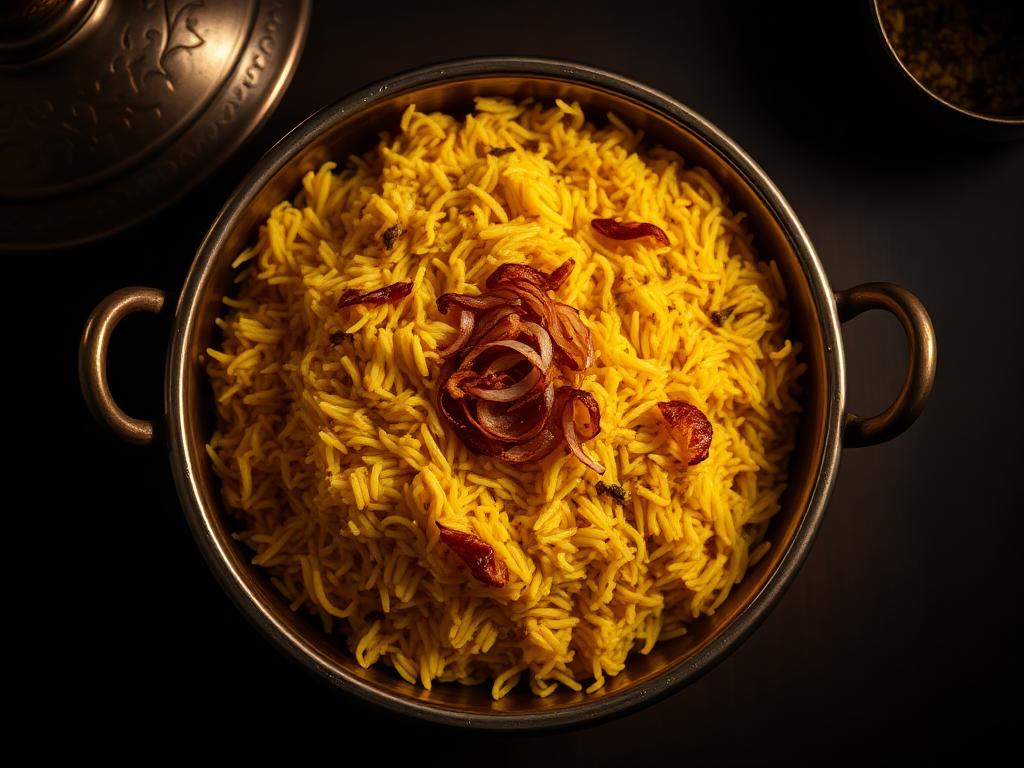
Originating in the royal kitchens of the Nizams, this 'Kachhe Gosht' (raw meat) style is the pinnacle of Hyderabadi culinary art. Unlike other biryanis where meat is pre-cooked, here marinated mutton is layered with semi-cooked Basmati rice and steamed together in a sealed 'Dum' process. The result is succulent meat and fragrant, separate grains of rice infused with saffron and spices, traditionally served at weddings and festive Eid celebrations.
Ingredients
Meat Marination
- 1 kg Mutton (goat meat), bone-in pieces from the shoulder
- 200g (1 cup) Thick yogurt, whisked
- 2 tbsp Ginger-garlic paste, fresh
- 3 tbsp Raw papaya paste (with skin) for tenderizing
- 1.5 tbsp Red chili powder
- 1 tsp Turmeric powder
- 1 cup Fried onions (Birista), crushed
- 1/2 cup Fresh mint leaves, chopped
- 1/2 cup Fresh coriander leaves, chopped
- 2 tbsp Ghee (clarified butter)
- 1 tsp Shahi Jeera (Caraway seeds)
- Salt to taste
Rice and Aromatics
- 750g (3.5 cups) Long-grain Basmati rice, soaked for 40 mins
- 4 liters Water for boiling
- 2 sticks Cinnamon
- 4 Green cardamoms
- 2 Black cardamoms
- 4 Cloves
- 1 pinch Saffron strands soaked in 1/4 cup warm milk
- 1/4 cup Ghee for drizzling
- 2 tbsp Lemon juice
- Wheat flour dough for sealing the pot
Method
- 1
Marinate the Mutton
In a heavy-bottomed copper pot (Degchi) or a deep stainless steel pot, combine the mutton with yogurt, papaya paste, ginger-garlic, spices, and half the fried onions. Massage the marinade into the meat fibers for at least 5 minutes to ensure deep penetration. Cover and refrigerate for at least 4 hours, or preferably overnight; the papaya is essential for softening the raw meat during the Dum process.
- 2
Prepare the Rice
Bring 4 liters of water to a rolling boil with cinnamon, cardamoms, cloves, and enough salt so the water tastes like seawater. Add the soaked and drained rice to the boiling water. Cook on high heat for exactly 5-6 minutes until the rice is 'Ek Kani' (parboiled, showing a firm white core when broken) or roughly 50% cooked.
- 3
First Layering
Quickly drain the first third of the rice (at 50% cooked) and spread it directly over the raw marinated meat in the pot. This bottom layer of rice needs to be less cooked as it will absorb the moisture released by the raw mutton. Sprinkle a bit of mint, coriander, and fried onions over this layer.
- 4
Second Layering
Allow the remaining rice in the boiling pot to cook for another 2 minutes (until 70-80% cooked). Drain and spread this over the first layer. The top layer of rice should be soft to the touch but not mushy, as it will cook primarily in the steam (Dum).
- 5
Final Garnishing
Drizzle the saffron-infused milk in a circular motion over the top of the rice for natural color and aroma. Add the remaining fried onions, mint, coriander, ghee, and lemon juice. Ensure the surface is even but do not press down on the rice, as it needs space for the steam to circulate.
- 6
Sealing the Pot
Roll the wheat flour dough into a long rope and press it onto the rim of the pot. Place a heavy, tight-fitting lid on top and press down firmly to create an airtight seal (Dum). This prevents any steam from escaping, which is crucial for cooking the raw meat underneath.
- 7
High Heat Phase
Place the pot on high heat for the first 10-12 minutes. You will eventually see a small amount of steam trying to escape from the dough seal or hear the liquid inside sizzling. This initial high heat is necessary to start the cooking process of the raw mutton at the bottom.
- 8
Slow Dum Phase
Reduce the heat to the lowest possible setting. For even heat distribution and to prevent the bottom from burning, place a flat cast-iron Tawa (griddle) under the pot. Let it cook on this low 'Dum' for 45 minutes without opening the lid.
- 9
Resting and Opening
Turn off the heat but do not open the pot for at least 15-20 minutes. This 'resting' period allows the juices to redistribute and the rice grains to firm up. Carefully break the hardened dough seal with a knife and lift the lid to reveal the fragrant steam.
- 10
Mixing and Serving
Using a flat silicone spatula or a thin saucer, gently scoop the rice from the sides, reaching deep to bring up the succulent meat and the spicy 'masala' from the bottom. Mix very lightly to avoid breaking the long rice grains. The bottom-most rice will be darker and spicier, while the top will be white and saffron-tinged.
Notes & variations
- Always use aged Basmati rice (at least 1-2 years old) for the best grain elongation.
- Raw papaya paste is the secret; if unavailable, use a commercial meat tenderizer but reduce the marination time.
- The pot must be thick-bottomed; if using a thin pot, the mutton will burn before it cooks.
- Leftovers can be refrigerated for 2 days; reheat by steaming to maintain moisture.
Serve with
Serve hot with Mirchi ka Salan (chili gravy) and a cool Onion-Mint Raita.
Cook's note
Never stir the biryani vigorously; use a 'cut and fold' motion from the edges of the pot to keep grains intact.