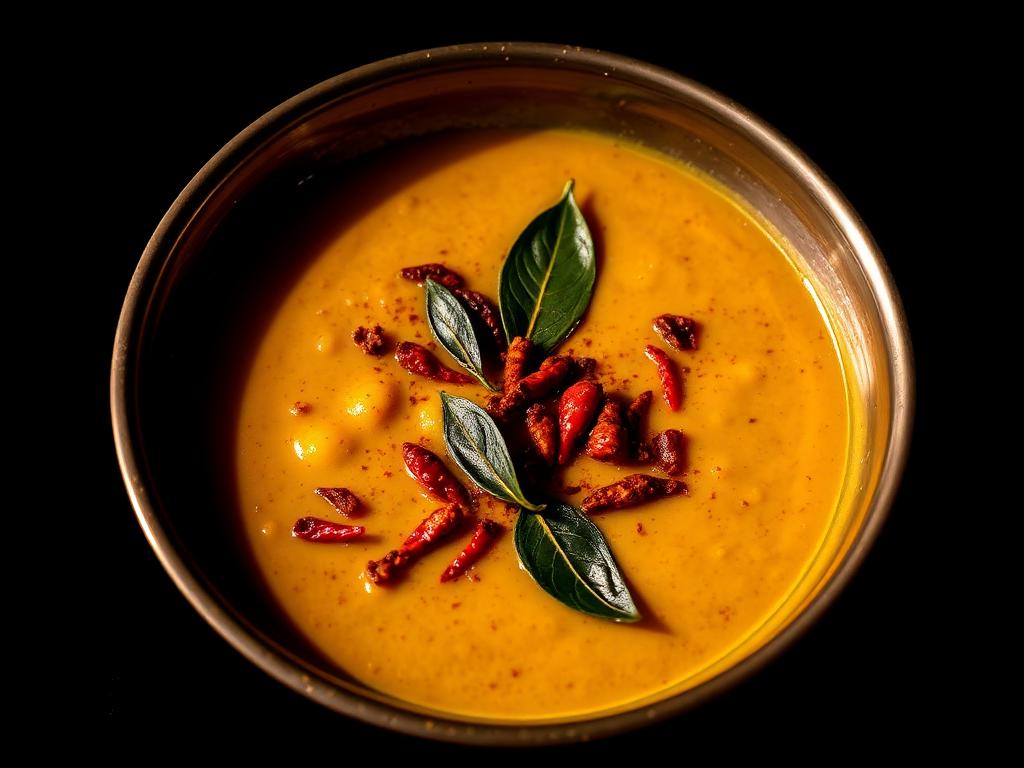
Iyer Kadhamba Sambar
A multi-vegetable mixed sambar traditionally made for festivals.
About this dish
Kadhamba Sambar is the 'mixed vegetable' specialty of the Tamil Brahmin (Iyer) community, often prepared for Ekadashi or grand festivals like Pongal. The word 'Kadhambam' means a mixture or medley, referring to the diverse array of country vegetables used. It is distinct because it avoids onions and garlic, relying on a freshly roasted 'Arachu Vitta' (ground) spice paste for its complex flavor.
Ingredients
The Lentil Base
- 200g (1 cup) Toor dal (Pigeon peas)
- 1/2 tsp turmeric powder
- 1 tsp castor oil (optional, for softening dal)
The Vegetables (The Kadhambam)
- 1 drumstick, cut into 2-inch pieces
- 1 small yellow pumpkin wedge, cubed
- 1 carrot, sliced into rounds
- 1 sweet potato, cubed
- 10-12 broad beans (Avarakkai), stringed
- 1 small eggplant (Brinjal), quartered
Arachu Vitta Spice Paste
- 1 tbsp chana dal
- 1 tbsp coriander seeds
- 1/2 tsp fenugreek seeds (methi)
- 6-8 dried Guntur red chilies
- 1/2 cup fresh grated coconut
- 1 tsp coconut oil for roasting
The Sambar Liquid
- Small lemon-sized ball of tamarind, soaked in 1 cup warm water
- 1/4 tsp asafoetida
- 2 sprigs curry leaves
- Salt to taste
Method
- 1
Cooking the Dal
Pressure cook the toor dal with 3 cups of water, turmeric, and a drop of castor oil for 4-5 whistles until completely mushy. Once the pressure releases, whisk the dal with a traditional 'mathu' or a wire whisk until it is a smooth, creamy liquid. Set this aside.
- 2
Roasting the Spices
Heat 1 teaspoon of coconut oil in a pan. Roast the chana dal, coriander seeds, fenugreek, and red chilies on low heat until the dal turns golden and the coriander becomes aromatic. Add the grated coconut at the very end and toss for 30 seconds until it smells toasted.
- 3
Grinding the Masala
Allow the roasted spices to cool completely. Grind them in a mixer-grinder with a little water to form a very smooth, fine paste. This 'Arachu Vitta' paste is the soul of the sambar and should have a thick, velvety texture.
- 4
Extracting Tamarind
Squeeze the soaked tamarind to extract the juice and discard the pulp/fiber. You should have about 1.5 cups of tamarind water. Ensure no seeds remain, as they can add bitterness to the final dish.
- 5
Simmering Vegetables
In a large heavy-bottomed pot, add the tamarind water, salt, asafoetida, and curry leaves. Add the 'hard' vegetables first (drumstick, carrot) and simmer for 5 minutes before adding the 'soft' vegetables (pumpkin, eggplant). Cook until the vegetables are 80% tender.
- 6
Adding the Dal base
Pour the whisked toor dal into the boiling vegetable-tamarind mixture. Stir well to combine. Let this come to a gentle boil on medium heat for about 3-4 minutes so the vegetables absorb the salt and tamarind from the dal.
- 7
Integrating the Spice Paste
Add the ground coconut-spice paste to the pot. Lower the heat and stir continuously to avoid the paste settling at the bottom. The sambar will start to thicken significantly at this stage and emit a rich, nutty aroma.
- 8
Final Simmer
Let the sambar simmer on low heat for 5-7 minutes. Do not let it boil vigorously after adding the coconut paste, as it can cause the flavors to split. Look for a layer of frothy bubbles forming on top, indicating it is perfectly cooked.
- 9
The Tempering
Heat coconut oil in a small pan, crackle mustard seeds, and add curry leaves. Pour this over the sambar. Cover immediately with a lid to trap the smoky coconut oil aroma.
Notes & variations
- Avoid using 'English' vegetables like cauliflower or peas; stick to 'Country' vegetables for authenticity.
- The consistency should be thicker than daily sambar, almost like a stew.
- If the sambar becomes too thick, dilute only with warm water to maintain temperature.
- Leftovers taste even better the next day as the vegetables soak up the spices.
Serve with
Hot rice, a dollop of ghee, and Appalam (papad).
Cook's note
Never skip the fenugreek seeds in the spice paste; they provide the characteristic 'hotel-style' aroma and digestive balance.