Iyer Kalyana Rasam
Traditional wedding-style rasam with a special freshly ground spice mix.
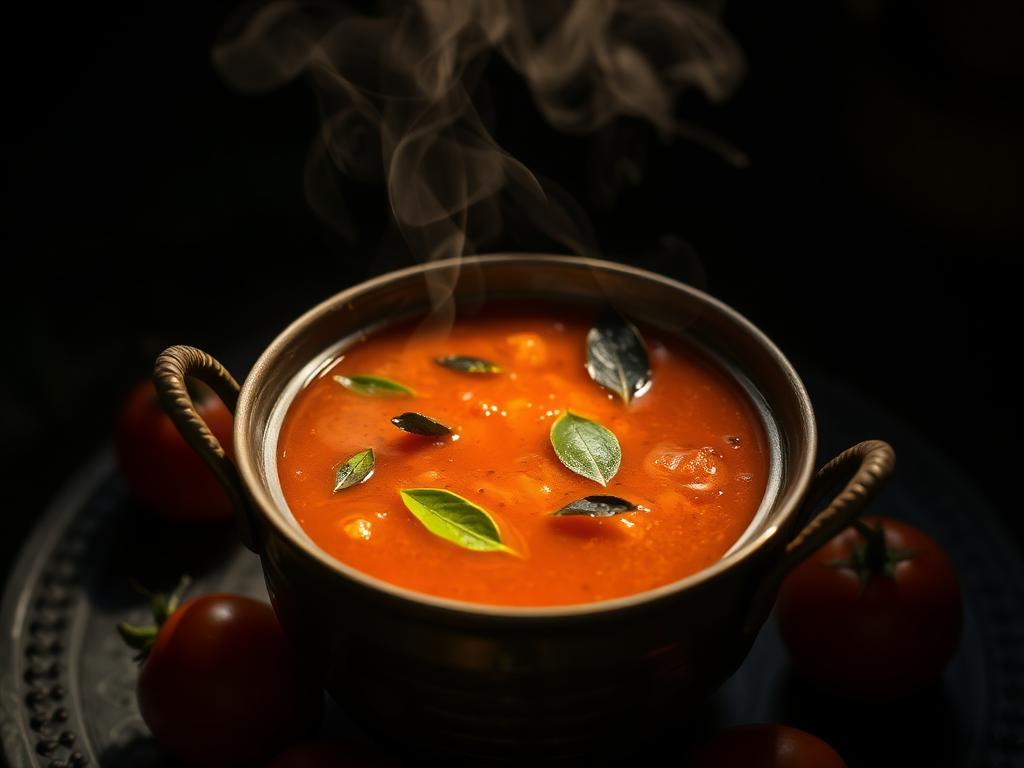
About this dish
A staple of Tamil Brahmin wedding feasts, this Rasam is celebrated for its aromatic complexity and digestive properties. Unlike everyday rasam, the 'Kalyana' version uses a freshly roasted and ground spice mix (Podi) and is never boiled for too long. It represents the pinnacle of Satvik cooking, focusing on the balance of tamarind, black pepper, and cumin.
Ingredients
Fresh Rasam Podi (Spice Mix)
- 1 tsp Ghee for roasting
- 1 tbsp Toor dal (Pigeon peas)
- 1 tbsp Black peppercorns
- 1 tbsp Cumin seeds
- 2-3 Dried red chilies
- 1/4 tsp Fenugreek seeds
The Base
- 1 medium Tomato, finely chopped by hand
- 1 small lime-sized ball Tamarind, soaked in 400ml water
- 1/2 tsp Turmeric powder
- 1/4 tsp Hing (Asafoetida)
- 1 tsp Salt
- 1 sprig Curry leaves
- 50g Cooked toor dal, mashed smoothly
Tempering
- 2 tsp Ghee
- 1/2 tsp Mustard seeds
- 1/2 tsp Cumin seeds
- 2 sprigs Fresh coriander leaves, finely chopped
Method
- 1
Roast the Spices
Heat 1 tsp ghee in a small pan. Roast toor dal until golden, then add peppercorns, red chilies, and fenugreek. Add cumin seeds last as they brown quickly. Roast until highly aromatic (about 3 minutes on low heat) and grind to a coarse powder once cooled.
- 2
Extract Tamarind Water
Squeeze the soaked tamarind to extract all juice and discard the pulp. You should have about 400ml of tamarind water. Place this in a 'Eeya Chombu' (traditional tin vessel) or a heavy pot.
- 3
Infuse Aromatics
Add the chopped tomatoes, turmeric, hing, salt, and curry leaves to the tamarind water. Using your hands, slightly mash the tomatoes into the water to release their juices. This manual bruising creates a deeper flavor profile than machine blending.
- 4
Simmer the Base
Place the pot on medium heat. Simmer until the raw smell of tamarind disappears, which usually takes about 10-12 minutes. The volume should reduce slightly, and the tomatoes should look mushy.
- 5
Add Dal and Spice Mix
Add the mashed toor dal and 2 teaspoons of the freshly ground rasam podi. Add another 100-150ml of water to adjust consistency. The rasam should be thin and watery, not thick like sambar.
- 6
The Frothing Point
This is the most critical step. Watch the pot closely; as soon as a thick white froth (nurayidhal) forms on the surface and it's about to boil, turn off the heat immediately. Never let rasam reach a rolling boil after adding the spices, or it will lose its aroma.
- 7
Final Tempering
Heat 2 tsp ghee in a tadka pan. Splutter mustard and cumin seeds. Pour this over the hot rasam. Immediately cover the pot with a lid to trap the volatile oils and aromas.
- 8
Garnish
Just before serving, garnish with a generous handful of freshly chopped coriander leaves. The residual heat will soften them perfectly without losing their vibrant color.
Notes & variations
- If using a traditional Eeya Chombu, never leave it on the stove empty as it will melt.
- Store extra Rasam Podi in an airtight jar for up to two weeks.
- For a vegan version, substitute ghee with coconut oil, though the flavor will change.
- Always use aged tamarind for a better dark color and mellow sourness.
Serve with
Serve hot in a bowl or mixed with steaming hot rice and a dollop of ghee, accompanied by potato fry.
Cook's note
Crushing the coriander stalks along with the leaves into the hot rasam provides a much deeper herbal note.