Kadah Prashad
The sacred, velvety smooth wheat flour halwa served in Gurdwaras.
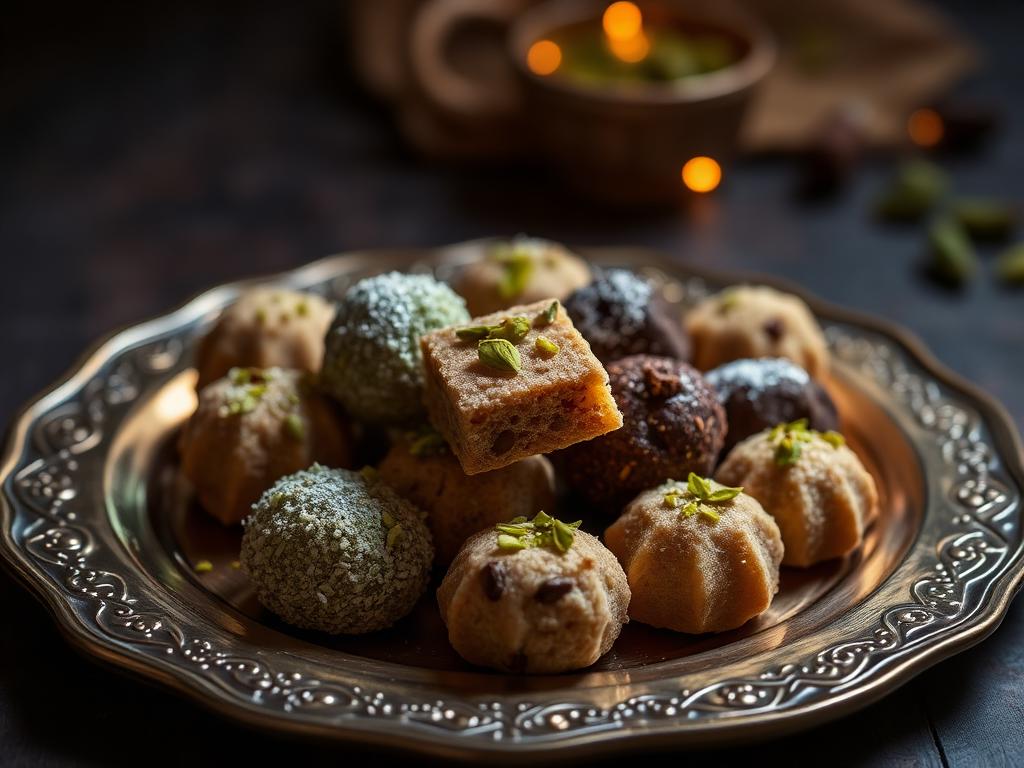
About this dish
Kadah Prashad is the ultimate symbol of equality and devotion in Sikhism, served to all visitors at Gurdwaras. It is a rich, velvety halwa made with equal parts whole wheat flour, ghee, and sugar. The secret to its distinct texture lies in the continuous stirring and the 'Bhuna' (roasting) process which transforms humble flour into a nutty, mahogany-colored delicacy.
Ingredients
- 200g (1 cup) Coarse whole wheat flour (Aata)
- 200g (1 cup) Desi Ghee (clarified butter)
- 200g (1 cup) Granulated sugar
- 600ml (3 cups) Water
Method
- 1
Prepare the Syrup
In a saucepan, combine the sugar and water. Heat over medium until the sugar completely dissolves; do not boil it down into a thick syrup (no string consistency required). Keep this sugar water hot on a very low flame while you prepare the flour.
- 2
Melt the Ghee
In a heavy-bottomed iron kadai (wok), melt the ghee over medium heat. It is vital to use a heavy pan to ensure even heat distribution and prevent the flour from scorching, which would ruin the sacred flavor profile.
- 3
Add the Flour
Once the ghee is hot but not smoking, add the whole wheat flour. Immediately begin stirring with a long-handled spatula. The mixture will initially look like a thick, bubbling paste and will feel heavy to stir.
- 4
The Roasting (Bhuna)
Continuously stir the flour in the ghee for 12-15 minutes over medium-low heat. This is the most critical step; you are looking for the color to change from pale beige to a deep, rich almond brown. The aroma should be intensely nutty, reminiscent of toasted biscuits.
- 5
Visual Cues
Watch for the ghee to start separating from the sides of the flour mixture and the appearance of fine white bubbles. If the flour is under-cooked, the prashad will taste raw and stick to the roof of the mouth; if over-cooked, it will taste bitter.
- 6
The Water Addition
Lower the heat to minimum. Carefully and slowly pour the hot sugar-water into the roasted flour mixture. Be extremely cautious as the mixture will hiss and steam violently; keep your hand at a distance and stir constantly to prevent lumps from forming.
- 7
Emulsification
Increase the heat slightly and continue stirring vigorously. The flour will rapidly absorb the water and start to swell. Within 2-3 minutes, the mixture will thicken and begin to leave the sides of the kadai.
- 8
Final Texture
Cook until the halwa attains a smooth, glossy, and velvety finish. The ghee should just start to ooze from the edges of the mass. The final consistency should be soft enough to slide off a spoon but firm enough to hold its shape.
- 9
Resting
Cover the kadai with a lid and turn off the heat. Let it rest for 2 minutes. This allow the steam to settle and ensures the texture becomes perfectly uniform throughout before serving.
Notes & variations
- The 1:1:1 ratio (flour:ghee:sugar) is non-negotiable for authentic Kadah Prashad.
- Do not add cardamom, saffron, or nuts; the authentic version relies purely on the flavor of roasted wheat and ghee.
- If using fine atta instead of coarse, reduce the water slightly to 2.5 cups.
- Always serve warm; the texture becomes firm and less silky as it cools.
Serve with
Served as a holy offering, usually received in cupped hands.
Cook's note
The secret to the 'Gurdwara flavor' is the iron kadai; it adds a depth of color and flavor that stainless steel cannot replicate.