Kancheepuram Kovil Idli
Traditional temple-style spiced idlis steamed in dry ginger and pepper.
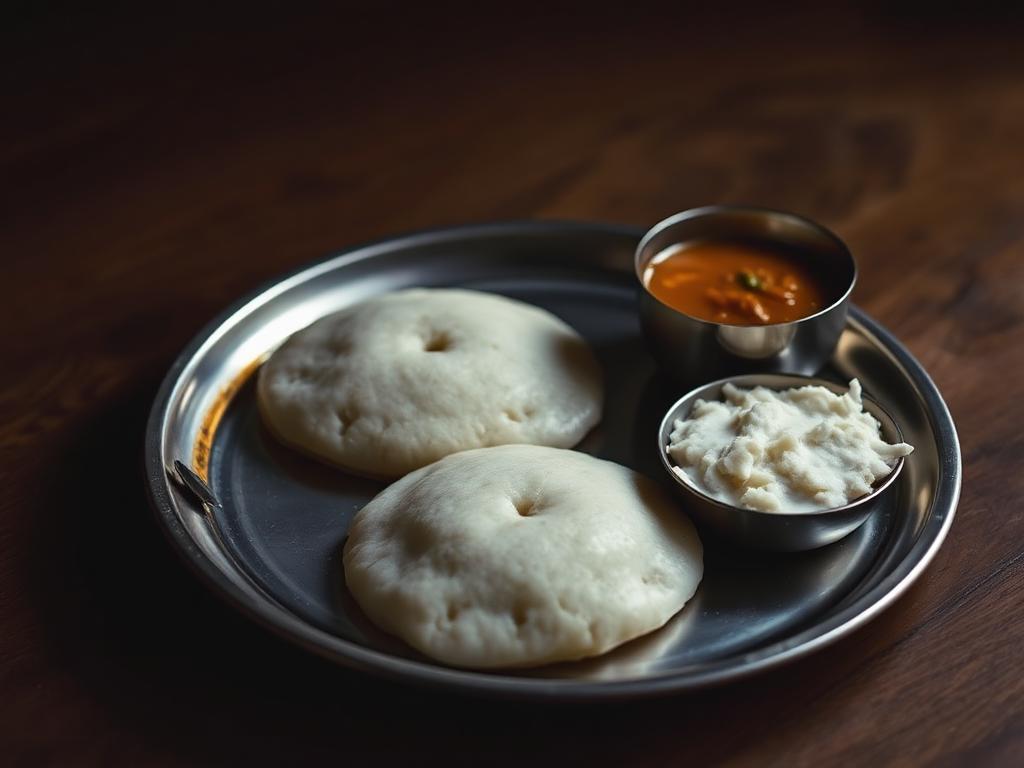
About this dish
Originating from the Varadharaja Perumal Temple in Kancheepuram, these idlis are traditionally offered as 'Neivedhyam' to the deity. Unlike the fluffy white breakfast idli, these are dense, cylindrical, and highly aromatic, seasoned with dry ginger and whole peppercorns. They were historically steamed in 'Mantharai' leaves, which lend a unique earthy fragrance and anti-microbial properties to the batter.
Ingredients
Batter Base
- 2 cups (400g) Raw Rice (Sona Masuri)
- 2 cups (400g) Parboiled Rice (Idli Rice)
- 1 cup (200g) Whole Urad Dal (husked black gram)
- 1 tsp (5g) Fenugreek seeds
- 2 tsp (10g) Rock salt
Spice Tempering
- 3 tbsp (45ml) Ghee (clarified butter)
- 1 tsp (5g) Cumin seeds
- 2 tsp (10g) Whole black peppercorns, slightly crushed
- 1 tbsp (15g) Dry ginger powder (Sukku)
- 1/2 tsp (2g) Asafoetida (Hing)
- 2 sprigs Fresh curry leaves, finely chopped
- 10-12 Cashew nuts, halved
Method
- 1
Soaking and Grinding
Wash the rice and urad dal separately until the water runs clear. Soak the rice varieties together and the urad dal with fenugreek seeds in separate bowls for at least 5 hours. Grind the urad dal into a very fluffy, thick paste using minimal cold water, then grind the rice into a coarse, rava-like consistency; mix both with salt.
- 2
Fermentation Phase
Transfer the combined batter to a deep vessel, ensuring there is enough room for it to rise. Cover and leave it in a warm, dark spot for 8 to 12 hours depending on the ambient temperature. The batter is ready when it has doubled in volume and smells slightly sour but fresh.
- 3
Preparing the Spice Mix
Heat 1 tablespoon of ghee in a small pan over medium-low heat. Add the cashew nuts and fry until they turn golden brown, then remove and set aside. In the same ghee, add cumin seeds and crushed peppercorns, allowing them to crackle and release their oils for 30 seconds.
- 4
Tempering the Batter
Turn off the heat and stir in the dry ginger powder, asafoetida, and chopped curry leaves. Pour this aromatic tempering along with the remaining raw ghee and fried cashews into the fermented batter. Use a wide spatula to fold the spices gently; do not over-mix or deflate the batter significantly.
- 5
Setting up the Steamer
Traditional Kancheepuram idlis are steamed in 'Tumblers' (tall stainless steel glasses) or bamboo baskets. Grease the insides of four 250ml steel tumblers generously with ghee. If available, line them with cleaned Mantharai or banana leaves for an authentic woody aroma.
- 6
Steaming Process
Fill the tumblers up to 3/4 capacity to allow room for rising. Place them in a steamer or pressure cooker (without the weight) that has 2 inches of boiling water at the bottom. Steam on medium-high heat for 20-25 minutes; a skewer inserted in the center should come out clean and non-sticky.
- 7
Resting and Unmolding
Once cooked, remove the tumblers from the steamer and let them rest for 5-7 minutes. This resting phase allows the steam to settle, making it easier to unmold without the idli breaking. Run a thin knife around the edges and invert the tumbler to release the cylindrical idli.
- 8
Slicing and Finishing
Slice the cylindrical idlis into 1-inch thick rounds. The cross-section should reveal the coarse rice grains and the evenly distributed black pepper and ginger bits. The texture should be firm yet spongy, much heartier than a standard idli.
- 9
Checking the Texture
Ensure the rice was ground coarsely like semolina. If ground too fine, the idli will become gummy rather than having the signature 'broken grain' mouthfeel. The color should be a pale cream due to the dry ginger and ghee.
Notes & variations
- Use only dry ginger (Sukku) powder, not fresh ginger, for the authentic temple flavor.
- The coarse rice texture is critical; it should feel like sand between your fingers when grinding.
- Store leftovers in the fridge for up to 3 days; reheat by steaming for 2 minutes.
- If you don't have tumblers, use deep bowls or even a cake tin.
Serve with
Serve hot with Milagai Podi (gunpowder) mixed with gingelly oil and a spicy ginger chutney.
Cook's note
Adding a tablespoon of raw gingelly (sesame) oil along with the ghee keeps the idlis moist even after they cool down.