Katre pao Recipe
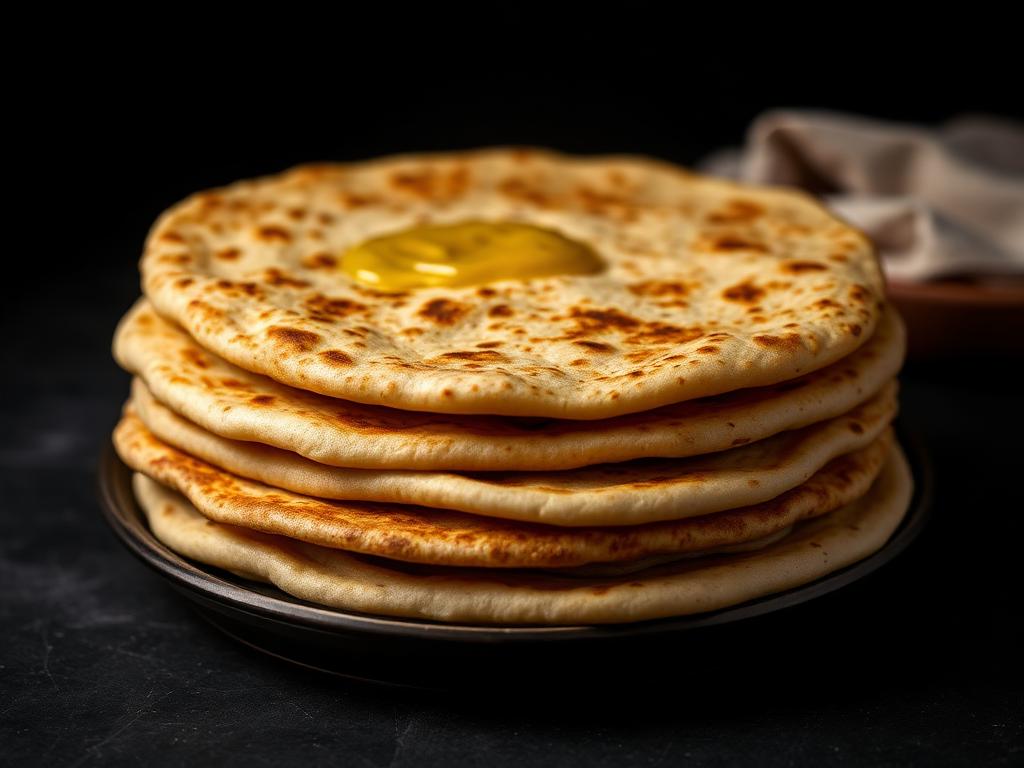
Goan scissor-cut bread with joined lobes, golden edges and a soft centre.
About this dish
Katre pao is a shaped bread from Goa’s local bakery repertoire, recognised for its cut, lobed outline. Its name is commonly associated with scissors, although the exact shape and spelling vary between bakeries. It shares the Portuguese-influenced, locally adapted bread tradition that made the poder an essential figure in Goan daily life. The lobes are particularly convenient for tearing off pieces at breakfast or alongside a curry.
Ingredients
Dough
- 360 g refined wheat flour or maida (3 cups, spooned and levelled)
- 230 ml lukewarm water, about 32°C (1 cup minus 2 tsp)
- 4 g instant yeast (1 1/4 tsp)
- 4 g sugar (1 tsp)
- 7 g fine salt (1 1/4 tsp)
- 5 ml neutral oil (1 tsp)
Handling and finishing
- 15 g refined wheat flour or maida (2 tbsp), for dusting
- 5 ml neutral oil (1 tsp), for the bowl and scissors
- 15 ml water (1 tbsp), for brushing
Method
- 1
Combine the dough ingredients
Mix the flour, yeast and sugar in a wide bowl, then stir in the salt. Add the lukewarm water and dough oil, and mix for 3–4 minutes until the flour is fully moistened. Cover and rest for 10 minutes at room temperature; the dough should feel soft but hold its shape.
- 2
Knead until smooth
Knead for 10 minutes on a lightly floured surface. Use a folding and pushing motion until the dough becomes elastic and its surface looks satiny. Avoid working in the full dusting allowance unless necessary, because excess flour makes the cut lobes dense.
- 3
Allow the first fermentation
Rub most of the handling oil inside a bowl, reserving a little for the scissors. Cover the dough in the bowl and leave at 26–29°C for about 70 minutes. It should almost double and feel light and gently inflated when lifted.
- 4
Divide into generous portions
Turn the dough onto the counter and press down gently to redistribute the bubbles. Divide into 4 equal pieces, approximately 153 g each, and form loose rounds. Cover for 10 minutes so the dough relaxes before shaping.
- 5
Shape short, broad ovals
Flatten each portion gently, fold the edges inward and pinch the seam closed. Turn seam-side down and press into a thick oval about 13 cm long and 9 cm wide. Place on a parchment-lined baking sheet, leaving at least 7 cm between pieces for the lobes to expand.
- 6
Make the scissor cuts
Lightly oil clean kitchen scissors and cut inward from each short end of an oval along its long axis. Make each cut about 4 cm long, leaving a central bridge of roughly 5 cm so the bread remains joined. Ease the four resulting lobes slightly apart to create a broad butterfly-like outline without stretching the centre thin.
- 7
Proof without losing definition
Cover loosely and proof at 26–29°C for about 35 minutes. Preheat a conventional oven to 230°C during the final 25 minutes. The lobes should look rounded and airy while the cuts remain visible; overproofing can blur the shape.
- 8
Bake until the edges colour
Brush the tops lightly with the finishing water and place the tray on the middle shelf. Bake at 230°C for 10 minutes, then reduce to 210°C and bake for another 10–12 minutes. The raised edges should be golden brown, the cut surfaces a little paler, and the centre should register about 94–96°C.
- 9
Cool and tear into lobes
Transfer the breads to a wire rack and cool for 20 minutes. Leave uncovered for a firmer edge, or drape with a cloth for the final 10 minutes if you prefer a softer finish. Tear at the cuts to reveal a springy centre that separates cleanly rather than compressing into doughy layers.
Notes & variations
- Makes 4 generous breads, one per person; cup measurements use a 240 ml cup.
- Katre pao shapes differ among Goan bakeries; this home version uses a four-lobed scissor-cut outline.
- Cutting before the final proof gives rounded lobes, while keeping a substantial bridge prevents the bread splitting into separate rolls.
- The dough is deliberately only lightly enriched; it should taste like everyday Goan bread, not a sweet or buttery bun.
Serve with
Potato bhaji, mushroom xacuti, an omelette or a bowl of Goan curry.
Cook's note
Make decisive cuts with sharp scissors; repeated short snips drag the dough and leave ragged edges.