Thiruvananthapuram Style Parippu
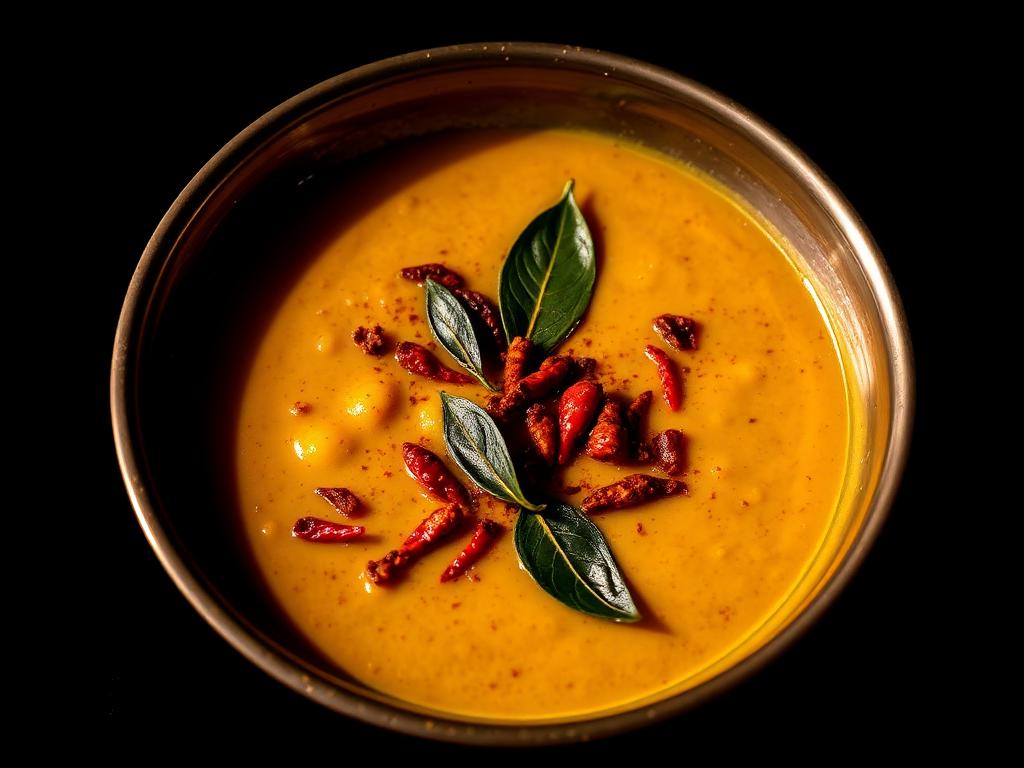
Thick mashed dal served with a mandatory dollop of ghee.
About this dish
In the Thiruvananthapuram (Trivandrum) style Sadya, the Parippu is the very first course served on the leaf. Unlike the watery dals of the north, this is a 'Katti' (thick) dal, slow-cooked until creamy and finished with a distinct coconut-cumin paste. The addition of a generous pour of pure cow ghee (Neyyozhichu) is non-negotiable, acting as a digestive and a flavor enhancer.
Ingredients
The Dal Base
- 200g (1 cup) Split yellow moong dal (Cheruparippu)
- 750ml (3 cups) Water
- 1/2 tsp Turmeric powder
- 1/2 tsp Salt
The Coconut Paste
- 1/2 cup Fresh grated coconut
- 1/2 tsp Cumin seeds
- 1-2 Green chilies
- 2 Shallots
Finishing
- 2 tbsp Pure Cow Ghee
- 1 sprig Curry leaves
Method
- 1
Dry Roast the Dal
Place the moong dal in a heavy-bottomed pan over medium heat. Dry roast for 4-5 minutes, stirring constantly, until the dal turns a light golden brown and emits a nutty aroma. This prevents the dal from becoming slimy and adds a deep roasted flavor.
- 2
Wash and Rinse
Transfer the roasted dal to a colander and wash it under cold running water 2-3 times. This removes excess starch and any dust from the roasting process. Drain well.
- 3
Pressure Cook
Place the dal in a pressure cooker with 3 cups of water, turmeric, and a drop of oil. Cook for 3-4 whistles on medium heat until the dal is completely soft and mashable. If using an open pot, simmer for 25 minutes, skimming off any foam.
- 4
Mash the Dal
Once the pressure releases, use a heavy wooden masher (mathu) or a whisk to blend the dal into a smooth, thick consistency. There should be no distinct grains visible; it should be like a thick puree.
- 5
Grind the Aromatics
Grind the coconut, cumin, shallots, and green chilies into a very smooth, fine paste using 2 tablespoons of water. The finer the paste, the silkier the final Parippu will be.
- 6
Simmer with Coconut
Add the coconut paste and salt to the mashed dal. Place back on low heat and simmer for 5-7 minutes. Stir frequently to prevent the bottom from scorching, as the mixture is very thick.
- 7
Check Consistency
The dal should be thick enough to hold its shape slightly on a leaf but fluid enough to mix with rice. If it is too thick, add a little hot water and simmer for one more minute.
- 8
The Ghee Finish
Turn off the heat. Immediately stir in one sprig of fresh curry leaves and cover the pot. Keep the ghee separate to be poured directly onto the rice at the time of serving.
Notes & variations
- Roasting the dal is the secret to the authentic Thiruvananthapuram flavor profile.
- Use a heavy-bottomed vessel (Uruli) if possible for even heat distribution.
- Do not over-boil once the coconut is added, or the oil might separate and spoil the texture.
- If reheating, add a splash of hot water to loosen the dal.
Serve with
Serve with hot Matta rice and a side of crispy Pappadam.
Cook's note
Always use homemade or high-quality cow ghee; buffalo ghee has a different aroma that alters the dish.