Ker Sangri Recipe
Desert berries and dried bean pods cooked into a tangy, spice-coated sabzi.
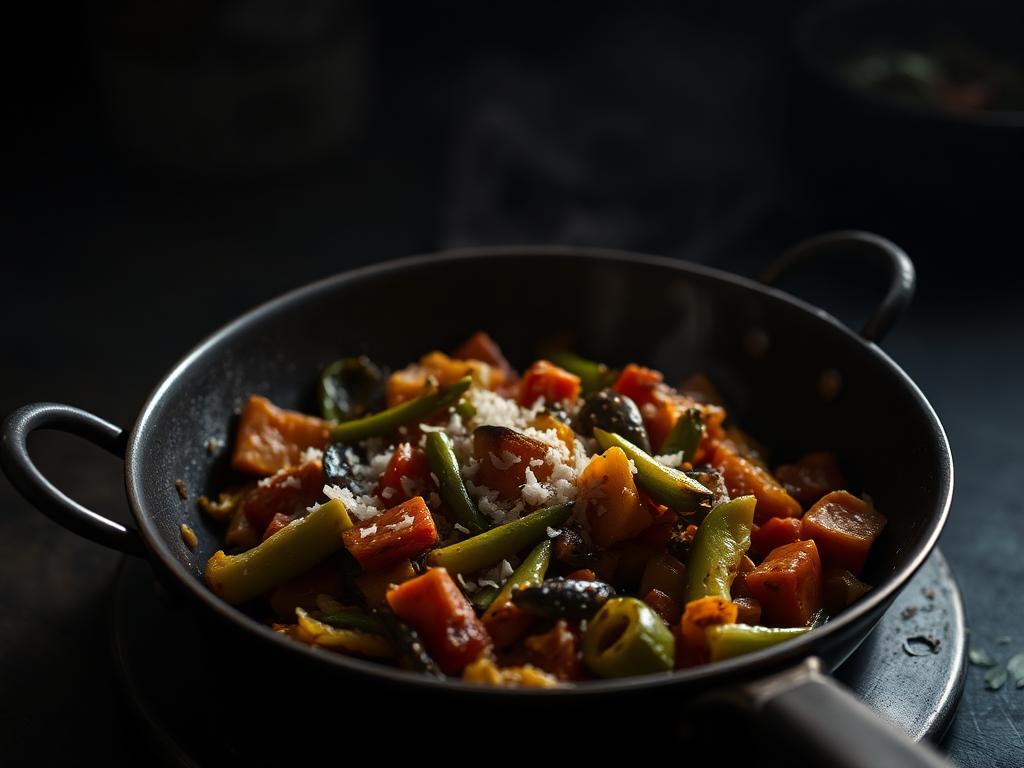
About this dish
Ker berries and sangri pods are iconic foods of Rajasthan’s arid west, where seasonal wild produce is dried for later use. This pairing is closely associated with Marwar and is served in homes, festive thalis and wedding meals. It also appears on royal-style menus, though its foundation lies in the practical preservation traditions of desert communities.
Ingredients
Dried desert produce
- 100 g dried sangri pods (about 2 cups loosely packed)
- 40 g dried ker berries (about ⅓ cup)
- 3 litres water (12½ cups), divided for initial soaking and simmering, plus fresh water for changes
Spiced cooking base
- 60 ml mustard oil (¼ cup)
- 2 g cumin seeds (1 teaspoon)
- 1 g fennel seeds (½ teaspoon)
- 0.25 g compounded asafoetida (⅛ teaspoon)
- 3 g dried red chillies (3 small)
- 8 g ground coriander (1 tablespoon plus 1 teaspoon)
- 4 g mild Kashmiri red chilli powder (2 teaspoons)
- 1 g hot red chilli powder (½ teaspoon)
- 1 g ground turmeric (½ teaspoon)
- 2 g ground fennel (1 teaspoon)
- 120 ml water (½ cup)
- 4 g fine salt (⅔ teaspoon), or to taste
Souring and finishing
- 4 g amchur, dried mango powder (1½ teaspoons)
- 14 g ghee (1 tablespoon)
Method
- 1
Sort the dried produce
Spread the sangri and ker on separate plates and inspect them for grit, stalks and damaged pieces. Trim woody stems from the sangri without cutting the tender pods into short pieces. Rinse both separately under cool water for 3–4 minutes, until loose dust is removed.
- 2
Soak separately
Cover the sangri with 1 litre water and the ker with 500 ml water in separate bowls. Soak for 12 hours in the refrigerator, changing the ker water two or three times to draw out bitterness and any salt. The pods should become flexible and the berries visibly plump, though neither will yet be fully tender.
- 3
Cook the sangri
Drain the sangri and put it in a saucepan with 1 litre fresh water. Bring to a boil over high heat, then simmer over low-medium heat for 20–30 minutes. A pod should bend easily and yield when bitten, while retaining a pleasant chew rather than becoming stringy or mushy.
- 4
Cook and check the ker
Drain the ker and simmer it separately in 500 ml fresh water over low-medium heat for 15–20 minutes. Taste one cooled berry; it should be tender and pleasantly tangy, not aggressively bitter or salty. If necessary, drain and simmer in fresh water for another 5–10 minutes before proceeding.
- 5
Drain thoroughly and prepare spices
Drain both cooked ingredients in a colander for 10 minutes so excess water does not dilute the masala. Mix the coriander powder, both chilli powders, turmeric and ground fennel with 60 ml of the measured cooking water. Keep this paste off the heat while you prepare the tempering; it should resemble a loose, brick-red slurry.
- 6
Heat the oil and bloom whole spices
Heat the mustard oil in a heavy kadai over medium-high heat until shimmering and just beginning to give off a faint wisp, about 2 minutes. Lower the heat and allow 30 seconds for the strongest heat to subside before adding cumin, fennel seeds and dried chillies. Stir for 30–40 seconds, then add the asafoetida as the seeds become fragrant.
- 7
Cook the spice paste
Add the wet spice paste carefully and cook over low heat for 2–3 minutes, stirring continuously. The masala should turn glossy and smell rounded rather than dusty or acrid. If it catches on the base, add a teaspoon of the remaining water rather than letting the chilli powder burn.
- 8
Coat and simmer
Add the drained ker and sangri, the remaining measured water and the salt, reducing the salt if the berries were already salted. Toss gently and cook covered over low heat for 10–12 minutes, stirring twice. Uncover and cook for another 3–5 minutes until the masala clings to the pods and no watery gravy remains.
- 9
Add sourness and rest
Sprinkle in the amchur and fold in the ghee over low heat for 1 minute. Taste for salt and tang, remembering that ker itself contributes acidity. Turn off the heat and rest covered for 10 minutes so the dried produce absorbs the seasoned fat.
Notes & variations
- Cup measures use a 240 ml cup; dried pods pack unevenly, so the gram weights are strongly preferred.
- This recipe uses dried ker, not ready-to-eat pickled ker; salted or brined ker needs desalting and usually less cooking.
- Soaking and cooking times depend on age and processing; older sangri may require a longer simmer, and bitter ker needs additional water changes.
- This is ker sangri, not the fuller five-ingredient panchkuta mixture; refrigerate within 2 hours and use within 3 days despite its dry appearance.
Serve with
Bajra roti brushed with ghee, plain yoghurt, lehsun chutney and a small piece of jaggery.
Cook's note
Cook ker and sangri separately before combining: their tenderness and desalting needs rarely match.