Nadan Beef Fry
Slow-cooked beef dry-fried with coconut slivers.
About this dish
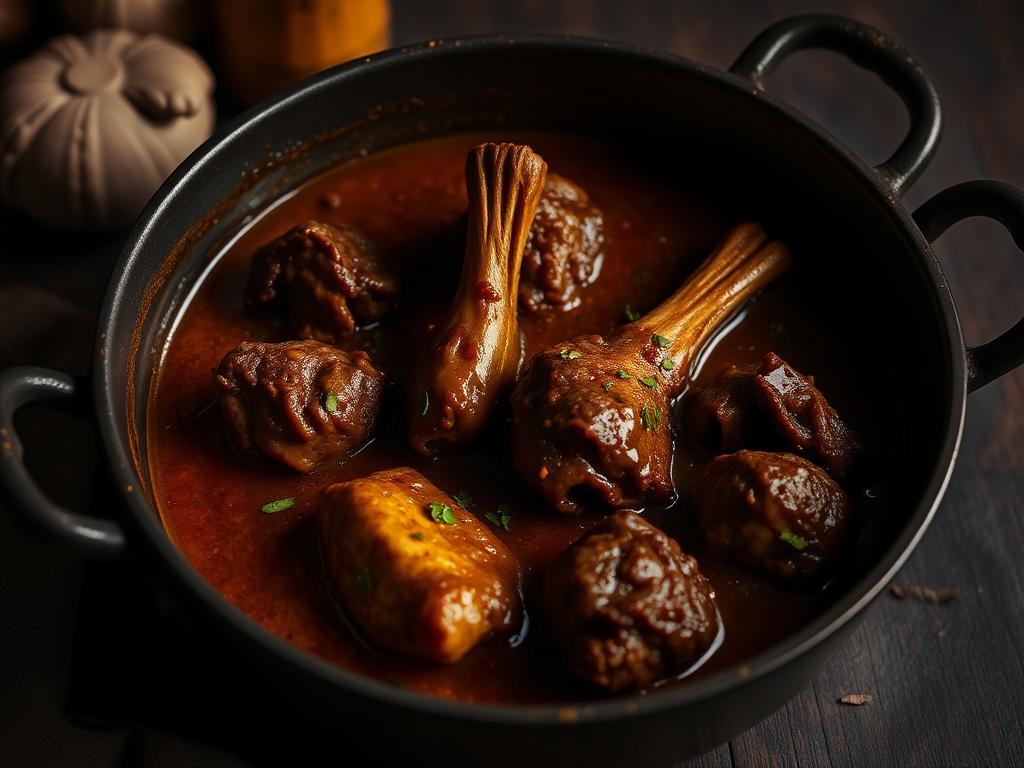
Nadan Beef Ularthiyathu is the gold standard of Kerala's toddy shop and bistro culture. It is a slow-cooked masterpiece where the meat is first braised in its own juices and then 'ularthiyathu' (slow-roasted) in coconut oil until it turns nearly black. The addition of fried coconut slices (thenga kothu) provides a crucial crunch against the tender, spicy meat.
Ingredients
For the Pressure Cooking
- 1 kg Beef (chuck or brisket), cut into 1-inch cubes
- 1 tbsp Ginger-garlic paste
- 1/2 tsp Turmeric powder
- 1 tbsp Crushed black peppercorns
- 2 tsp Meat masala or Garam masala
- 1 tsp Salt
- 2 sprigs Curry leaves
For the Roasting (Ularthiyathu)
- 1/2 cup Coconut slivers (thinly sliced fresh coconut pieces)
- 2 cups Small onions (Shallots), sliced
- 1 tbsp Ginger, finely chopped
- 1 tbsp Garlic, finely chopped
- 3-4 Green chilies, slit
- 2 tbsp Coriander powder
- 1 tbsp Kashmiri red chili powder
- 1/2 cup Coconut oil
- 3 sprigs Curry leaves
Method
- 1
Marinate and braise
Mix the beef cubes with the ginger-garlic paste, turmeric, crushed pepper, meat masala, salt, and curry leaves. Place in a pressure cooker with only 1/4 cup of water (the meat will release its own juices). Cook for 5-6 whistles until the meat is 90% tender; it should have a bite but not be falling apart.
- 2
Fry the coconut
Heat coconut oil in a heavy-bottomed cast iron pan or 'Uruli'. Add the coconut slivers and fry on medium heat until they turn a deep, reddish-golden brown. This step is vital for the authentic nutty texture and flavor profile of the dish.
- 3
Sauté the shallots
In the same oil, add the sliced shallots (use small onions for authenticity). Sauté with a pinch of salt until they become soft and start turning brown. Add the chopped ginger, garlic, and green chilies, cooking for another 3 minutes until the raw aroma is completely gone.
- 4
Toast the spices
Lower the flame and add the coriander powder and Kashmiri red chili powder. Stir continuously for 1-2 minutes until the spices darken and the oil begins to separate. If the pan is too dry, add a spoonful of the beef cooking liquid to prevent burning.
- 5
Combine and reduce
Pour the cooked beef along with all its remaining cooking liquid into the pan. Increase the heat to medium and stir well to coat every piece of meat with the masala base. Allow the liquid to evaporate completely while stirring occasionally.
- 6
The slow roast
This is the 'Ularthiyathu' stage. Once the moisture is gone, lower the heat and continue to fry the beef in the coconut oil. Add more curry leaves and another tablespoon of coconut oil if needed. Stir every few minutes, scraping the bottom of the pan to incorporate the caramelized bits back onto the meat.
- 7
Achieve the dark color
Continue roasting for 15-20 minutes on low-medium heat. The meat will transition from brown to a deep, dark, near-black color. The exterior should become slightly crisp while the interior remains succulent. Taste for salt and pepper adjustment.
- 8
Final garnish
Once the beef is perfectly roasted and coated in a thick, dry masala, toss in the fried coconut slivers and a final handful of fresh curry leaves. Give it one last stir and turn off the heat. Let it rest for 5 minutes before serving to allow the flavors to settle.
Notes & variations
- Small onions (shallots) are non-negotiable for the authentic sweet-savory balance.
- A cast iron pan or traditional bronze Uruli is recommended for the best searing and color.
- If using a tougher cut of beef, increase pressure cooking time by 2-3 whistles.
- Store leftovers in the fridge for up to 3 days; the flavors actually deepen over time.
Serve with
Serve as a side dish with Kerala Porotta, or as a starter alongside a glass of cold beverage.
Cook's note
Do not rush the final roasting stage; the low-and-slow frying in coconut oil is what creates the legendary deep flavor.