Thalassery Beef Roast
Succulent beef pieces slow-cooked with Malabar spices and fried coconut.
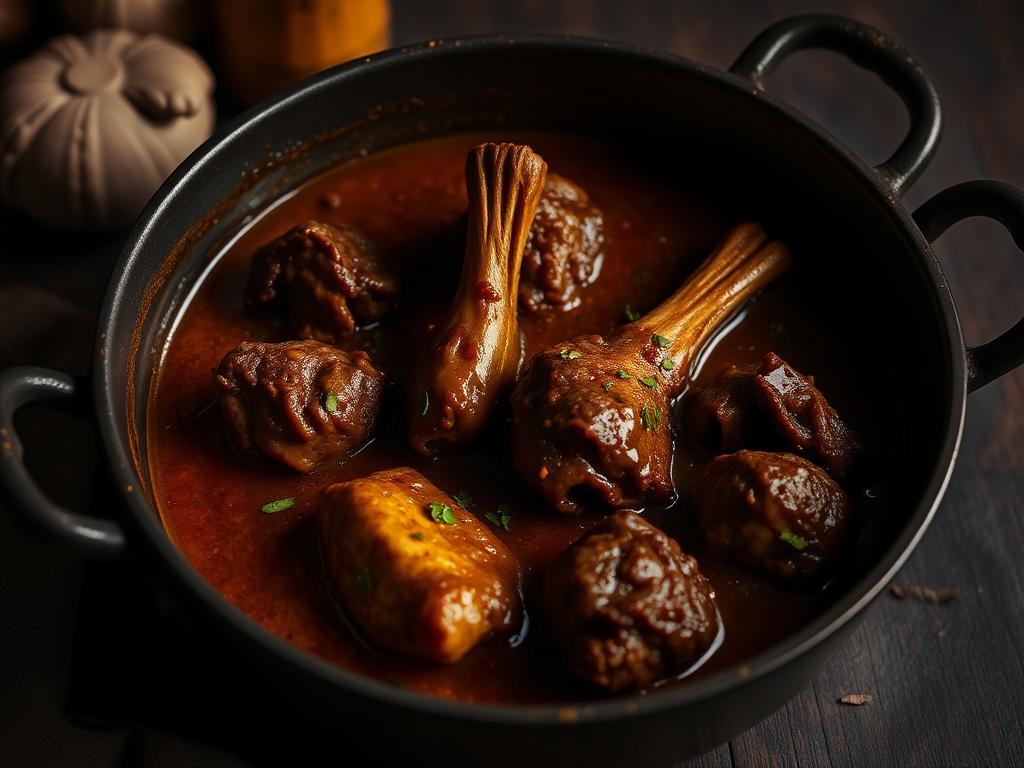
About this dish
Commonly known as Beef Ularthiyathu, this dish is a hallmark of the Syrian Christian community in Kerala, particularly from the Thalassery and Kottayam regions. It involves a two-stage cooking process: first pressure cooking the meat with spices, then slow-roasting it with coconut slivers until it reaches a dark, near-black hue. It is the ultimate 'touchings' or side dish served at celebrations and local toddy shops.
Ingredients
For the Meat Marination
- 1 kg Beef (chuck or brisket), cut into 1-inch cubes
- 1 tbsp Ginger-garlic paste
- 1/2 tsp Turmeric powder
- 1 tbsp Crushed black peppercorns
- 1 tbsp Vinegar or lime juice
- 1 tsp Salt
For the Ularthiyathu (Roasting)
- 1/2 cup Coconut slivers (Thengakkothu)
- 3 tbsp Coconut oil
- 2 cups Sliced shallots (Chuvannulli)
- 2 sprigs Curry leaves
- 2 tbsp Coriander powder
- 1.5 tbsp Red chili powder (half Kashmiri for color)
- 1 tsp Garam masala
- 1 tsp Fennel powder (Perumjeerakam)
Method
- 1
Marinate the Beef
Rub the beef cubes with ginger-garlic paste, turmeric, crushed pepper, salt, and vinegar. Let it sit for at least 30 minutes to tenderize the fibers. If time permits, refrigerating for 2 hours yields much deeper flavor penetration.
- 2
Pressure Cook
Place the marinated beef in a pressure cooker. Do not add water, as the meat will release its own juices. Cook on medium heat for 4-5 whistles until the meat is 90% cooked—tender but still holding its shape firmly.
- 3
Fry the Coconut Slivers
Heat coconut oil in a heavy iron kadai or seasoned cast iron pan. Add the coconut slivers and fry on medium heat until they turn a deep reddish-brown and become crunchy. These provide the essential texture contrast in the final dish.
- 4
Sauté the Shallots
To the same oil, add the sliced shallots and curry leaves. Sauté patiently on medium heat for 10-15 minutes until the shallots turn dark golden brown. Using shallots instead of regular onions is crucial for the authentic 'Ularthiyathu' taste.
- 5
Toast the Dry Spices
Add coriander powder, chili powder, and fennel powder to the browned shallots. Lower the heat and stir for 2 minutes. The spices should smell toasted and the oil should start to separate from the spice paste.
- 6
Combine Meat and Masala
Pour the cooked beef and all its concentrated stock into the kadai. Stir well to coat every piece of meat with the dark spice mixture. Increase the heat slightly to evaporate excess liquid.
- 7
The Slow Roast (Ularthuka)
This is the most critical step. Lower the heat and slow-fry the meat for 20-30 minutes, stirring every few minutes. The beef should gradually turn from brown to a deep, dark charcoal-black as it fries in its own fat and coconut oil.
- 8
Final Seasoning
Sprinkle the garam masala and the fried coconut slivers over the meat. Give it one final toss. The meat should look slightly dry on the outside but remain succulent and moist on the inside.
- 9
Resting Period
Turn off the heat and let the dish rest in the pan for 10 minutes. This allows the residual heat to further crisp the edges of the beef and locks in the spices.
Notes & variations
- If you don't have shallots, use red onions, but shallots offer a superior sweetness and aroma.
- Using a cast iron pan (Irumbu Chatti) is highly recommended for achieving the signature dark color.
- Leftovers taste even better the next day as the spices mature.
- Adjust black pepper levels to control the heat; the heat in this dish should come primarily from pepper, not just chilies.
Serve with
Serve with Malabar Parotta, Appam, or steamed Matta rice.
Cook's note
Never discard the beef stock from the pressure cooker; reduce it in the pan to concentrate the 'umami' of the meat.