Khechudi Recipe
Odia rice and roasted moong dal, gently seasoned with ghee and whole spices.
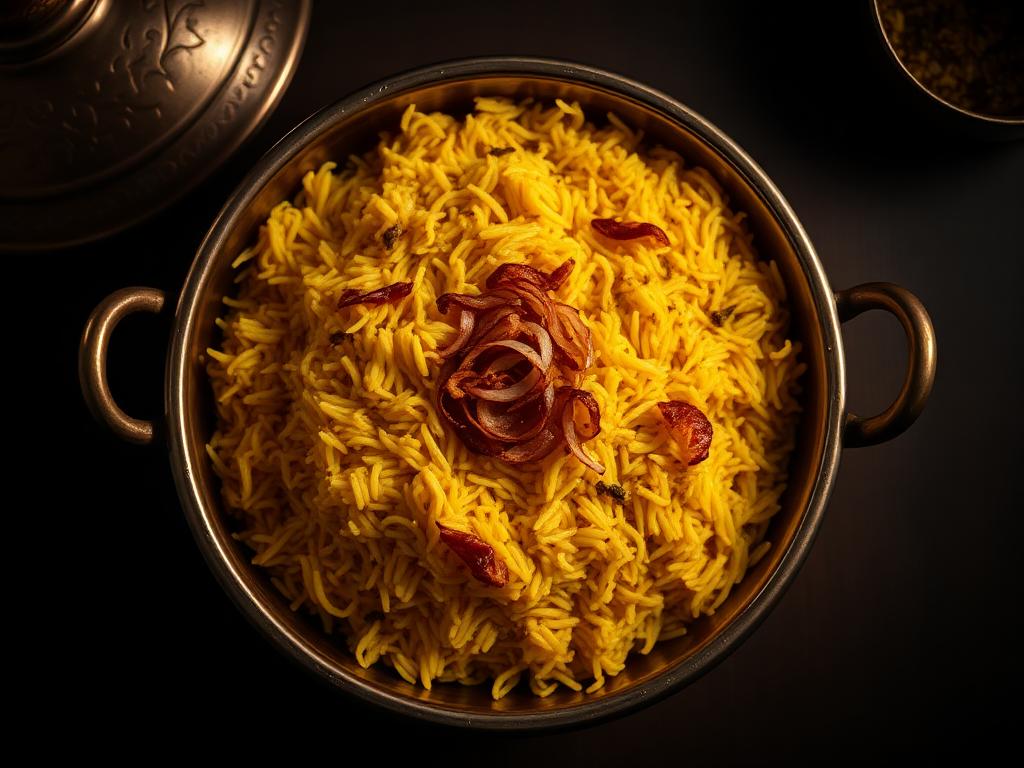
About this dish
Khechudi is an Odia rice-and-dal preparation that appears in both domestic meals and Jagannath's sacred food tradition. Roasted moong dal gives many home versions their characteristic nutty aroma. Its texture ranges from soft and spoonable to a drier preparation suited to a festive plate. This no-onion, no-garlic household recipe keeps the seasoning restrained and should not be read as the temple kitchen's exact method.
Ingredients
Rice and dal
- 250 g everyday raw white rice (1¼ cups)
- 150 g split yellow moong dal (¾ cup)
- 1.44 litres hot water (6 cups)
- 240 ml additional hot water, only if needed (1 cup)
Seasoning
- 30 g ghee (2 tablespoons)
- 2 g cumin seeds (1 teaspoon)
- 2 small Indian bay leaves (about 0.4 g)
- 1 cinnamon stick, 2.5 cm long (about 1 g)
- 1 g ground turmeric (½ teaspoon)
- 7.5 g fine salt (1¼ teaspoons), or to taste
Method
- 1
Roast the moong dal
Place the dry moong dal in a heavy saucepan over medium-low heat. Stir continuously for 5–7 minutes, until a few grains deepen in colour and a warm, nutty aroma rises. Stop before the dal turns brown, as dark roasting can make the finished dish bitter.
- 2
Rinse the roasted dal
Transfer the dal to a heatproof bowl and let it cool off the heat for 3 minutes. Add water carefully, rinse twice and drain. The grains should smell toasted and clean, without any burnt notes.
- 3
Wash the rice
Rinse the rice in three changes of cool water, working off the heat for about 3 minutes. Drain in a sieve while you prepare the saucepan. The rice does not need a long soak for this soft, one-pot preparation.
- 4
Bloom the spices
Wipe the saucepan dry and heat 22 g, or about 1½ tablespoons, of the ghee over medium-low heat. Add the cumin, bay leaves and cinnamon and stir for 45–60 seconds. The cumin should sizzle and smell earthy without becoming dark brown.
- 5
Give the dal a head start
Add the drained dal, turmeric and 960 ml, or 4 cups, of the hot water. Bring to a boil over medium-high heat, then reduce to medium-low and simmer partially covered for 10–12 minutes. The dal should begin to swell but still offer resistance when pressed.
- 6
Add rice and remaining water
Add the drained rice, salt and remaining 480 ml, or 2 cups, of the measured hot water. Stir once and return to a gentle boil over medium heat for 2–3 minutes. Scrape the base lightly so no dal remains stuck underneath the rice.
- 7
Simmer until soft
Cover with the lid slightly ajar and cook over low heat for 18–22 minutes. Stir gently once or twice, checking that the bottom is not catching. The rice should be fully tender and the dal soft, with some grains beginning to break down.
- 8
Adjust the consistency
If the mixture is too thick or the dal remains firm, add the reserved hot water 60 ml at a time. Simmer over low heat for 3–5 minutes after an addition, until the khechudi falls softly from a spoon. Stir in the remaining ghee and check the salt.
- 9
Rest and serve
Turn off the heat, cover and let the khechudi rest for 10 minutes. Fold gently for 30 seconds before spooning it into a serving bowl. It should be soft and cohesive, not dry or stiff, and will thicken further as it cools.
Notes & variations
- All cup measures use a 240 ml cup; the rice quantity here is for raw white rice, not parboiled rice.
- Roasting moong dal is important to this version's flavour, but it should remain mostly yellow with only a little golden colouring.
- This is a soft household khechudi; festival and temple-associated preparations can have different proportions, seasonings and textures.
- Older dal may take longer to soften. Extend its initial simmer by 5–10 minutes if necessary before adding the rice.
Serve with
Dalma or a simple vegetable preparation, khatta, saga bhaja and crisp fried badi.
Cook's note
Keep the khechudi slightly looser than your desired serving texture because both rice and dal continue absorbing liquid.