Maavinkayi Gojju
Sweet, sour, and spicy raw mango curry.
About this dish
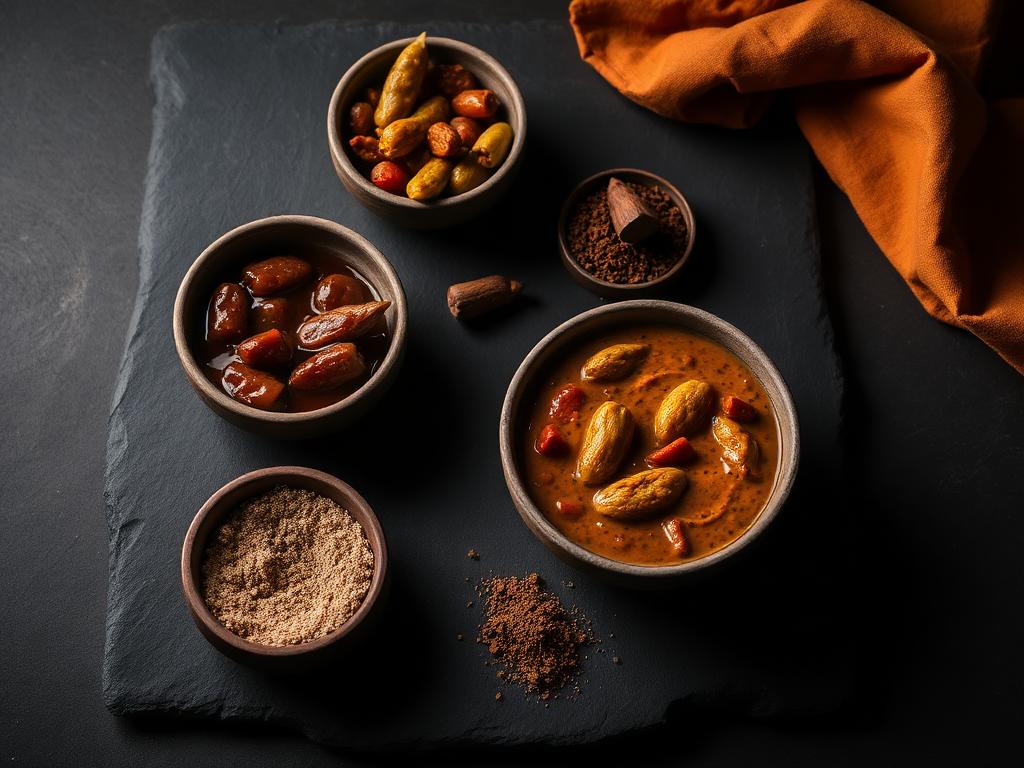
Originating from the Malnad and Old Mysore regions, Maavinkayi Gojju is a quintessential summertime delicacy that balances the 'shaviruchi' (six tastes). It is a staple at traditional weddings and festivals, known for its bold interplay of sour raw mango, pungent mustard, and sweet jaggery. Unlike thinner gravies, this is a thick, jam-like relish that preserves the essence of the mango season.
Ingredients
Primary Ingredients
- 2 medium (400g) Raw Mangoes, peeled and cut into 1-inch cubes
- 50g Jaggery, powdered or grated
- 1/2 tsp Turmeric powder
- 1.5 tsp Salt
- 500ml Water
For the Roasted Masala
- 1 tsp Coconut oil
- 2 tbsp Urad dal
- 1/2 tsp Fenugreek seeds (methi)
- 6-8 Dried Byadagi chillies
- 1/4 tsp Hing (Asafoetida)
- 1/2 cup Fresh coconut, grated
- 1 tsp Black mustard seeds (for grinding raw)
The Tempering (Oggarane)
- 1 tbsp Coconut oil
- 1 tsp Mustard seeds
- 1 sprig Curry leaves
- 2 Dried red chillies, broken
Method
- 1
Cook the Mangoes
In a heavy-bottomed pot, combine the mango cubes, 500ml water, turmeric, and salt. Bring to a boil over medium-high heat and simmer for 8-10 minutes until the mango is fork-tender but not mushy. The pieces should hold their shape while being translucent.
- 2
Roast the Spices
Heat 1 tsp oil in a small pan. Roast the urad dal and fenugreek seeds on low heat until the dal turns golden brown and aromatic. Add the Byadagi chillies and hing, roasting for another 30 seconds until the chillies puff up slightly. Do not burn the fenugreek as it will turn the gojju bitter.
- 3
Grind the Masala
Transfer the roasted spices to a blender and add the fresh coconut and the 1 tsp of raw mustard seeds. Add a splash of water and grind to a very smooth, fine paste. The raw mustard seeds added at this stage provide the signature pungent 'kick' characteristic of a true Gojju.
- 4
Incorporate the Base
Add the ground masala paste to the cooked mangoes in the pot. Stir gently to combine, ensuring you don't break the mango pieces. Adjust the consistency by adding a little warm water if the mixture is too thick; it should be like a thick gravy.
- 5
Add Sweetener
Stir in the powdered jaggery. The amount may need adjustment based on the sourness of the mangoes. Allow the mixture to simmer on low heat for 5 minutes. The color will darken to a rich, glossy brownish-orange as the jaggery melts and integrates.
- 6
Prepare the Tempering
In a small tadka pan, heat 1 tbsp coconut oil. Add mustard seeds and wait for them to splutter completely. Add the curry leaves and broken red chillies, letting them crisp up for 10 seconds. The aroma of toasted curry leaves in coconut oil is vital for the final flavor profile.
- 7
Final Infusion
Pour the hot tempering over the simmering Gojju. Immediately cover the pot with a lid and turn off the heat. Let it sit for at least 10 minutes before serving to allow the flavors to marry and the mangoes to soak up the spiced gravy.
- 8
Adjust Consistency
Check the final thickness. The gojju tends to thicken as it cools due to the urad dal in the masala. If it becomes too solid, whisk in a tablespoon of hot water to reach a coating consistency.
- 9
Taste Check
Perform a final taste test. It should be a complex balance where no single flavor dominates. If it is too sour, add more jaggery; if too sweet, a pinch more salt or a dash of chili powder can balance it out.
Notes & variations
- If using very sour mangoes (like the Totapuri variety), increase jaggery by 20%.
- The addition of raw mustard seeds in the paste is a specific Udupi-style technique for pungency.
- This dish keeps well in the refrigerator for up to 3 days and the flavor improves over time.
- For a variation, you can use pineapple or bitter gourd following the same spice base.
Serve with
Serve hot with steamed sona masuri rice and a dollop of ghee, or as a side with curd rice.
Cook's note
Always roast fenugreek seeds on the lowest heat possible; even a few seconds of over-roasting creates an irreversible bitter aftertaste.