Makki Mooli Roti
Maize flour flatbread stuffed with spiced grated radish.
About this dish
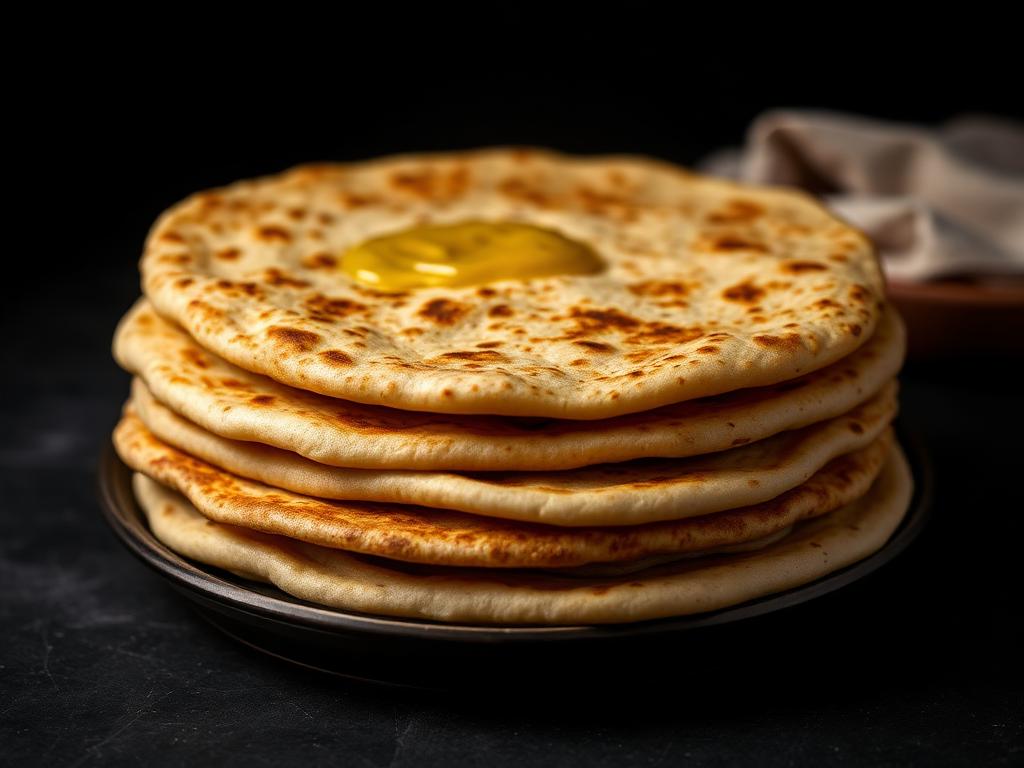
A winter staple in Punjabi households, this flatbread combines the earthy grit of maize flour with the sharp, peppery bite of seasonal white radish. Traditionally prepared over a clay 'chulha' using hand-patting techniques, it represents the heart of rustic farm-to-table dining. The addition of radish not only provides flavor but also moisture, making the gluten-free maize dough more pliable and easier to handle.
Ingredients
- 250g (2 cups) Makki ka Atta (yellow maize flour)
- 150g (1.5 cups) Mooli (white radish), peeled and finely grated
- 10g (2 tsp) Ginger, finely minced
- 2-3 Green chilies, finely chopped
- 15g (1/4 cup) Fresh cilantro, finely chopped
- 5g (1 tsp) Carom seeds (Ajwain)
- 5g (1 tsp) Salt, or to taste
- 120ml (1/2 cup) Warm water, added incrementally
- 50g Ghee, for pan-frying
Method
- 1
Squeeze the Radish
Grate the radish into a bowl and sprinkle with a pinch of salt; let it sit for 5 minutes to release water. Squeeze the radish firmly between your palms to extract as much liquid as possible, saving this liquid in a separate cup to use for the dough if needed. If the radish is too wet, the dough will become a sticky mess that cannot be shaped.
- 2
Prepare the Flour Base
In a large mixing bowl (parat), sift the maize flour and add the carom seeds, ginger, chilies, cilantro, and the squeezed radish. Use your fingers to rub the radish into the flour until the mixture looks like coarse crumbs. Carom seeds are essential here as they aid in the digestion of the heavy maize flour.
- 3
Knead with Warm Water
Gradually add warm water (or the reserved radish juice) a tablespoon at a time while kneading with the heel of your palm. Knead for at least 5-7 minutes until the dough is smooth and pliable; it should not crack when pressed. Maize flour lacks gluten, so the friction and heat from your palm are necessary to develop a workable texture.
- 4
Divide and Portion
Divide the dough into 6 equal-sized balls, roughly the size of a large lemon. Keep them covered with a damp cloth to prevent the surface from drying out and cracking. Unlike wheat dough, makki dough loses its elasticity quickly if left exposed to air.
- 5
Shape the Roti
Place a dough ball between two sheets of parchment paper or moistened plastic wrap. Gently pat with your fingers or a rolling pin into a circle about 6 inches in diameter and 4mm thick. Authentic Punjabi cooks do this entirely by hand-patting, but the paper method prevents the brittle dough from sticking or breaking.
- 6
Initial Sear
Heat a heavy iron tawa (griddle) over medium-high heat until a drop of water sizzles instantly. Carefully peel the roti off the paper and place it on the hot tawa; cook for 1-2 minutes until the edges look dry and small bubbles appear on the surface. Do not try to flip it too early, or it will shatter.
- 7
Flip and Press
Flip the roti using a wide spatula and cook the other side for another minute. Use a clean cloth or a wooden press to gently push down on the edges, ensuring the heat penetrates the dense maize core. You should see light brown charred spots forming on the underside.
- 8
Apply Ghee
Spread half a teaspoon of ghee over the top surface and flip again. Press down firmly to create a crisp, golden crust, then repeat for the other side. The roti should be golden-brown and crispy on the outside while remaining soft and moist inside from the radish.
- 9
Final Browning
Continue to cook for another 30 seconds on each side over medium heat to ensure the raw taste of the flour is completely gone. The aroma should be nutty and toasted. Remove from heat and place in a padded basket (chhabba) to keep warm.
Notes & variations
- Use fine-milled yellow maize flour; white cornmeal or coarse polenta will not work for this recipe.
- The water must be warm to the touch (around 50°C) to help the starches in the maize bind.
- If the dough is too brittle, add 1 tablespoon of whole wheat flour (atta) to help with binding.
- Leftovers can be reheated on a tawa with a little ghee to restore crispness.
Serve with
A large dollop of white butter (makkhan) and a side of Sarson ka Saag.
Cook's note
Always knead the dough just before making the rotis; if the dough sits too long, the radish releases more water and makes it impossible to roll.