Malabar Mutton Korma
Rich mutton curry with cashew paste and aromatic spices.
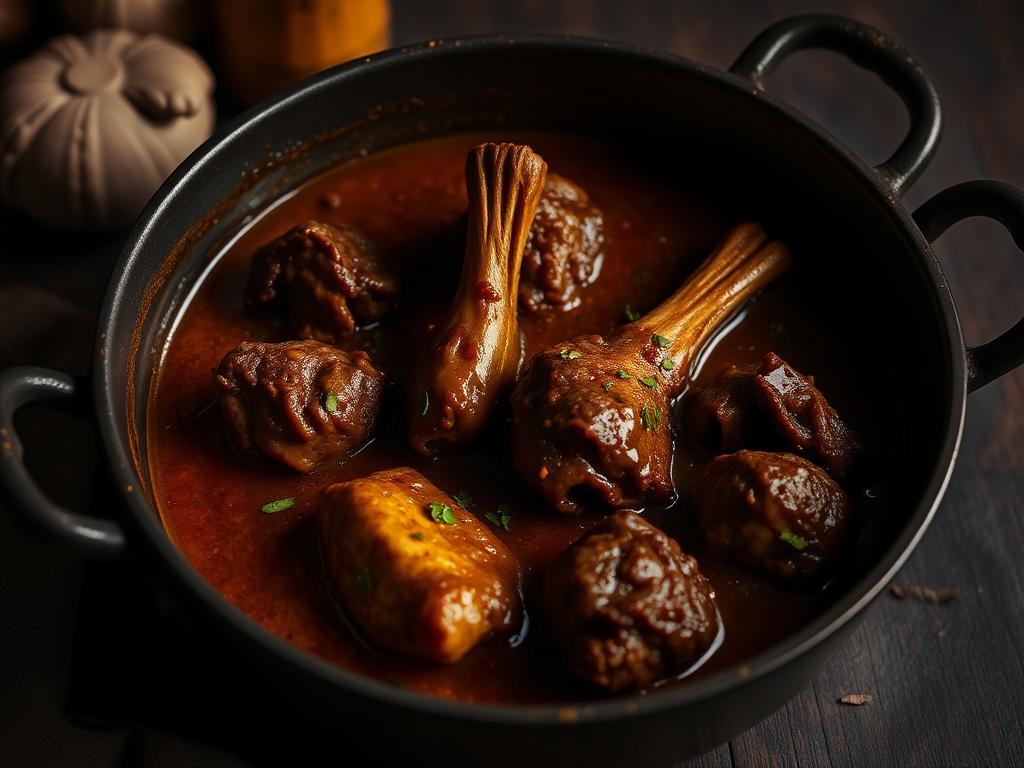
About this dish
Originating from the Mappila community of Northern Kerala, this white korma is a refined version of the Mughlai influence on Malabar cuisine. Unlike its fiery red counterparts, this dish uses green chilies for heat and a heavy base of cashew and coconut milk for luxury. It is a staple at weddings (Nikah) and festive Eid lunches, prized for its silky texture and fragrant spice profile.
Ingredients
The Meat & Marinade
- 500g Mutton (bone-in, cut into 1.5 inch cubes)
- 1/2 tsp Turmeric powder
- 1 tsp Salt
- 1 tbsp Ginger-garlic paste
The White Paste
- 15 whole Cashew nuts (soaked in warm water)
- 1/2 cup Grated fresh coconut
- 1 tsp Fennel seeds (Saunf)
- 2 tbsp Water
Aromatics & Sauté
- 3 tbsp Coconut oil
- 2 large Red onions (thinly sliced)
- 6 Green chilies (slit lengthwise)
- 1 sprig Curry leaves
- 1 inch Cinnamon stick
- 4 Green cardamoms
- 4 Cloves
- 1/2 cup Thick coconut milk
Method
- 1
Marinate and Pressure Cook
Rub the mutton with turmeric, salt, and ginger-garlic paste; let it sit for 15 minutes. Place the meat in a pressure cooker with 1/2 cup of water and cook on medium heat for 4-5 whistles until tender. Do not overcook; the meat should hold its shape but yield easily to a fork.
- 2
Prepare the Rich Paste
Drain the soaked cashews and place them in a blender with the grated coconut and fennel seeds. Grind into a very smooth, ivory-colored paste using a tablespoon of water if necessary. The texture must be velvety, as any grit will ruin the mouthfeel of the korma.
- 3
Temper the Whole Spices
Heat coconut oil in a heavy-bottomed kadai or pot over medium heat until it shimmers. Add the cinnamon, cardamom, and cloves, allowing them to sizzle and release their oils for about 30 seconds. If the spices turn dark brown, the heat is too high; they should just become aromatic.
- 4
Sauté the Aromatics
Add the sliced onions and curry leaves to the oil. Sauté on medium-low heat for 8-10 minutes until the onions are translucent and soft, but not browned. Maintaining the white color of the onions is crucial for the final aesthetic of the dish.
- 5
Incorporate the Chilies
Toss in the slit green chilies and stir for 1 minute until they soften. The heat of this dish comes entirely from the green chilies, so adjust the quantity now based on your preference. The oil should start smelling sharp and spicy.
- 6
Simmer the Mutton
Add the cooked mutton along with its cooking liquid (yakhni) into the pot with the onions. Bring to a gentle boil and let it simmer for 5 minutes so the meat absorbs the flavor of the sautéed aromatics. Taste the broth and adjust salt at this stage.
- 7
Add the Cashew-Coconut Paste
Lower the heat to minimum and stir in the prepared cashew and coconut paste. Cook for 3-4 minutes, stirring constantly to prevent the cashew from sticking to the bottom. The gravy will begin to thicken significantly and turn a creamy off-white.
- 8
Final Enrichment
Pour in the thick coconut milk and stir gently to combine. Do not let the gravy boil vigorously after adding the coconut milk, as it may curdle. Look for small bubbles appearing at the edges, then immediately move to the next step.
- 9
The Rest and Finish
Turn off the heat and cover the pot with a tight-fitting lid. Let the korma rest for 10 minutes before serving. This allows the oils to rise to the top (rogon) and the flavors to marry into a cohesive, rich sauce.
Notes & variations
- Avoid browning the onions; the goal is a white/cream colored gravy.
- Use fresh coconut for the paste; desiccated coconut will make the dish too oily and gritty.
- Mutton can be replaced with chicken, but reduce pressure cooking time to 2 whistles.
- If the gravy is too thick, thin it with a little warm water or thin coconut milk.
Serve with
Serve hot with Malabar Parotta or Pathiri (rice rotis).
Cook's note
Soaking cashews in warm milk instead of water makes the gravy even creamier.