Malligai Poo Idli
Ultra-soft jasmine-like idlis famous in Madurai.
About this dish
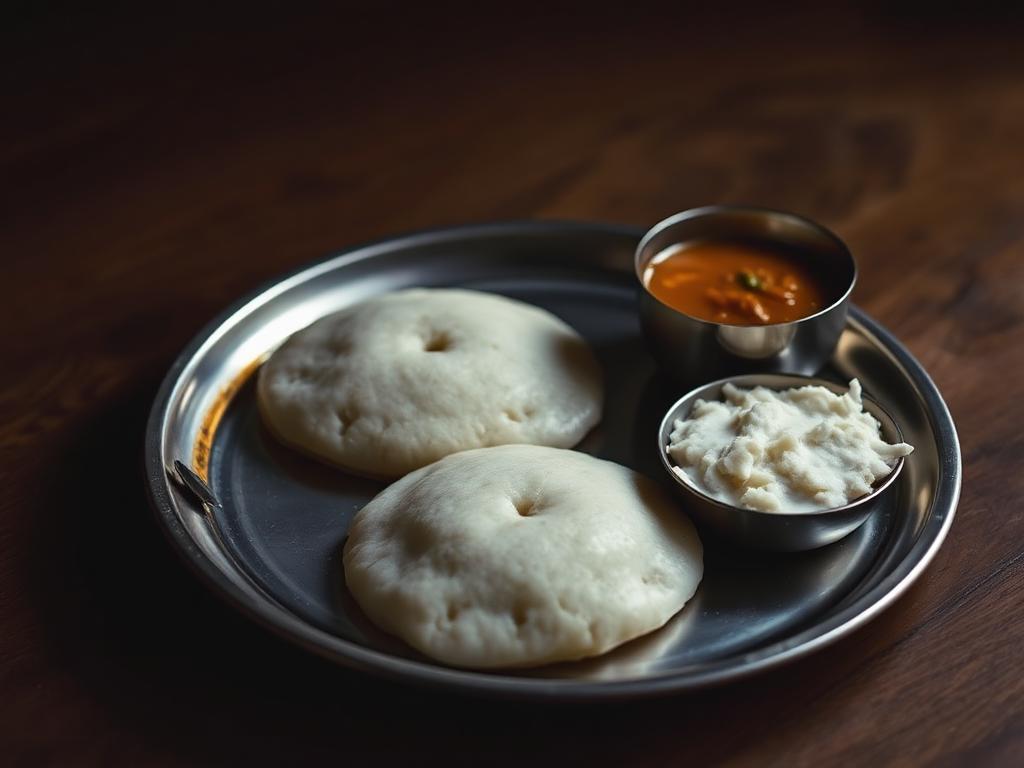
Originating from the temple city of Madurai, these idlis are named after the 'Malligai' (Jasmine) flower due to their brilliant white color and ethereal softness. Unlike standard idlis, these use a specific ratio of parboiled rice and sago to achieve a texture that collapses at the touch. They are a breakfast staple, traditionally steamed in thin cotton cloths rather than greased molds to ensure maximum aeration.
Ingredients
- 400g (2 cups) Idli Rice (parboiled)
- 100g (1/2 cup) Whole Urad Dal (husked black gram)
- 50g (1/4 cup) Sabudana / Sago (small variety)
- 1 tsp Fenugreek seeds
- 1.5 tsp Sea salt
- Water for grinding and soaking
Method
- 1
Soaking the grains
Wash the idli rice and sago together in cold water until the water runs clear, then soak for at least 5 hours. In a separate bowl, soak the urad dal and fenugreek seeds for 3 hours; using cold water helps prevent the dal from heating up during grinding, which is crucial for fluffiness.
- 2
Grinding the Urad Dal
Drain the dal and grind it in a wet grinder, adding ice-cold water in small splashes. Continue for 20-25 minutes until the batter is voluminous, buttery smooth, and can float in a cup of water without sinking.
- 3
Grinding the Rice and Sago
Remove the dal batter and add the soaked rice and sago to the grinder. Grind to a slightly coarse texture (like fine semolina) rather than a smooth paste, adding water sparingly to maintain a thick consistency.
- 4
Fermentation Process
Mix both batters with sea salt using your clean hands; the natural bacteria on your skin aids fermentation. Place in a large pot with room for the batter to double, and leave in a warm, dark place for 8-12 hours until it smells slightly tangy and looks bubbly.
- 5
Preparing the Steamer
Fill an idli steamer with 2 inches of water and bring to a rolling boil. If using the Madurai method, dampen a thin cotton cloth (veshti cloth) and drape it over the idli plates instead of oiling them.
- 6
Pouring the Batter
Gently fold the fermented batter once (do not over-mix or you will lose the air). Ladle the batter into the cloth-lined depressions, leaving a little room for the idlis to rise.
- 7
Steaming Technique
Cover the steamer and cook on high heat for 10-12 minutes. You will know they are done when the steam rising from the pot smells like cooked rice and a skewer inserted comes out clean.
- 8
The Rest and Release
Remove the plates and let them sit for 2 minutes. Flip the plate over onto a tray, sprinkle a little cold water on the back of the cloth, and gently peel the cloth away to reveal the snowy white idlis.
Notes & variations
- Use aged Idli rice for the best structure.
- Ensure the sago is completely soft before grinding to avoid lumps.
- In cold climates, ferment the batter inside an oven with the light turned on.
- Leftover batter can be stored for 2 days but is best on day one for this specific recipe.
Serve with
Serve with spicy Kara Chutney and Tiffin Sambar.
Cook's note
Never over-grind the rice; the slight grit is what allows the steam to pass through, creating the airy texture.