Mangalorean Pork Bafat
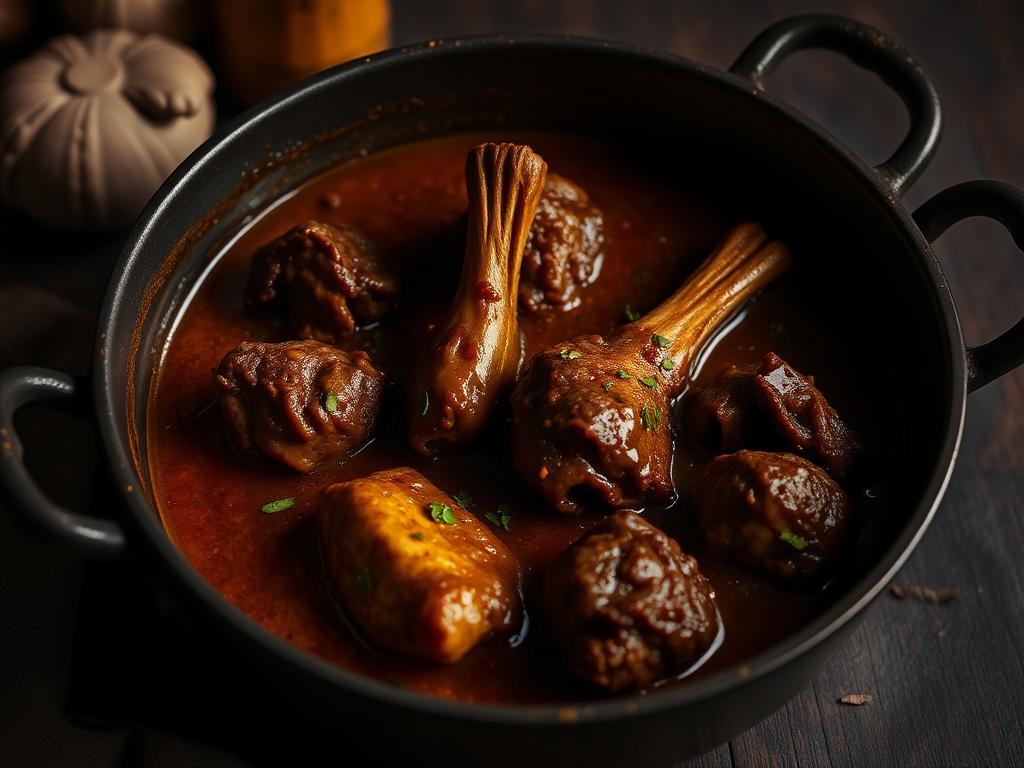
Pork Bafat is the crown jewel of the Mangalorean Catholic community, typically served at weddings and festive gatherings.
About this dish
Pork Bafat is the crown jewel of the Mangalorean Catholic community, typically served at weddings and festive gatherings. The dish relies on the 'Bafat Powder', a specific blend of warm spices and dried red chilies that creates a deep, mahogany-colored gravy. It is traditionally slow-cooked in earthenware pots, allowing the fat from the pork to render and preserve the meat.
Ingredients
The Meat
- 1 kg Pork (shoulder or belly), cut into 1-inch cubes
- 2 tsp Salt
- 1 tsp Turmeric powder
The Aromatics
- 4 Large Onions, sliced thick
- 2-inch Ginger, julienned
- 10-12 Cloves Garlic, crushed slightly
- 4-6 Green chilies, slit lengthwise
- 2 Sprigs Curry leaves
The Spice and Tang
- 3-4 tbsp Bafat Powder (homemade or store-bought)
- 1/2 cup Tamarind pulp (thick)
- 1/2 tsp Cinnamon powder
- 4-5 Cloves
- 1 tbsp Coconut vinegar (optional, for authenticity)
Method
- 1
Marinating the pork
In a large bowl, toss the pork cubes with salt and turmeric. Ensure you have a good mix of fat and lean meat, as the fat is essential for the authentic texture and flavor of a Bafat. Let it sit for 20 minutes while you prep the aromatics.
- 2
Layering the pot
In a heavy-bottomed pressure cooker or a large clay pot, add the pork, sliced onions, ginger, garlic, and green chilies. Do not add any oil at this stage; the pork will release its own fat during the rendering process.
- 3
Initial dry cook
Heat the pot on medium-high for 5-7 minutes, stirring occasionally. You will see the meat changing color from pink to greyish-white and water starting to release from the onions and pork. This 'sweating' phase builds the base flavor.
- 4
Adding Bafat spices
Add the Bafat powder and the whole spices (cloves, cinnamon). Stir well for 3 minutes to coat every piece of meat. The spice mix should start smelling toasted and the color should turn a deep, dark red.
- 5
Pressure cooking or slow simmering
Add 1 cup of water (don't submerge the meat, just enough to create steam). If using a pressure cooker, cook for 3-4 whistles. If using a pot, cover and simmer on low heat for 45-50 minutes until the meat is fork-tender.
- 6
Adding the souring agent
Once the meat is cooked and the pressure has released, open the lid. Add the thick tamarind pulp and vinegar. The acid cuts through the richness of the pork fat and balances the heat of the chilies.
- 7
Reducing the gravy
Simmer the curry uncovered on medium-high heat for 10-15 minutes. The gravy should thicken and become glossy as the oil separates and floats to the top. This 'oil separation' is the sign of a perfectly cooked Bafat.
- 8
Final seasoning check
Taste for salt and acidity. The Bafat should be spicy, slightly tangy, and very savory. Adjust the tamarind if the heat is too dominant. Add the curry leaves in the last 2 minutes for a fresh herbal aroma.
- 9
Resting the dish
Turn off the heat and let the dish rest for at least 30 minutes before serving. Like most stews, Pork Bafat tastes significantly better the next day as the spices penetrate deep into the meat fibers.
Notes & variations
- If you don't have Bafat powder, make a paste of dried red chilies, coriander seeds, cumin, peppercorns, and mustard seeds.
- Traditionalists insist on using 'Dukra Maas' (pork with skin) for the gelatinous texture it adds to the gravy.
- Coconut vinegar adds a specific Goan/Mangalorean tang, but apple cider vinegar is a functional substitute.
- Store in the refrigerator for up to 5 days; the flavor intensifies over time.
Serve with
Serve with Sannas (steamed rice cakes) or Neer Dosa to soak up the rich, spicy gravy.
Cook's note
Never trim all the fat off the pork; the fat acts as a cooking medium and carries the fat-soluble flavors of the Bafat spice.