Mathi Mulakittathu
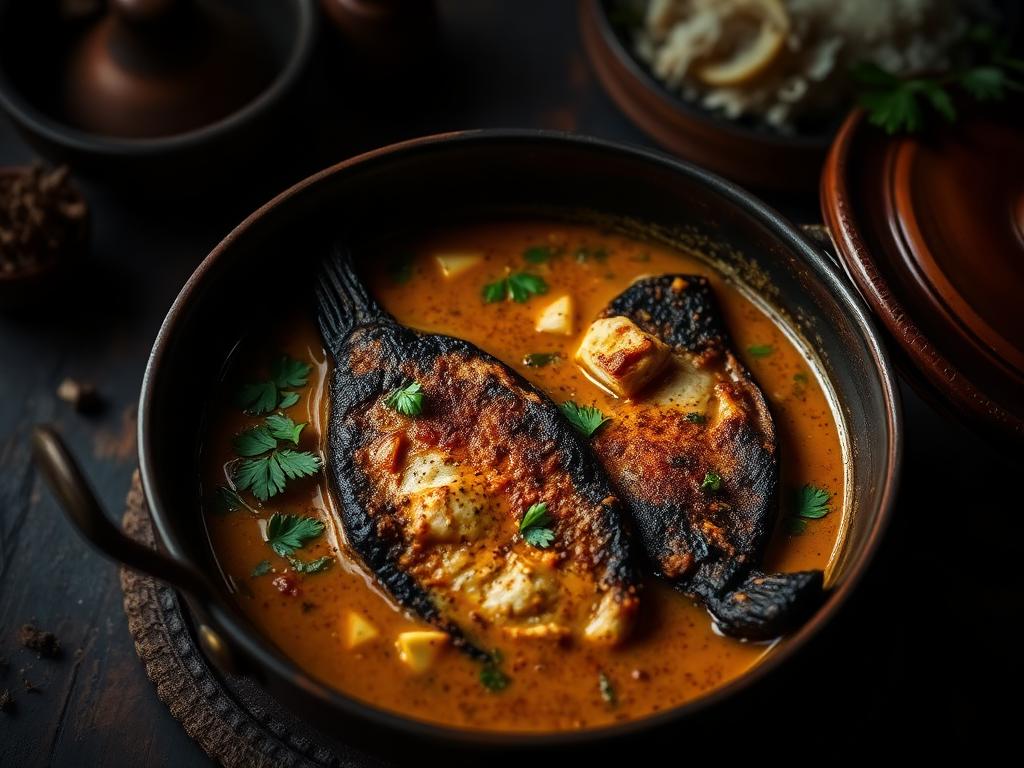
Fiery sardine curry made with red chili and tamarind, no coconut.
About this dish
This quintessential coastal Kerala sardine curry is a staple in the Toddy shops and Christian households of Alappuzha. Distinct for its absence of coconut, it relies on the sharp acidity of Kudampuli (Malabar tamarind) and the heat of Kashmiri chilies to balance the oily richness of the sardines. It is traditionally cooked in a 'Manchatti' (clay pot), which enhances the depth of the fiery red gravy over time.
Ingredients
Primary Protein
- 500g Fresh Sardines (Mathi), cleaned and scaled
- 1/2 tsp Turmeric powder
- 1/2 tsp Salt
The Souring Agent
- 3-4 pieces Kudampuli (Malabar Tamarind)
- 1/2 cup Warm water for soaking
The Masala Base
- 3 tbsp Coconut oil
- 1/2 tsp Mustard seeds
- 1/4 tsp Fenugreek seeds (Uluva)
- 10-12 Small onions (Shallots), thinly sliced
- 1 tbsp Ginger, finely chopped
- 1 tbsp Garlic, finely chopped
- 3 Green chilies, slit lengthwise
- 2 sprigs Curry leaves
Spice Paste
- 2 tbsp Kashmiri chili powder
- 1/2 tsp Spicy red chili powder
- 1/4 tsp Turmeric powder
- 1 tsp Coriander powder
Method
- 1
Prepare the Tamarind
Wash the Kudampuli pieces thoroughly to remove any grit. Soak them in half a cup of warm water for at least 15 minutes until they soften and the water turns dark brown. Do not discard this soaking water as it contains the essential sourness.
- 2
Temper the Spices
Heat a clay pot (Manchatti) over medium heat and add 2 tablespoons of coconut oil. Once shimmering, add mustard seeds and let them pop, then add fenugreek seeds, being careful not to burn them as they turn bitter instantly.
- 3
Sauté Aromatics
Add the sliced shallots, ginger, garlic, green chilies, and one sprig of curry leaves. Sauté on medium heat for 5-7 minutes until the shallots turn a translucent light golden brown and the raw smell of ginger-garlic disappears.
- 4
Create the Chili Base
Mix the chili powders, turmeric, and coriander with a tablespoon of water to form a thick paste. Lower the heat to minimum and add this paste to the pot, stirring constantly for 2 minutes until the oil begins to separate from the masala.
- 5
Build the Gravy
Pour in the soaked Kudampuli along with its soaking water and an additional 1.5 cups of water. Add salt to taste and bring the liquid to a rolling boil over medium-high heat.
- 6
Simmer the Sardines
Gently slide the cleaned sardines into the boiling gravy. Swirl the pot gently instead of using a spoon to avoid breaking the delicate fish; ensure the fish is mostly submerged.
- 7
Slow Cook
Cover the pot and simmer on low-medium heat for about 10-12 minutes. You will know it is ready when the gravy thickens slightly and the sardines are opaque and firm to the touch.
- 8
Final Infusion
Turn off the heat and drizzle the remaining 1 tablespoon of fresh coconut oil over the curry. Throw in the remaining sprig of fresh curry leaves and cover immediately to trap the aroma.
- 9
Resting Period
Crucially, let the curry sit for at least 2 hours before serving. The flavors of the tamarind and chili penetrate the fish more deeply as it cools, making it taste even better the next day.
Notes & variations
- If Kudampuli is unavailable, you can use regular tamarind, though the smoky flavor will be missing.
- Always use coconut oil for the authentic Kerala flavor profile.
- Sardines can be replaced with Mackerel (Ayala) using the same recipe.
- Store in the same clay pot at room temperature for up to 24 hours in tropical climates.
Serve with
Steamed Matta (Red) rice or boiled cassava (Kappa Puzhukku).
Cook's note
Never stir this curry with a ladle after adding the fish; always shake the pot in a circular motion to mix.