Methi Missi Paratha
Nutty gram flour and wheat flatbread loaded with fresh fenugreek leaves.
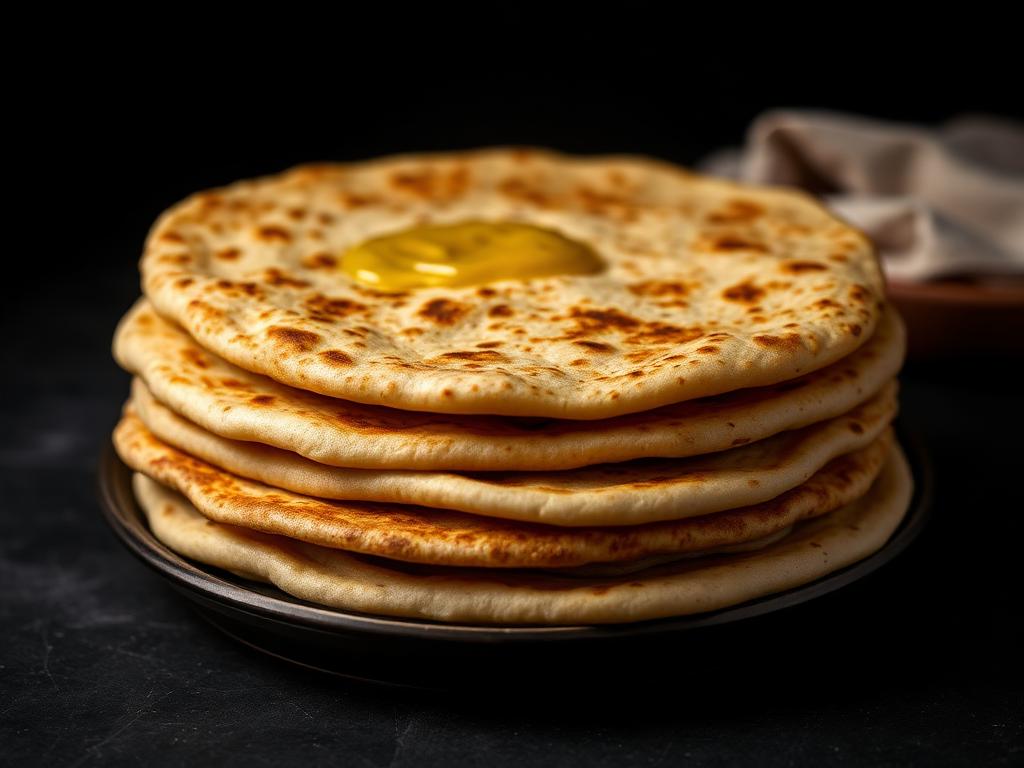
About this dish
While 'Thepla' is technically Gujarati, the Punjabi 'Methi Missi Paratha' is its sturdier, heartier cousin. Made with a significant portion of Besan (gram flour) and spiked with carom seeds, this flatbread was traditionally baked on the walls of a clay tandoor. It is the quintessential winter breakfast in Punjab, utilizing the abundance of fresh, bitter fenugreek leaves that hit the markets during the cold months.
Ingredients
The Flour Mix
- 200g (1.5 cups) Whole wheat flour (Atta)
- 100g (3/4 cup) Gram flour (Besan)
- 2 cups Fresh Methi (Fenugreek) leaves, finely chopped
- 1/2 tsp Ajwain (Carom seeds)
Seasoning and Binding
- 2 Green chilies, minced
- 1 tsp Red chili powder
- 1/2 tsp Turmeric powder
- 1 tsp Salt
- 2 tbsp Ghee or Oil (for the dough)
- 1/2 cup Warm water (approx), for kneading
Method
- 1
Prep the Greens
Pluck only the leaves of the fenugreek, discarding the bitter, woody stems. Wash them thoroughly in three changes of water to remove grit, then chop them extremely fine. Sprinkle a little salt over the chopped leaves and let them sit for 5 minutes; this draws out excess moisture and reduces bitterness.
- 2
Mixing Dry Ingredients
In a large 'Parat' (wide kneading bowl), whisk together the wheat flour, besan, salt, turmeric, red chili powder, and ajwain. Rub the carom seeds between your palms before adding to release their essential oils.
- 3
Incorporate the Greens
Add the chopped methi and the 2 tablespoons of ghee to the flour. Rub the flour between your fingers until it resembles coarse breadcrumbs. The methi will release its own juice, so do not add water yet.
- 4
Knead the Dough
Slowly drizzle warm water and knead into a firm, smooth dough. The dough should be slightly tighter than regular roti dough because the greens and salt will soften it over time. Knead for 5 minutes until it is no longer sticky.
- 5
Resting Period
Cover the dough with a damp cloth and let it rest for 15–20 minutes. This allows the gluten to relax and the besan to hydrate, making the parathas easier to roll without tearing.
- 6
Divide and Shape
Divide the dough into equal lemon-sized balls (pedas). Roll them between your palms until smooth and crack-free. Dust a ball with dry flour and flatten it on your rolling board.
- 7
Rolling the Paratha
Roll into a 6 or 7-inch circle using even pressure. Because of the besan and chopped leaves, the edges might be slightly jagged; this is a hallmark of an authentic Missi Paratha. Do not roll them too thin like a tortilla.
- 8
The First Sear
Place the paratha on a hot iron tawa (griddle) over medium-high heat. Cook for 30 seconds until tiny bubbles appear on the surface, then flip it over.
- 9
Apply Fat
Spread half a teaspoon of ghee or oil on the cooked side. Flip again and apply ghee to the other side. Use a spatula to press down on the edges, ensuring they cook through and become crisp.
- 10
The Golden Finish
Continue flipping and pressing until both sides have beautiful reddish-brown spots and the edges feel crunchy. The aroma of toasted besan and fried methi should be unmistakable.
Notes & variations
- If fresh methi isn't available, use 3 tbsp of dried Kasuri Methi soaked in water.
- These parathas stay soft for 24 hours, making them ideal for travel.
- For an extra kick, add a teaspoon of amchoor (dried mango powder) to the dough.
- To make it 'khasta' (extra crispy), increase the ghee in the dough.
Serve with
White butter (Loni), a bowl of thick curd, and spicy mango or garlic pickle.
Cook's note
Knead the dough with warm water to keep the besan-heavy parathas soft even after they cool.