Minapa dosa Recipe
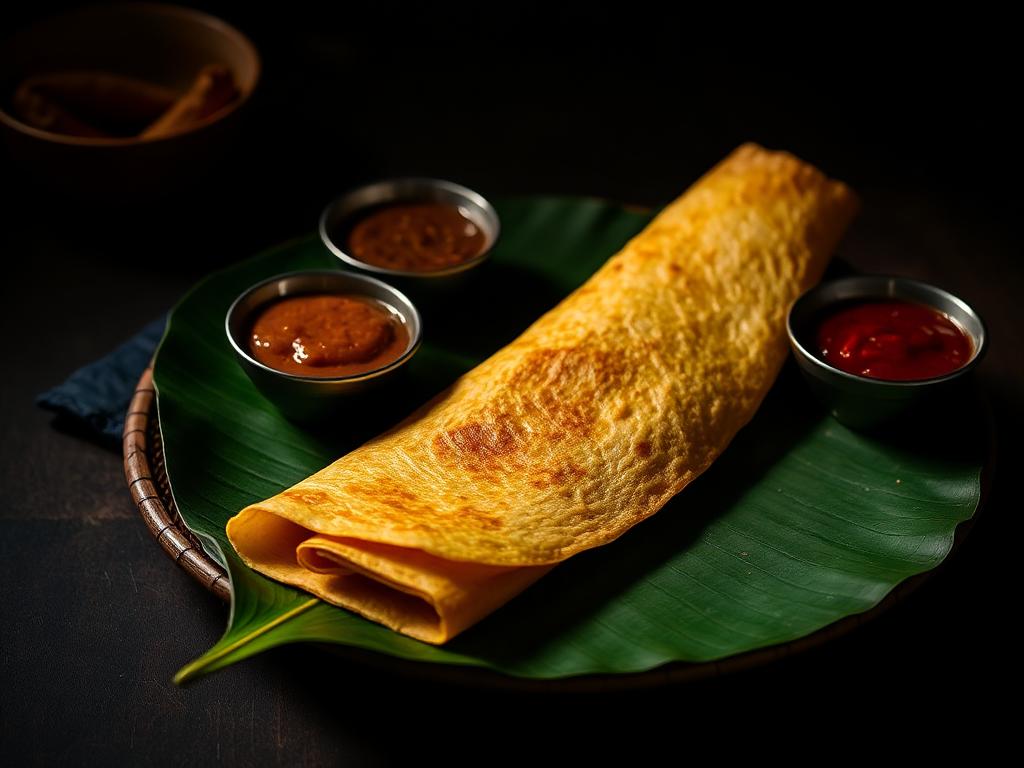
Fermented rice-and-urad dosas with golden edges and a gently tangy centre.
About this dish
Minapa refers to urad dal, a central ingredient in many Andhra breakfast batters. Rice-and-urad dosas are everyday tiffin across the state, from Guntur and Nellore to the Godavari districts, with proportions varying by household. This fermented version is suited to a family breakfast and lets the accompanying chutney or karam provide the heat.
Ingredients
Batter
- 300 g raw rice (1½ cups)
- 100 g skinned whole urad dal (½ cup)
- 2 g fenugreek seeds (½ teaspoon)
- 6 g fine salt (1 teaspoon)
- 480 ml water for grinding and thinning (2 cups)
- 1 litre water for soaking rice (about 4 cups), discarded
- 750 ml water for soaking urad dal and fenugreek (about 3 cups), discarded
Cooking
- 45 ml groundnut oil (3 tablespoons)
Method
- 1
Soak separately
Wash the rice and urad dal separately in several changes of water. Cover the rice with its soaking water and the dal and fenugreek with theirs, then soak without heat for 6 hours. Both should soften, while the dal becomes noticeably swollen.
- 2
Grind the dal
Drain the dal and fenugreek, then grind with 180 ml of the measured grinding water. Add the water gradually over 3–5 minutes, stopping to scrape the jar and keep the mixture cool. The finished paste should feel smooth and look airy rather than dense.
- 3
Grind the rice
Drain the rice and grind it with 180 ml of the measured water for 3–4 minutes. Aim for a smooth batter with only the faintest fine-grained texture when rubbed between your fingers. Avoid prolonged grinding that makes the batter hot, using brief pauses if necessary.
- 4
Combine and ferment
Mix the rice and dal batters thoroughly in a large bowl, leaving room for the batter to expand. Cover loosely and ferment without direct heat for about 10 hours in a warm place around 26–30°C. It should rise noticeably, develop small bubbles and smell pleasantly tangy rather than sharply sour.
- 5
Season and thin
Fold in the salt gently and add up to the remaining 120 ml water in small portions. Spend about 2 minutes adjusting the batter until it pours in a continuous ribbon and spreads easily. Keep it off the heat and avoid vigorous beating, which knocks out all the fermentation bubbles.
- 6
Prepare the tawa
Heat a seasoned cast-iron tawa over medium heat for 4 minutes. Wipe with a few drops of the measured oil, leaving almost no visible film. Water sprinkled on the surface should hiss briskly; if it vanishes violently, lower the heat before spreading.
- 7
Spread a dosa
Reduce the heat to medium-low and pour about 75 ml batter into the centre. Spread outward immediately with the rounded base of a ladle, making a thin circle about 20–23 cm wide. Complete the spreading in 15–20 seconds before the surface sets.
- 8
Cook until golden
Drizzle about ¾ teaspoon oil around the rim and across thicker areas, then raise the heat to medium. Cook for 2–3 minutes until the top loses its wet shine and the underside becomes golden. Flip for 20–30 seconds only if the dosa is thick or has damp patches; a thin dosa can finish on one side.
- 9
Serve in batches
Fold or roll the dosa and lift it from the tawa while the edge is crisp. Repeat for about 12 dosas, lowering the heat briefly before spreading each one and returning to medium for browning. Serve each batch immediately, since even a 5-minute covered hold softens the crust.
Notes & variations
- Cup measures use a 240 ml cup; the listed fermentation time assumes a warm kitchen.
- Minapa dosa is a household name with varying interpretations; this entry uses a fermented rice-and-urad batter.
- In cooler weather fermentation may take 12–16 hours; judge by rise, bubbles and a clean sour aroma.
- Refrigerate fermented batter promptly if not cooking immediately, and use within 2 days.
Serve with
Coconut chutney, allam pachadi, sambar or Andhra karam podi mixed with oil.
Cook's note
An overheated or heavily oiled tawa prevents an even spread; wipe it nearly dry and moderate the heat.