Moong Dal Halwa
Rich, ghee-laden dessert made from ground yellow moong lentils.
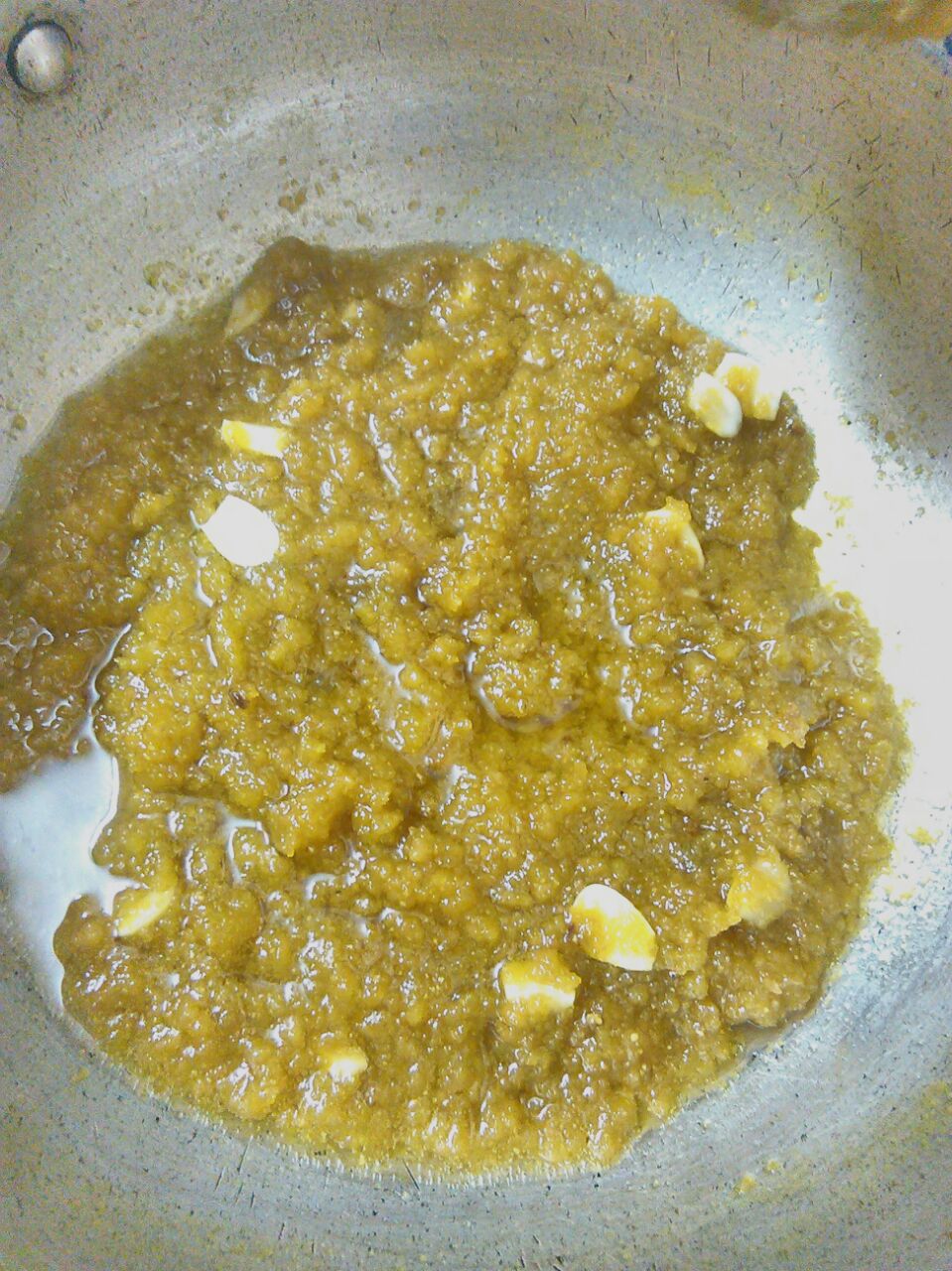
About this dish
A labor-intensive masterpiece of Punjabi celebrations, Moong Dal Halwa is traditionally prepared during winters and at weddings to provide warmth and richness. The secret lies in the 'bhuna' process—the slow roasting of the lentil paste until it releases its raw smell and transforms into a nutty, golden-brown delicacy. It is distinctive for its heavy use of desi ghee and its ability to store well for weeks, making it a beloved festive staple.
Ingredients
The Lentil Base
- 200g (1 cup) Yellow Moong Dal, soaked for 4 hours and drained
- 200g (1 cup) Desi Ghee, melted
- 1 tbsp Semolina (Suji) for texture
- 1 tbsp Gram Flour (Besan) to prevent sticking
Sugar Syrup & Aromatics
- 200g (1 cup) Granulated Sugar
- 250ml (1 cup) Whole Milk, warm
- 250ml (1 cup) Water
- 1/2 tsp Saffron strands, soaked in 1 tbsp warm milk
- 1 tsp Green Cardamom powder
- 50g Slivered Almonds and Pistachios
Method
- 1
Pulse the Lentils
Grind the soaked and drained moong dal into a slightly coarse paste using as little water as possible (1-2 tbsp max). The texture should be like fine semolina, not a smooth liquid; if it is too wet, the roasting time will double. Ensure the dal is drained thoroughly before grinding to maintain control over the moisture.
- 2
Prepare the Syrup
In a separate saucepan, combine the sugar, water, and milk over medium heat. Bring to a gentle boil until the sugar dissolves completely, then stir in the saffron milk and cardamom powder. Keep this syrup warm on the lowest heat setting while you roast the lentils, as adding cold syrup to hot dal causes clumping.
- 3
Heat the Ghee
In a heavy-bottomed kadai or non-stick pan, heat the ghee over medium-low flame. Once the ghee is shimmering but not smoking, add the suji and besan. Stir for 1 minute until they start to bubble and release a faint nutty aroma; this prevents the moong dal from forming large, stubborn lumps.
- 4
Initial Roasting
Add the ground moong dal paste to the ghee. Initially, the paste will absorb all the ghee and become a thick, heavy mass that is difficult to stir. Use a sturdy spatula to continuously break up the lumps and scrape the bottom of the pan to prevent scorching.
- 5
The Bhuna Stage
Continue roasting on medium-low heat for 20-25 minutes. The paste will transition from a pale yellow to a deep golden brown, and the ghee will begin to separate at the edges. You will know it is ready when the dal feels light and 'sandy' rather than sticky, and a fragrant toasted aroma fills the room.
- 6
Add the Liquid
Carefully pour the warm sugar-milk syrup into the roasted dal while stirring constantly. Be cautious as the mixture will hiss and steam vigorously. Keep the flame low to prevent the hot liquid from splashing onto your hands during this integration phase.
- 7
Absorb and Thicken
Cook the mixture on medium heat, stirring frequently, until the dal absorbs all the liquid. The halwa will start to leave the sides of the pan and aggregate into a glossy, unified mass. This usually takes about 5-8 minutes after the liquid is added.
- 8
Final Garnish
Fold in half of the slivered nuts and continue to cook for another 2 minutes. The halwa should have a glistening sheen from the ghee. If the halwa looks dry, you can add an extra tablespoon of ghee at this stage to enhance the mouthfeel.
- 9
Rest and Serve
Turn off the heat and let the halwa sit covered for 5 minutes. This allows the grains to swell slightly and the flavors to settle. Transfer to a serving bowl and garnish with the remaining nuts before serving hot.
Notes & variations
- Always use a heavy-bottomed pan or iron kadai to ensure even heat distribution and prevent burning.
- You can store this halwa in the refrigerator for up to 2 weeks; simply reheat with a splash of milk.
- For a richer version, add 50g of crumbled khoya (dried milk solids) along with the sugar syrup.
- Do not rush the roasting; high heat will brown the outside but leave the dal tasting raw inside.
Serve with
Serve piping hot on its own or alongside a savory Punjabi meal to balance the spice.
Cook's note
If the halwa forms lumps after adding syrup, use a whisker or a potato masher to smoothen it out immediately.