Dilli Ki Tegh Wali Biryani
The distinct orange-tinged biryani found in the lanes of Old Delhi.
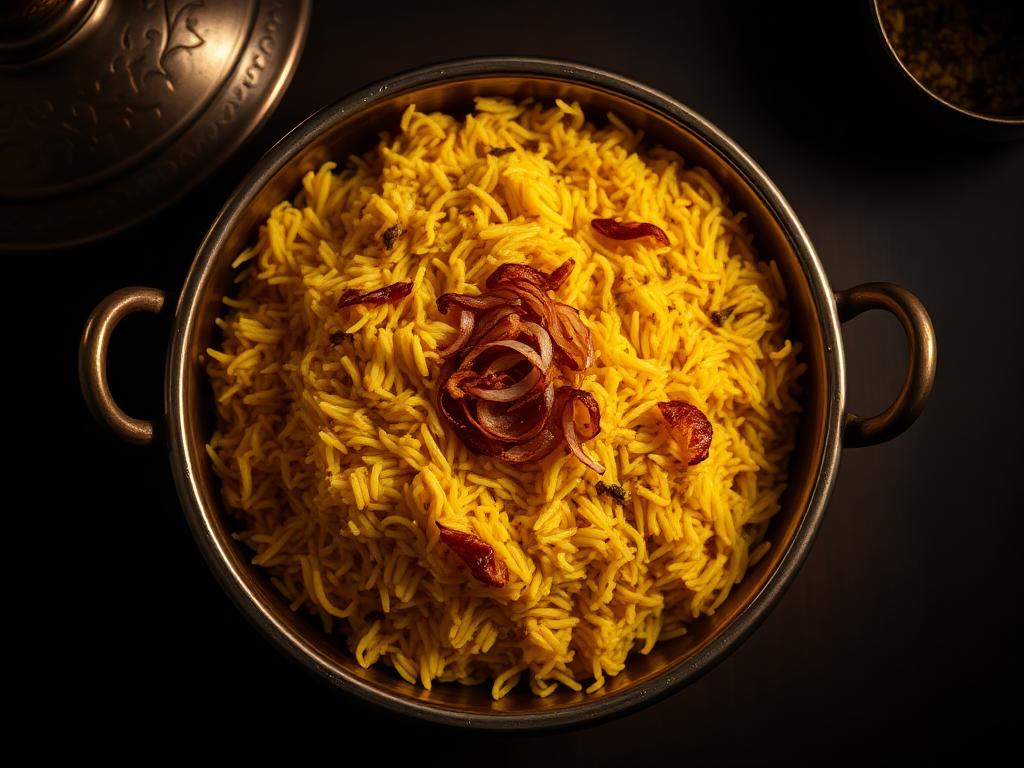
About this dish
Known as 'Tegh Wali Biryani', this is the soul of Old Delhi (Dilli 6). Unlike the subtle Lucknowi version or the spicy Hyderabadi, this biryani is characterized by its bright orange hue, the use of 'Pila Mirch' (yellow chili), and a distinct tang from achaar (pickle). It is traditionally cooked in massive copper cauldrons (teghs) over wood fires.
Ingredients
The Mutton (Yakhni)
- 1kg Mutton (goat meat), curry cut with bones
- 2 tbsp Ginger-garlic paste
- 200g Yogurt, whisked
- 1 tsp Yellow chili powder (Pila Mirch)
- Salt to taste
- 150ml Ghee
The Rice
- 750g Long-grain Sela Basmati rice, soaked for 2 hours
- 4 Green cardamoms
- 2 Bay leaves
- 1 tbsp Royal Cumin (Shahi Jeera)
The Dilli-6 Specials
- 2 tbsp Red chili pickle (Hari Mirch ka Achaar)
- 1 tsp Kewra water
- 1/2 tsp Orange food color mixed in milk
- 1 tsp Mace and Cardamom powder (Javitri-Elaichi)
Method
- 1
Yakhni Preparation
In a heavy copper pot or pressure cooker, combine mutton, ginger-garlic paste, salt, and enough water to cover. Cook until the meat is 80% tender. If using a pressure cooker, this takes about 4-5 whistles.
- 2
Sauté the Meat
Drain the meat but reserve the stock. In the main cooking vessel (Tegh), heat ghee and fry the partially cooked mutton for 5 minutes until the edges are slightly seared and fragrant.
- 3
Add Spices and Yogurt
Lower the heat and add the whisked yogurt and yellow chili powder. The yellow chili provides a sharp heat without changing the color of the meat too much. Stir constantly to prevent yogurt from curdling.
- 4
The Achaar Secret
Mix in the green/red chili pickle. This is the defining element of Old Delhi Biryani, providing a fermented tang and heat that cuts through the richness of the mutton and ghee.
- 5
Parboil the Rice
In a separate large pot, boil water with bay leaves, cardamom, and salt. Add the soaked Sela rice and cook until it is 70% done (the grain should have a firm bite). Sela rice is used here as it withstands long steaming better than raw Basmati.
- 6
Layering
Drain the rice and spread it evenly over the mutton layer. Do not mix the two. The mutton should be at the bottom with a small amount of its own gravy (yakhni) to provide steam.
- 7
Infuse Aromatics
Sprinkle the mace-cardamom powder and kewra water over the rice. The kewra provides that 'Dilli 6' street aroma that can be smelled from blocks away.
- 8
Coloring
Drizzle the orange food color mixed with milk in specific spots or lines across the rice. This creates the characteristic white-and-orange contrast when served.
- 9
Seal for Dum
Seal the pot with a heavy lid or dough (atta) to trap all steam. Place a heavy weight on top. Cook on high for 5 minutes until steam builds up, then reduce to a very low flame.
- 10
Slow Steam
Let the biryani cook on 'Dum' for 25-30 minutes. The moisture from the mutton yakhni at the bottom will rise through the rice, cooking it to perfection while absorbing the meat's juices.
- 11
The Reveal
Turn off the heat and let it rest for 15 minutes. When opening, do not stir vigorously. Use a flat saucer to scoop the biryani from one side, ensuring each plate gets a mix of white rice, orange rice, and succulent mutton.
- 12
Check Tenderness
Ensure the mutton is now 'falling-off-the-bone' tender. The Sela rice should be long, separate, and fully cooked but never mushy.
Notes & variations
- Sela Basmati (parboiled) is non-negotiable for this style to achieve the right texture.
- Yellow chili powder is available in specialty spice shops and is hotter than red chili powder.
- The use of 'Achaar' is what differentiates this from a 'Pulao'.
- Traditional cooks use 'Khoya' (milk solids) in the yakhni for extra richness, though it's optional.
Serve with
Serve with a simple red onion laccha salad and a thin spicy curd raita.
Cook's note
To get the authentic 'Dilli' look, use a high-quality food-grade orange color; it's the visual signature of the dish.