Mutton Dal Pacha
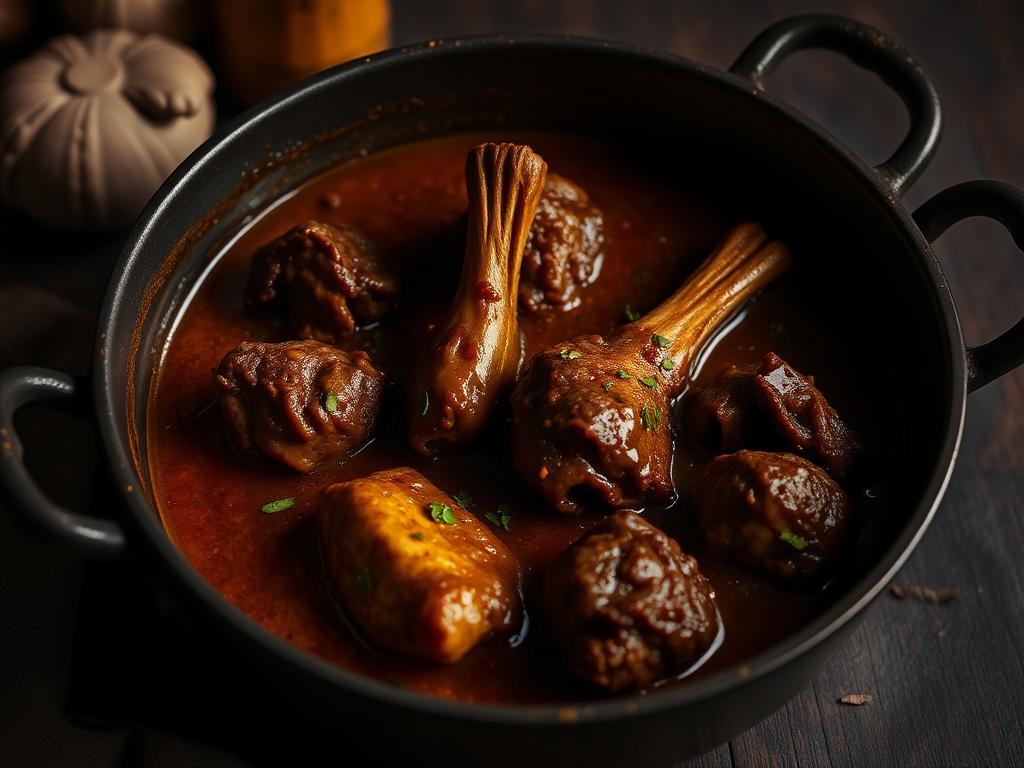
A rustic Telangana combination of mutton and green gram (Moong Dal).
About this dish
A soul-warming staple from the rural kitchens of Telangana, Mutton Dal Pacha is a unique marriage of protein-rich green gram and succulent goat meat. Unlike the creamy dals of the North, this dish focuses on a coarse texture and the earthy aroma of roasted moong dal. It is traditionally prepared for lunch in farming households, offering a sustained release of energy through its fiber and protein content.
Ingredients
The Base
- 500g Mutton (goat), bone-in, cut into 1-inch pieces
- 150g (3/4 cup) Yellow Moong Dal (split green gram)
- 2 medium Onions, finely sliced
- 2 medium Tomatoes, chopped
- 1 tbsp Ginger-Garlic paste
- 1/2 tsp Turmeric powder
- 2 tsp Red chili powder (Guntur variety)
- 1 tsp Salt, or to taste
- 3 cups Water
The Tempering (Tadka)
- 3 tbsp Peanut oil
- 1 tsp Cumin seeds
- 2 Dry red chilies, broken
- 2 sprigs Curry leaves
- 4 cloves Garlic, crushed with skin
- 1/2 tsp Garam masala powder
Method
- 1
Roast the Lentils
Heat a heavy-bottomed pan over medium heat and add the moong dal. Dry roast the dal, stirring constantly for 4-5 minutes until it turns a pale golden brown and emits a nutty aroma. Immediately transfer to a bowl and wash under cold water twice to stop the cooking process.
- 2
Sauté Aromatics
In a pressure cooker, heat 1 tablespoon of oil over medium-high heat. Add the sliced onions and sauté for 6-8 minutes until they turn translucent and slightly golden at the edges. Stir in the ginger-garlic paste and sauté for another minute until the raw smell disappears.
- 3
Sear the Mutton
Add the mutton pieces to the cooker. Increase heat to high and sear the meat for 5 minutes, allowing it to release its juices and brown slightly. This 'bhuna' process is crucial for locking in the flavor of the meat.
- 4
Add Spices and Tomatoes
Lower the heat to medium and add turmeric, red chili powder, and chopped tomatoes. Cook for 4 minutes, mashing the tomatoes with the back of your spoon until they soften and the oil begins to separate from the masala.
- 5
Combine Dal and Mutton
Add the washed, roasted moong dal to the mutton mixture. Stir well to coat the lentils with the spices. Add 3 cups of water and salt, ensuring the water level is about an inch above the ingredients.
- 6
Pressure Cook
Seal the pressure cooker lid. Cook on high for 2 whistles, then reduce heat to low and simmer for 12-15 minutes (about 4-5 more whistles) until the mutton is tender and the dal is soft but not completely mushy.
- 7
Natural Release
Turn off the heat and allow the pressure to release naturally for 10 minutes. Open the lid and check the consistency; if it is too watery, simmer uncovered for 3-5 minutes. The dal should be thick and coat the meat.
- 8
Prepare the Tadka
In a small frying pan, heat the remaining oil. Add cumin seeds and let them splutter. Add the crushed garlic and sauté until brown, then toss in the dry red chilies and curry leaves, letting them crackle for 10 seconds.
- 9
Final Seasoning
Pour the hot tempering over the cooked mutton and dal. Sprinkle garam masala and freshly chopped coriander leaves. Cover the pot immediately for 2 minutes to trap the smoky garlic aroma before serving.
Notes & variations
- Roasting the dal is mandatory; unroasted dal will result in a slimy texture.
- For a tangier version, add a small piece of tamarind pulp while pressure cooking.
- If using a pot instead of a pressure cooker, the cooking time will increase to about 75 minutes.
- Leftovers taste better the next day as the spices penetrate deeper into the lentils.
Serve with
Steamed white rice (Sona Masuri) and a dollop of ghee, or hot jowar rotis.
Cook's note
Crushing the garlic with the skin on for the tadka provides a more rustic, deep flavor profile characteristic of Telangana cuisine.