Telangana Mutton Tarkari
A simple everyday meat gravy with local spices.
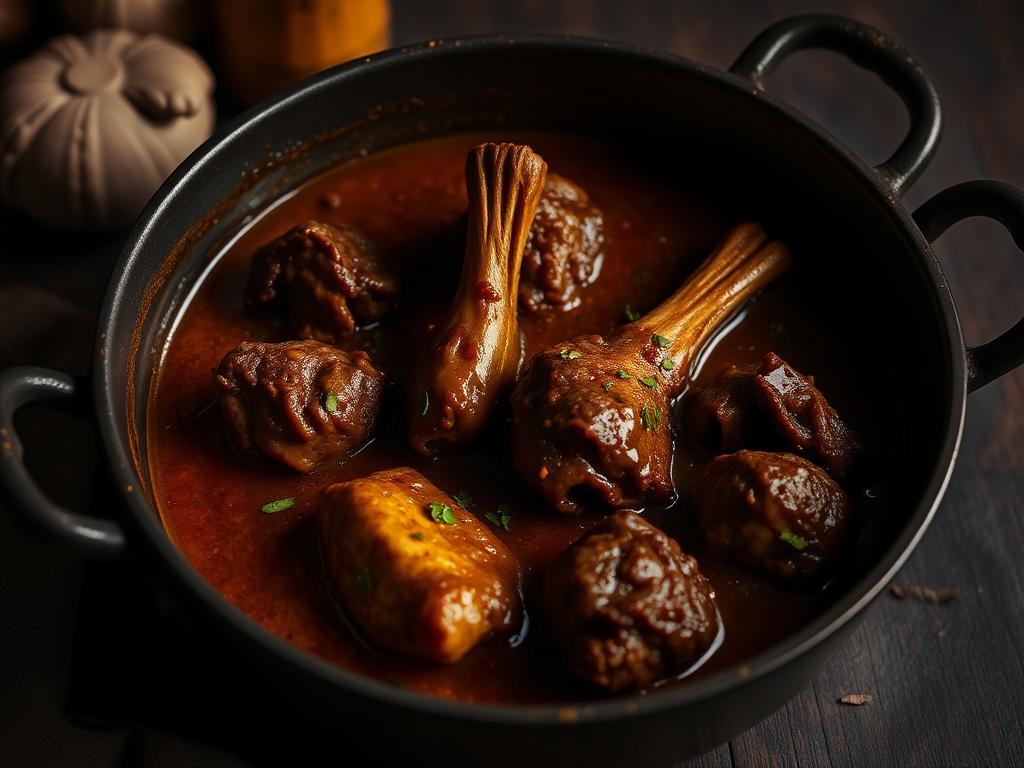
About this dish
This quintessential Telangana meat curry reflects the rustic flavors of the Deccan plateau, favoring heat and aromatics over heavy creams. Unlike the rich Hyderabadi Nizami dishes, this tarkari is a staple in local households, characterized by the use of locally grown chilies and stone-ground spices. It is typically prepared on Sundays or for festive gatherings, known for its thin, vibrant red gravy that highlights the freshness of the meat.
Ingredients
Meat and Marinade
- 500g Mutton (Goat meat), curry cut with bone
- 1 tsp Turmeric powder
- 1 tbsp Ginger-garlic paste
- 1 tsp Salt
- 100g Thick yogurt, whisked
The Base and Spices
- 3 tbsp Peanut oil or Sunflower oil
- 2 large Onions, finely sliced
- 2 Green chilies, slit
- 2 tbsp Kashmiri red chili powder
- 1 tbsp Coriander powder
- 1 tsp Roasted cumin powder
- 1/2 tsp Garam masala powder
- Handful of Fresh coriander leaves, chopped
Method
- 1
Marinate the meat
In a large mixing bowl, combine the mutton pieces with turmeric, ginger-garlic paste, salt, and yogurt. Massage the marinade into the meat thoroughly to ensure even penetration of flavors. Let it rest for at least 30 minutes at room temperature or up to 2 hours in the refrigerator for tenderization.
- 2
Sauté the aromatics
Heat oil in a heavy-bottomed pressure cooker or pot over medium-high heat until shimmering. Add the sliced onions and sauté for 8-10 minutes, stirring frequently until they turn a deep golden brown but not burnt. Add the slit green chilies during the last 2 minutes of sautéing for a sharp kick.
- 3
Seal the meat
Increase the heat to high and add the marinated mutton to the cooker. Stir-fry (bhuna) the meat for 5-7 minutes until the moisture from the yogurt evaporates and the meat pieces change color from pink to a light brown. This step is crucial for sealing the juices inside the meat.
- 4
Incorporate dry spices
Lower the heat to medium-low and add the chili powder, coriander powder, and cumin powder. Stir rapidly for 1 minute to cook the raw smell of spices without burning them. If the mixture sticks, splash a tablespoon of warm water to deglaze the bottom.
- 5
Pressure cook
Pour in 500ml of hot water—using hot water maintains the temperature of the meat and prevents toughness. Close the lid and pressure cook for 4-5 whistles on medium heat, then simmer on low for 10 minutes. If using an open pot, cover and cook for 45-55 minutes until the meat is fork-tender.
- 6
Reduce the gravy
Allow the pressure to release naturally before opening the lid. If the gravy is too thin, simmer uncovered on medium heat for 5 minutes until the oil (tarka) begins to separate and float on the surface. Check the seasoning and add more salt if necessary.
- 7
Finish with aromatics
Sprinkle the garam masala and a generous handful of freshly chopped coriander leaves. Stir gently to incorporate and let the curry sit covered for 5 minutes before serving. This resting period allows the flavors to settle and the color to deepen.
- 8
Check for oil separation
Observe the 'tari' or the oil layer on top; it should be a vibrant reddish-orange. This indicates that the spices are fully cooked and the meat fats have emulsified into the gravy. The meat should easily pull away from the bone.
- 9
Final resting
Keep the pot covered until the very moment of serving. The residual heat will continue to soften the connective tissues in the mutton. Serve hot to ensure the fats remain in liquid state.
Notes & variations
- Always use bone-in mutton for this recipe as the marrow adds depth to the thin gravy.
- For a more authentic Telangana flavor, add 1 tsp of crushed peppercorns during the spice step.
- Store leftovers in the fridge for up to 2 days; the flavor often improves the next day.
- If the mutton is particularly tough, add a small piece of raw papaya to the marinade.
Serve with
Serve hot with Jonna Rotte (Sorghum flatbread) or steamed Sona Masuri rice.
Cook's note
Never skip the browning of onions; the color and thickness of the gravy depend entirely on the caramelization of the onions.