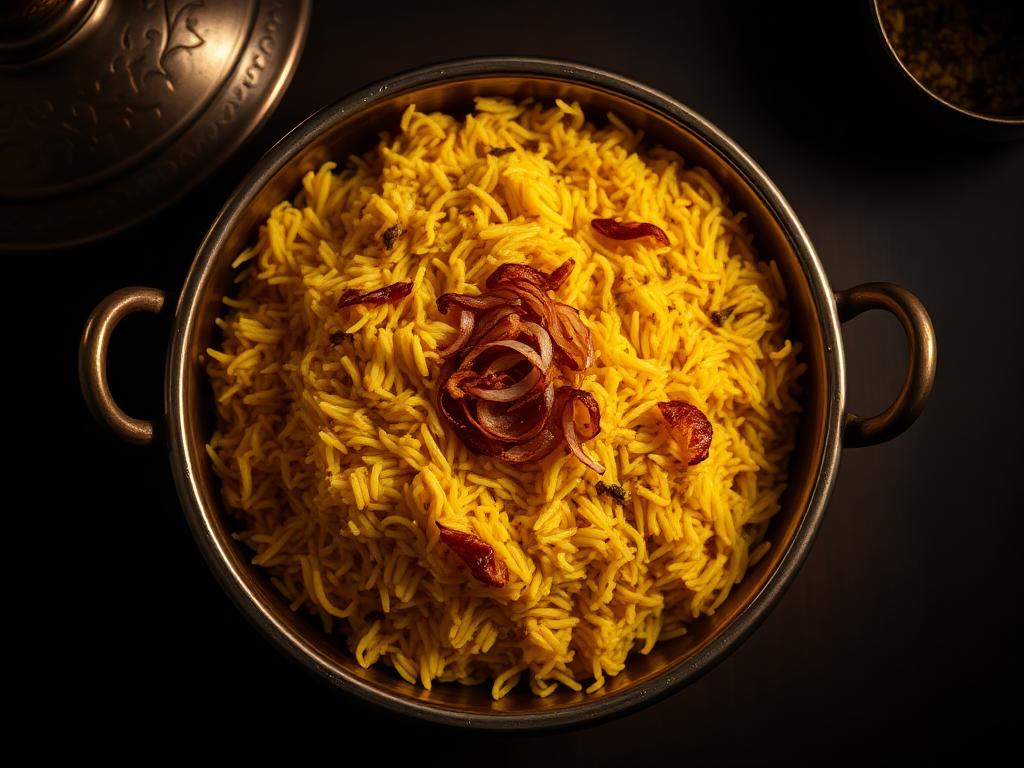
Mughlai Yakhni Pulao
Fragrant rice cooked in a spiced mutton broth, distinct from biryani.
About this dish
Originating from the royal kitchens of the Mughal Empire in Delhi, Yakhni Pulao is defined by its subtlety and the 'Yakhni' (clear meat broth). Unlike Biryani, which is layered and spicy, this dish focuses on infusing the rice with the pure essence of mutton and whole aromatics. It is traditionally served at weddings and celebratory Eid lunches, known for its pale appearance and deeply fragrant profile.
Ingredients
For the Yakhni (Broth)
- 500g Mutton (goat meat), bone-in pieces
- 1 large Onion, peeled and halved
- 1 head Garlic, whole and unpeeled
- 2-inch piece Ginger, smashed
- 2 tbsp Coriander seeds
- 2 tbsp Fennel seeds (Saunf)
- 1 tsp Salt
- 1.2 Liters Water
For the Pulao
- 500g Basmati Rice, soaked for 30 minutes
- 3 tbsp Ghee
- 2 medium Onions, thinly sliced
- 1 cup Thick Yogurt, whisked
- 2 Green Cardamoms
- 1 Black Cardamom
- 4 Cloves
- 1-inch Cinnamon stick
- 1 tsp Shahi Jeera (Caraway seeds)
- 4 Green chilies, slit
Method
- 1
Prepare the Yakhni bouquet
Tie the coriander seeds, fennel seeds, ginger, and garlic in a clean muslin cloth to make a 'potli'. Place this in a pressure cooker with the mutton, halved onion, salt, and water. Cook on medium-high for 4-5 whistles until the meat is 80% tender; do not overcook as it will cook further with the rice.
- 2
Strain and preserve
Discard the muslin bag and the onion halves. Strain the mutton pieces and set them aside, ensuring you measure the remaining broth (Yakhni); you need exactly double the volume of the rice, roughly 900ml-1L.
- 3
Fry the aromatics
Heat ghee in a heavy-bottomed Deg or Handi over medium flame. Add the whole spices (cardamoms, cloves, cinnamon, shahi jeera) and let them sizzle for 30 seconds until the aroma fills the room.
- 4
Caramelize the onions
Add the sliced onions and fry until they reach a deep golden brown color (biryani-style). Remove half of the onions for garnish later and leave the rest in the pot.
- 5
Sear the meat
Add the boiled mutton pieces to the ghee and onions. Sauté for 3-4 minutes on high heat until the meat develops a slight crust, then add the slit green chilies.
- 6
Incorporate the yogurt
Lower the heat to minimum and stir in the whisked yogurt. Stir constantly for 2 minutes to prevent curdling until the ghee separates from the masala.
- 7
Add the broth
Pour the measured Yakhni broth into the pot and bring it to a rolling boil. Taste the liquid; it should be slightly saltier than you want the final dish to be, as the rice will absorb the salt.
- 8
Incorporate the rice
Drain the soaked rice thoroughly and add it to the boiling broth. Stir once very gently with a flat spatula to avoid breaking the long grains.
- 9
High heat absorption
Cook on high heat uncovered for 5-7 minutes until the water level drops to the surface of the rice and small 'craters' or holes appear on the top.
- 10
The Dum process
Cover the pot with a tight-fitting lid (or seal with foil). Reduce the heat to the absolute lowest setting and let it simmer (Dum) for 12-15 minutes.
- 11
Final rest
Turn off the heat but do not open the lid for at least 10 minutes. This allows the steam to redistribute and the grains to firm up without breaking.
Notes & variations
- Use Sela Basmati rice if you want more robust grains, but traditional Long Grain Basmati offers better aroma.
- Always use bone-in mutton; the marrow provides the gelatinous body needed for a rich Yakhni.
- You can add a drop of Kewra water at the Dum stage for a more commercial Mughlai scent.
- If you don't have a muslin cloth, just boil the spices loose and strain the broth carefully through a fine sieve.
Serve with
A simple mint and onion raita and a side of sliced red onions.
Cook's note
The secret to a white pulao is not over-browning the onions that stay in the pot; keep them light golden.