Mysore Pak (Soft)
A melt-in-the-mouth royal sweet made from gram flour, ghee, and sugar.
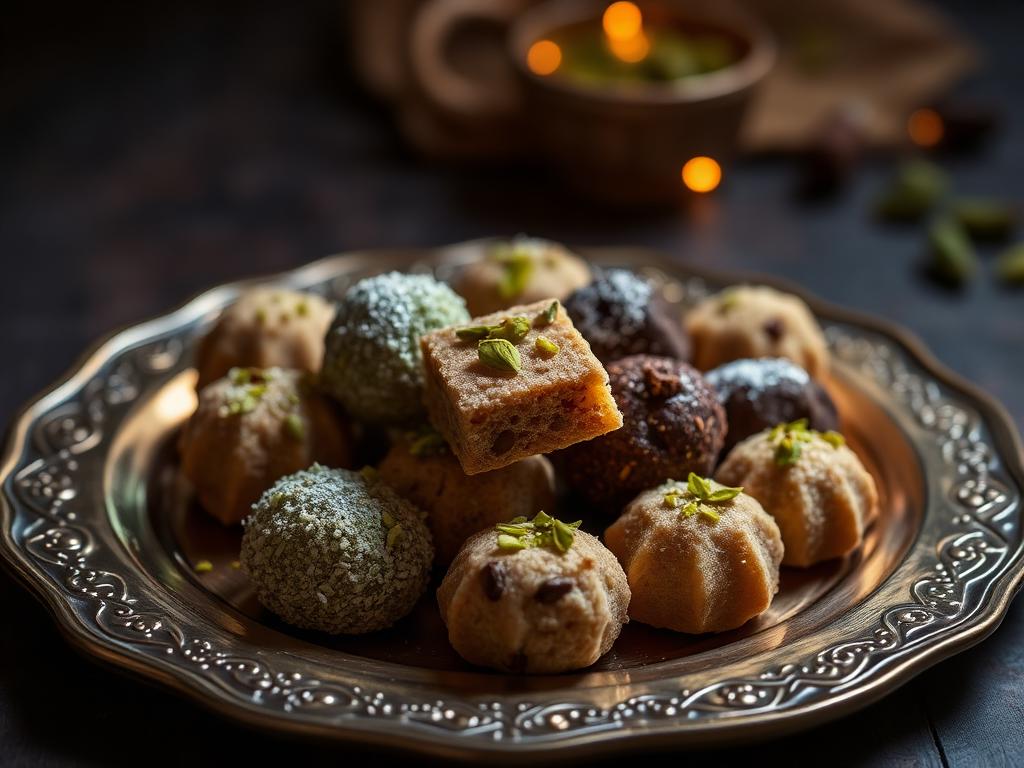
About this dish
Mysore Pak was created in the royal kitchens of the Mysore Palace by head chef Kakasura Madappa for Maharaja Krishna Raja Wadiyar IV. While the 'Hard' version is porous and crunchy, the 'Soft' version (often called Mysore Silk) is a modern evolution characterized by its velvety, fudge-like consistency. It is a prestigious sweet served at weddings and during Dasara, celebrated for its rich aroma of toasted gram flour and pure desi ghee.
Ingredients
The Core Trio
- 1 cup (125g) Besan (Gram flour), fine quality
- 1 cup (200g) Granulated sugar
- 1 cup (225g) Pure Desi Ghee (clarified butter), melted
Preparation
- 1/4 cup (60ml) Water
- 1 tbsp (15ml) Extra ghee for greasing the tray
Method
- 1
Sifting and Roasting
Sift the besan twice to ensure there are no lumps. In a heavy-bottomed pan, dry roast the besan on low heat for 4-5 minutes until the raw smell disappears and it smells slightly nutty. Do not let it change color to brown; it should remain pale yellow.
- 2
Ghee-Besan Slurry
Take 1/2 cup of the melted ghee and mix it into the roasted besan. Whisk vigorously until a smooth, lump-free paste forms. This pre-mixing prevents lumps from forming when the flour hits the hot sugar syrup later.
- 3
Sugar Syrup Stage
In a heavy kadai, combine the sugar and 1/4 cup water. Heat on medium until the sugar dissolves. Continue boiling until the syrup reaches 'one-string' consistency (when a drop between thumb and forefinger forms a single thread that doesn't break easily).
- 4
Integrating the Flour
Lower the heat to the absolute minimum. Slowly pour the besan-ghee slurry into the sugar syrup, whisking constantly with the other hand. Ensure the mixture is perfectly smooth before proceeding to the next step.
- 5
The Ghee Addition
Keep the remaining 1/2 cup of ghee warm in a separate small pot. Add the warm ghee one tablespoon at a time to the besan mixture. Stir continuously until the ghee is completely absorbed before adding the next spoonful. This is the most critical stage for texture.
- 6
Watching the Texture
Continue stirring for about 10-12 minutes. The mixture will start to thicken, become frothy, and begin to leave the sides of the pan. For soft Mysore Pak, you must stop when the mixture looks like a thick, flowing lava and doesn't yet show the honeycomb pores of the hard version.
- 7
The Release Cue
When the mixture starts to bubble slightly and leaves the bottom of the pan as one mass while still being glossy, it is ready. If you overcook it by even 30 seconds, it will turn into the hard, crumbly version.
- 8
Setting the Sweet
Immediately pour the molten mass into a pre-greased square tin. Do not press the top down with a spoon; let it settle naturally by gravity to keep it soft. Tap the tin gently on the counter once to remove air bubbles.
- 9
Cooling and Slicing
Let it cool for 15-20 minutes. While it is still slightly warm but firm, use a sharp greased knife to cut it into rectangular blocks. Allow it to cool completely to room temperature before removing the pieces from the tin.
Notes & variations
- The quality of ghee is paramount; use homemade or high-quality A2 cow ghee for the best aroma.
- Always keep the ghee warm; adding cold ghee to the hot sugar-besan mixture will seize the fat and ruin the texture.
- Use a heavy-bottomed copper or stainless steel kadai to ensure even heat distribution and prevent burning.
- Store in an airtight container at room temperature; it stays fresh for up to 2 weeks.
Serve with
A cup of strong South Indian Filter Coffee.
Cook's note
The 'soft' secret is to stop cooking when the mixture is still glossy and hasn't started turning 'porous' or 'matte'.