Nagori Halwa Poori
Crispy, tiny semolina pooris served with suji halwa and spicy potato curry.
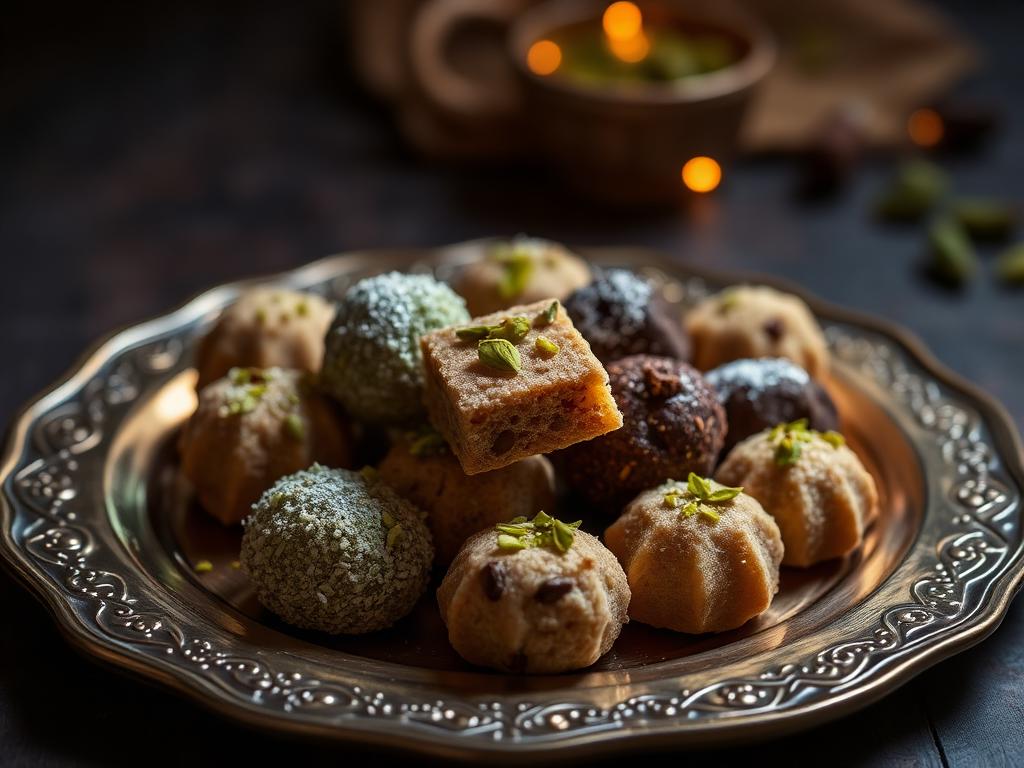
About this dish
A quintessential Old Delhi breakfast found in the narrow lanes of Chandni Chowk and Chawri Bazar. Nagori pooris are distinctively small, crisp, and crumbly, made with semolina rather than wheat flour. Traditionally served as a trio with spicy Aloo Sabzi and sweet Sooji Halwa, it offers a complex contrast of textures and flavors that define a Dilli winter morning.
Ingredients
For Nagori Poori Dough
- 250g (1.5 cups) Fine Semolina (Chiroti Rava)
- 30g (1/4 cup) All-purpose flour
- 30ml (2 tbsp) Ghee, melted
- 1/2 tsp Carom seeds (Ajwain)
- 1/2 tsp Salt
- 120ml (1/2 cup) Lukewarm water for kneading
- Oil for deep frying
For Sooji Halwa
- 100g (1/2 cup) Semolina
- 100g (1/2 cup) Ghee
- 100g (1/2 cup) Granulated sugar
- 300ml (1.25 cups) Warm water
- 4-5 Green cardamom pods, crushed
- 1 tbsp Saffron water
Method
- 1
Prepare the Nagori Dough
Mix semolina, flour, salt, and ajwain in a large bowl. Rub in the melted ghee with your fingertips until the mixture resembles breadcrumbs and holds shape when pressed. Gradually add lukewarm water to knead a very stiff, firm dough; this is crucial as a soft dough will result in oily, soft pooris.
- 2
Rest the Dough
Cover the stiff dough with a damp muslin cloth and let it rest for at least 30 minutes. This allows the semolina grains to hydrate and soften, which prevents the pooris from cracking excessively when rolled. After resting, knead again for 2 minutes until smooth.
- 3
Roast Semolina for Halwa
Heat ghee in a heavy-bottomed kadai over medium-low flame. Add the semolina and roast slowly, stirring constantly for 8-10 minutes until it turns a light golden brown and emits a nutty aroma. Do not rush this step or the raw taste of semolina will persist.
- 4
Simmer the Halwa
Combine sugar, water, cardamom, and saffron in a separate pan and bring to a boil. Carefully pour this hot syrup into the roasted semolina while stirring continuously to avoid lumps. Reduce heat to low and cook until the water is absorbed and ghee starts to separate from the sides.
- 5
Shape the Nagoris
Divide the poori dough into small, marble-sized balls (about 15-20g each). Grease your rolling pin with a drop of oil and roll the balls into small discs of 2-inch diameter. Ensure they are evenly thick; if too thin, they won't puff, if too thick, they won't get crisp.
- 6
Fry to Crisp Perfection
Heat oil in a deep kadai until it reaches approximately 180°C. Drop a small piece of dough; if it rises immediately, the oil is ready. Slide the pooris in and press gently with a slotted spoon until they puff up like small balloons. Lower the heat slightly to medium and fry until deep golden and very crisp on both sides.
- 7
Drain and Cool
Remove the pooris and drain on paper towels. Unlike regular wheat pooris, Nagoris should be fried longer to ensure the moisture is removed, giving them a cracker-like texture that stays crisp for hours.
- 8
Assemble the Plate
Poke a small hole in the center of the crisp Nagori poori, similar to a Pani Puri. Stuff a small teaspoon of the warm, buttery Sooji Halwa inside. Serve immediately alongside a bowl of thin, spicy Dilli-style potato curry.
- 9
Final Quality Check
The halwa should be moist and dripping with ghee, while the poori should shatter easily upon the first bite. The contrast of the hot, sweet halwa and the salty, crisp shell is the signature of a perfect Nagori.
Notes & variations
- Always use fine semolina (Chiroti Rava) for the best dough texture.
- The dough must be significantly stiffer than regular roti dough to achieve the 'khasta' (flaky) texture.
- If the pooris soften after frying, your oil was likely too hot, cooking the outside before the inside dried out.
- You can store fried Nagoris in an airtight container for up to 3 days.
Serve with
A spicy, watery Aloo-Matar Sabzi (potato and pea curry) and a glass of salty lassi.
Cook's note
Do not use dry flour for rolling the pooris as it burns in the oil; use a few drops of oil on the rolling surface instead.