Njandu Varutharacha Curry
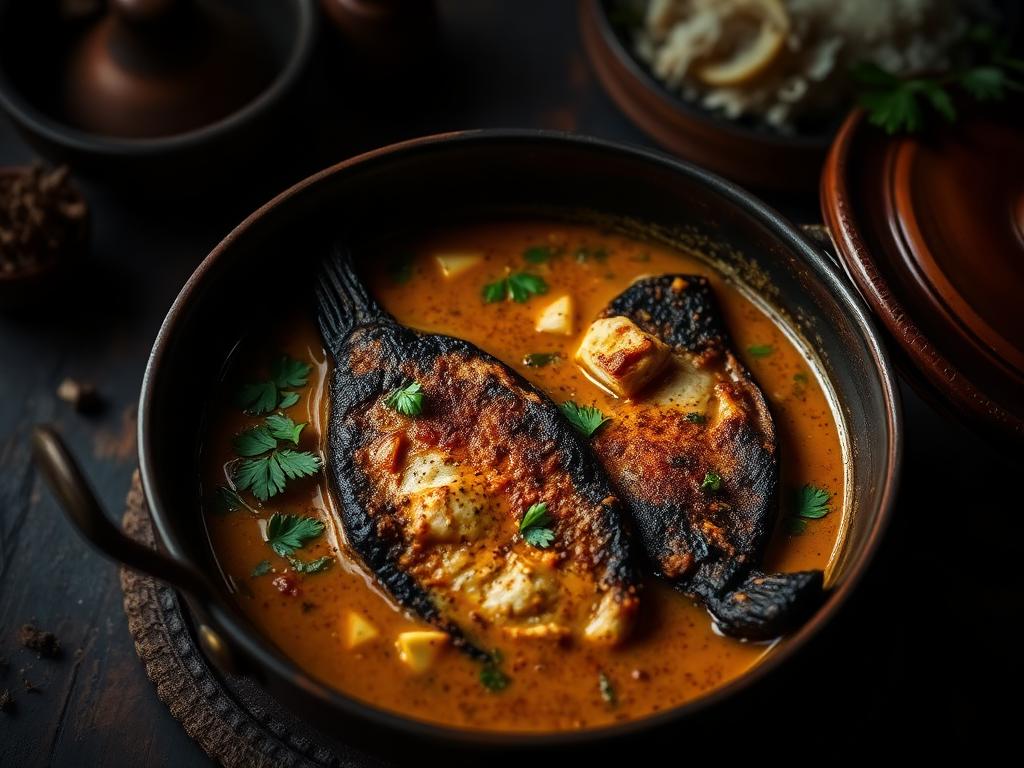
Crab curry in a deeply roasted coconut and spice gravy.
About this dish
This crab curry represents the pinnacle of Kerala coastal cooking. 'Varutharacha' refers to the technique of roasting fresh coconut with spices until it reaches a deep coffee-brown color before grinding it into a silky paste. This process imparts a smoky, nutty depth that perfectly complements the sweet, succulent meat of mud crabs found in Kerala's lagoons.
Ingredients
The Crab
- 1 kg Mud Crabs, cleaned and halved
- 1/2 tsp Turmeric powder
- 1 tsp Salt
Roasting Paste
- 200g (1.5 cups) Freshly grated coconut
- 6-8 Shallots, sliced
- 2 sprigs Curry leaves
- 2 tbsp Coriander seeds
- 6-8 Dried red chilies (adjust for heat)
- 1/2 tsp Peppercorns
- 2 Cloves
The Curry
- 2 tbsp Coconut oil
- 1/2 tsp Mustard seeds
- 1 inch Ginger, crushed
- 6 Garlic cloves, crushed
- 2 Small tomatoes, chopped
- 1 small piece Kudampuli (Malabar Tamarind), soaked in water
Method
- 1
Roast the coconut
In a heavy pan, roast the grated coconut, shallots, and curry leaves on medium heat. Stir continuously for 12-15 minutes. The coconut must turn a uniform dark brown without burning; this is the most critical step for the curry's color and flavor.
- 2
Add whole spices
Once the coconut is golden-brown, add coriander seeds, dried red chilies, peppercorns, and cloves. Roast for another 3-4 minutes until the spices are fragrant and the coconut is a deep chocolate brown.
- 3
Grind the masala
Allow the roasted mixture to cool completely. Grind it in a mixer with a small amount of water to a very smooth, fine paste. Any graininess in the paste will ruin the mouthfeel of the curry.
- 4
Temper the oil
Heat coconut oil in a large pot (Manchatti/Clay pot is ideal). Splutter mustard seeds, then add crushed ginger, garlic, and a few curry leaves. Sauté until the raw aroma of garlic is gone.
- 5
Cook tomatoes
Add the chopped tomatoes and sauté until they break down into a soft paste. This provides a subtle acidity to balance the rich coconut.
- 6
Simmer the crabs
Add the cleaned crab pieces, turmeric, and salt. Toss them in the aromatics. Add 1 cup of water and the soaked Kudampuli. Cover and cook on medium heat for 10-12 minutes until the crab shells turn bright orange/red.
- 7
Incorporate coconut paste
Add the ground roasted coconut paste to the pot. Stir gently to avoid breaking the crab claws. Add more water if the gravy is too thick; it should be a medium-thick consistency.
- 8
Final slow cook
Simmer the curry on low heat for another 8-10 minutes. This allows the crab meat to absorb the deep, smoky flavors of the roasted coconut. Check for salt and sourness.
- 9
Resting
Switch off the flame and let the curry sit covered for at least 20 minutes before serving. This 'settling' time is vital for the oils to surface and flavors to mature.
Notes & variations
- Kudampuli (Malabar Tamarind) gives the authentic smoky-sour taste; do not substitute with regular tamarind if possible.
- Ensure the crab is extremely fresh; the meat should be firm and sweet.
- If the coconut paste is not ground fine enough, the curry will feel 'sandy'.
- Cleaning crabs is time-consuming; ensure the 'apron' and gills are removed completely.
Serve with
Serve with Kerala Matta Rice or warm, flaky Parottas.
Cook's note
The secret to the perfect Varutharacha curry is patience during coconut roasting; if you rush and burn it, the curry will taste bitter.