Ou tenga dal Recipe
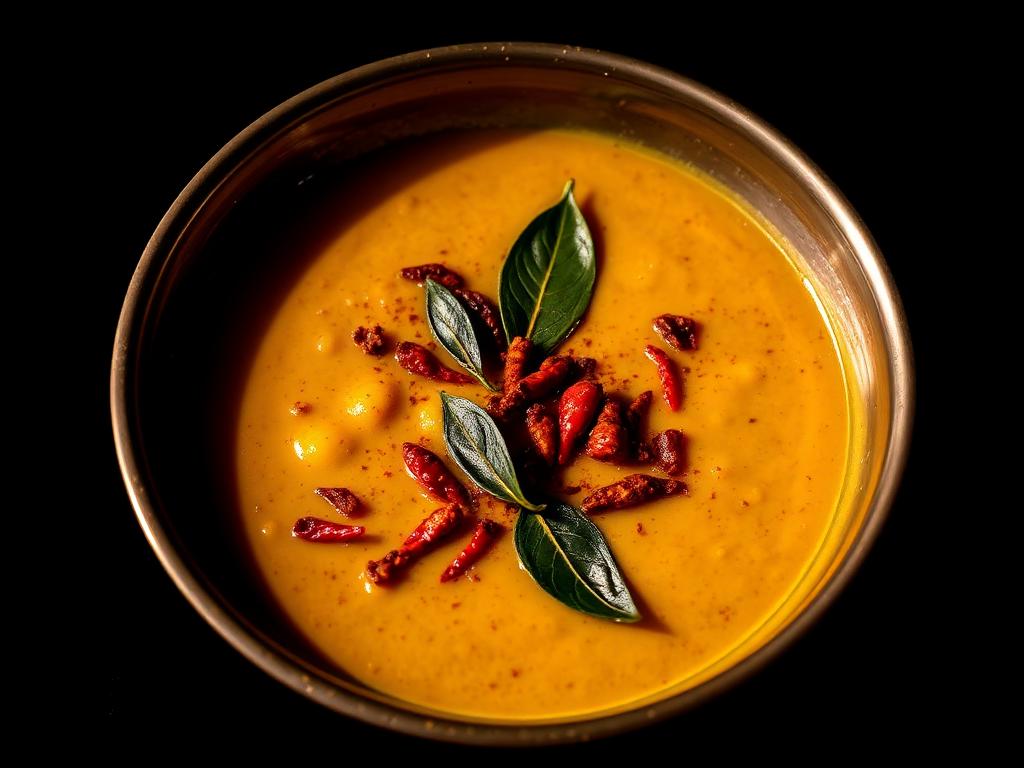
Assamese toor dal simmered with tart elephant apple and a modest tempering.
About this dish
Ou tenga, or elephant apple, gives many Assamese preparations their distinctive fruity sourness. Its firm, fleshy segments are simmered in dals and fish curries, particularly when the fruit is in season. This toor dal version is a household-style preparation rather than a single fixed formula used across Assam. Served with rice, it brings a refreshing contrast to mild vegetables and mashed accompaniments.
Ingredients
Dal
- 180 g split pigeon peas or toor dal (about 1 cup)
- 1200 ml water (5 cups), divided
- 1.5 g ground turmeric (1/2 teaspoon)
- 6 g salt (1 teaspoon), or to taste
Elephant apple
- 150 g cleaned fleshy elephant-apple segments, weighed after trimming (about 1 cup thinly sliced)
Tempering
- 15 ml mustard oil (1 tablespoon)
- 2 g panch phoron (about 3/4 teaspoon)
- 1 dried red chilli, about 1 g
- 2 green chillies, slit lengthwise (about 6 g)
Method
- 1
Rinse the dal
Pick through the dal to remove any small stones or damaged grains. Rinse in several changes of cool water for 2–3 minutes until the water is mostly clear. Drain and transfer to a heavy saucepan.
- 2
Start cooking the lentils
Add 960 ml of the water and the turmeric to the saucepan. Bring to a boil over high heat for 5–7 minutes, then skim away any thick surface foam. Reduce to low heat so the dal bubbles steadily without spilling over.
- 3
Simmer until nearly soft
Partly cover and simmer the dal over low heat for 25–30 minutes. Stir every 8–10 minutes to prevent the grains settling on the bottom. The lentils should crush readily at the edges but may still have slightly firm centres.
- 4
Prepare the elephant apple
While the dal cooks, separate the elephant apple's firm fleshy segments on a stable cutting board. Remove the central seedy material and trim any discoloured or particularly tough edges, then weigh out 150 g. Slice thinly across the fibres and lightly bruise the slices with a pestle; allow about 10 minutes for careful preparation.
- 5
Soften the sour fruit separately
Put the sliced elephant apple in a small pan with the remaining 240 ml water. Cover and simmer over low heat for 12–15 minutes, until the slices bend more easily and the liquid tastes tart. They will remain fibrous rather than melting like ripe fruit.
- 6
Combine after the dal softens
Check that the dal crushes easily, then add the elephant apple and all its cooking liquid. Stir in the salt and slit green chillies. Simmer over low heat for 8–10 minutes so the sourness spreads through the dal without preventing the lentils from softening initially.
- 7
Make the tempering
Heat the mustard oil in a small pan over medium heat for 1 minute. Add the panch phoron and dried red chilli, then let them sizzle for 20–30 seconds. The seeds should smell fragrant and begin to crackle without turning black.
- 8
Season and finish
Carefully pour the hot tempering into the simmering dal, keeping your face away from any spluttering. Stir and cook over low heat for 2–3 minutes. Press a spoonful of lentils against the pan to give the broth a lightly creamy body while leaving most fruit slices intact.
- 9
Rest and check the balance
Turn off the heat and rest the dal for 5 minutes. Taste the liquid for salt and sourness, remembering that the fruit pieces themselves taste sharper. Serve with a ladleable consistency and a gently tart finish rather than a thick, pasty texture.
Notes & variations
- Cup measures use a 240 ml cup; the elephant-apple quantity is measured after cleaning and trimming.
- Elephant apple is not wood apple or bael; they are different fruits and are not direct substitutes here.
- The mature fruit can be very hard, so buy prepared segments if you cannot safely separate it with your usual kitchen tools.
- The fibrous segments flavour the dal; diners may chew the tender flesh and leave tough fibres, or set the pieces aside.
Serve with
Steamed rice, aloo pitika and lightly fried seasonal vegetables.
Cook's note
Always soften the lentils before introducing the sour fruit, since acidity can delay their cooking.