Paneer Kulcha Dhaba Style
Leavened flatbread stuffed with spiced crumbled cottage cheese, baked in a tandoor.
About this dish
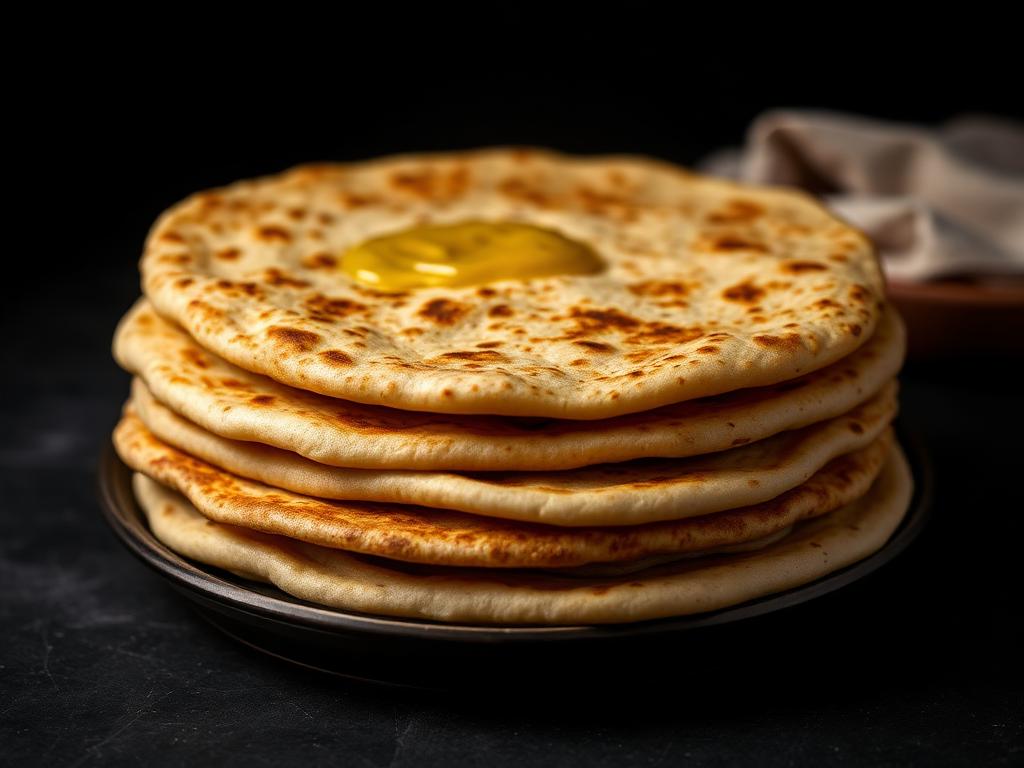
The Kulcha is Amritsar's gift to the world, and the Paneer variant is a luxury version found in highway dhabas across Punjab. Unlike the flat Naan, a proper Dhaba Kulcha is characterized by its flaky, layered crust achieved through multiple folds with ghee. It is traditionally slapped against the walls of a clay tandoor, resulting in characteristic charred spots and a soft, spiced interior.
Ingredients
For the Dough
- 400g (3 cups) Maida (All-purpose flour)
- 1 tsp Sugar
- 1 tsp Baking powder
- 1/4 tsp Baking soda
- 2 tbsp Oil or melted Ghee
- 1/2 cup Warm milk
- 1/2 cup Yogurt
- Extra flour for dusting
For the Paneer Stuffing
- 250g Paneer, finely crumbled
- 1 medium Onion, very finely chopped
- 2 Green chilies, minced
- 1 tsp Ginger, grated
- 1 tsp Anardana (Dried pomegranate) powder
- 1/2 tsp Chaat masala
- 1/2 cup Fresh coriander, chopped
- Salt to taste
Toppings
- 2 tbsp Nigella seeds (Kalonji)
- 1/4 cup Fresh coriander leaves
- 4 tbsp Butter for glazing
Method
- 1
Knead the Leavened Dough
Sift the flour, sugar, baking powder, and soda into a large bowl. Create a well in the center, add the yogurt, oil, and warm milk. Knead into a soft, slightly sticky dough for 10 minutes; the dough must be pliable and smooth. Cover with a damp cloth and rest in a warm place for at least 1-2 hours.
- 2
Prepare the Paneer Filling
In a separate bowl, mix the crumbled paneer with onions, chilies, and ginger. Add the dry spices, particularly the anardana powder which provides the signature tang. Ensure the onions are chopped extremely fine to prevent them from piercing the dough during rolling.
- 3
Divide and Portion
Punch down the rested dough and divide it into 8 equal-sized balls. Divide the paneer mixture into 8 balls as well. Keeping the filling slightly smaller than the dough ball ensures a good ratio without the bread bursting.
- 4
Stuff the Kulcha
Take a dough ball and flatten it into a 4-inch disk with your fingers. Place the paneer ball in the center, gather the edges of the dough, and pinch them together at the top to seal tightly. Flatten the stuffed ball slightly and let it rest for 5 minutes before rolling.
- 5
Rolling and Topping
Gently roll the ball into an oval or round shape, about 6-7 inches in diameter. Apply a little water on the top surface and sprinkle kalonji and coriander leaves. Press them down lightly with the rolling pin so they adhere to the dough.
- 6
Prepare for the Heat
Flip the kulcha over and brush the back generously with water. This is crucial for sticking the bread to the tandoor or pan. If using a tawa, heat it on high until it's very hot but not smoking.
- 7
Cooking Technique
Place the watered side down on the hot tawa. Once bubbles appear on the surface (about 1 minute), invert the tawa directly over the high flame. Move the tawa in a circular motion to char the top of the kulcha until it has dark golden spots and smells toasted.
- 8
Finish and Glaze
Scrape the kulcha off the tawa with a spatula. Immediately brush with a generous amount of salted butter. The heat from the bread will melt the butter, soaking into the layers and softening the crust.
Notes & variations
- Anardana powder is the secret ingredient for that authentic 'Amritsari' tang; don't skip it.
- Ensure the stuffing is dry; if the paneer is wet, the kulcha will become soggy and break.
- If you don't have a tandoor, an iron tawa (not non-stick) is essential for the inversion technique.
- Resting the dough is non-negotiable for gluten development and softness.
Serve with
Serve piping hot with Pindi Chole, a side of spicy pickle, and a dollop of fresh white butter.
Cook's note
Crush the finished kulcha slightly between your palms (chur-chur style) to release the steam and highlight the flakes.