Ari Pathiri
Paper-thin silky rice rotis from the Malabar coast.
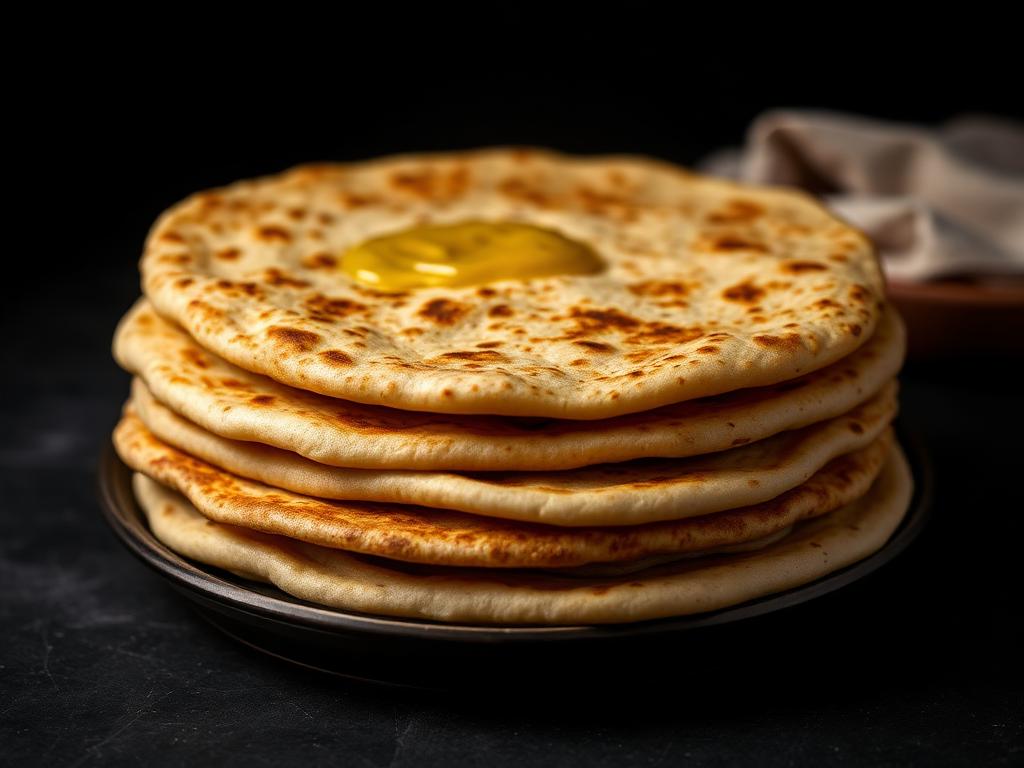
About this dish
Ari Pathiri is a classic unleavened rice pancake from the Mappila cuisine of Northern Kerala. Making a perfect Pathiri is considered an art form—they must be thin as paper, perfectly circular, and stark white. These are usually served during Iftar or at weddings, paired with a spicy Malabar chicken curry to balance the delicate, silky texture of the rice roti.
Ingredients
For the Pathiri Dough
- 2 cups Fine roasted rice flour (Pathiri podi)
- 2.25 cups Water
- 1/2 tsp Salt
- 1 tsp Coconut oil
For Rolling and Finishing
- 1/2 cup Rice flour for dusting
- 1 cup Thin coconut milk (optional, for soaking)
Method
- 1
Boil the Water
In a wide, deep pot, bring the water, salt, and oil to a rolling boil. It is essential that the water is bubbling vigorously before adding the flour to ensure the rice starch gelatinizes correctly for a soft dough.
- 2
Incorporate the Flour
Lower the heat and add the rice flour all at once into the center of the boiling water. Do not stir immediately. Cover with a lid and let it steam for 30 seconds on low heat.
- 3
The Initial Mix
Using the handle of a sturdy wooden spoon, stir the flour vigorously into the water until it forms a lumpy, moist mass. Turn off the heat and cover again for 5 minutes to let the steam finish the cooking process.
- 4
Knead While Hot
Transfer the hot dough to a flat surface or a large bowl. Wet your hands with cold water and knead the dough while it is still very warm. Knead for at least 5-8 minutes until it becomes smooth, pliable, and crack-free.
- 5
Portion the Dough
Divide the dough into small, smooth lime-sized balls. Keep the dough balls covered with a damp cloth at all times to prevent them from drying out and forming a crust.
- 6
Roll Thinly
Dust a rolling board with rice flour. Flatten a ball and roll it out into a very thin, even circle about 6 inches in diameter. The Pathiri should be thin enough to be almost translucent but strong enough to handle.
- 7
Heat the Tawa
Heat a non-stick or cast-iron tawa on medium heat. Do not use oil. Place the Pathiri on the tawa. Within 30 seconds, you will see tiny bubbles; flip it over immediately.
- 8
The Puffing Technique
Cook the second side for 30-40 seconds, then flip again. Using a clean cloth or back of a spoon, gently press the edges. The Pathiri should puff up like a balloon. Do not brown it; it must remain white.
- 9
Coconut Milk Dip
Optional but traditional: quickly dip the hot Pathiri into a bowl of thin coconut milk and place in a casserole. This keeps them incredibly soft for hours.
Notes & variations
- Use 'Pathiri Podi' specifically, which is very finely ground and roasted rice flour.
- If the dough is too sticky, add a little more flour; if it cracks, add a tablespoon of boiling water.
- Always stack Pathiris in an insulated container (casserole) to keep them soft with their own steam.
- Store in an airtight container for up to 24 hours; reheat gently over steam rather than a direct flame.
Serve with
Serve with spicy Malabar Chicken Curry or Mutton Stew.
Cook's note
The secret to a soft Pathiri is kneading the dough while it is almost too hot to touch; cold dough will never become silky.