Parsi Patrel Biryani
A unique Parsi layered rice dish using colocasia leaf rolls (patra).
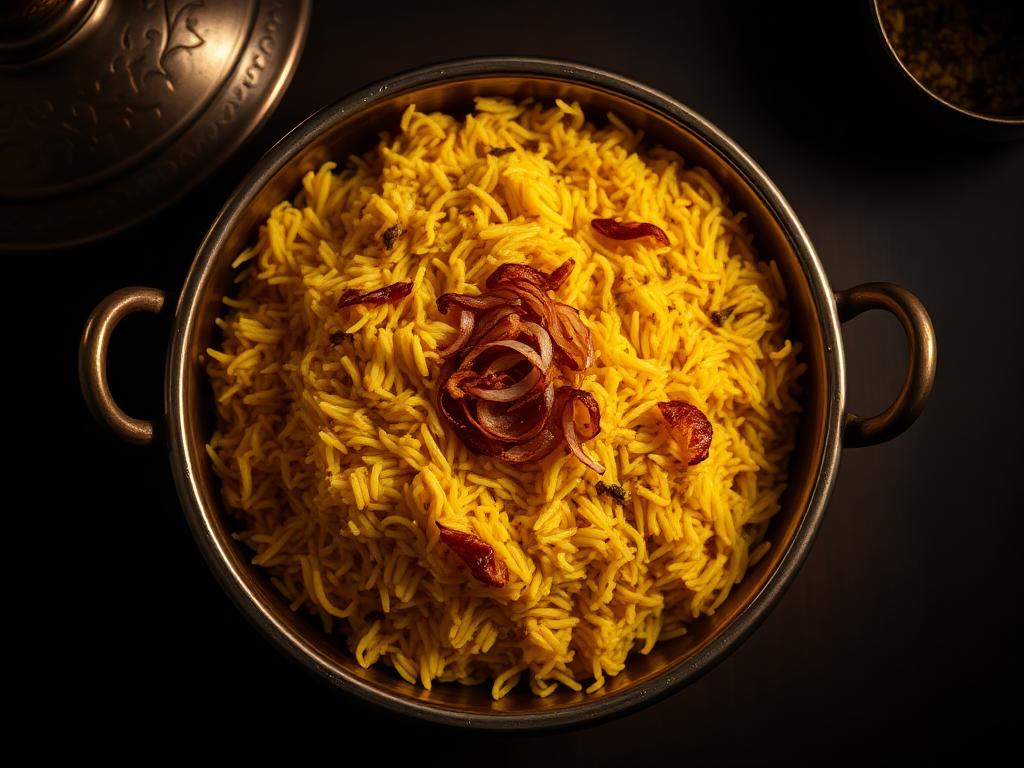
About this dish
A festive Parsi specialty, this dish marries the Gujarati influence of Patra (colocasia leaf rolls) with the Persian technique of slow-cooked rice. Often served at Navjote ceremonies and weddings, it is a labor-intensive masterpiece. The 'Patrel' (patra) absorbs the meat juices, becoming soft, velvety pillows of spice within the fragrant long-grain rice.
Ingredients
Meat Marinade
- 750g Mutton (goat meat), bone-in cubes
- 200g (1 cup) Thick yogurt, whisked
- 2 tbsp Ginger-garlic paste
- 1 tsp Turmeric powder
- 2 tsp Red chili powder
Patrel (Colocasia Rolls)
- 6-8 Large Patra (pre-made or homemade fried colocasia leaf rolls), sliced into 1-inch rounds
- 2 tbsp Ghee for shallow frying
Rice and Aromatics
- 500g (2.5 cups) Basmati rice, soaked for 30 mins
- 3 Large onions, thinly sliced and fried until golden (Birista)
- 4 Green cardamoms, 2 black cardamoms, 1-inch cinnamon stick
- 1/2 cup Fresh coriander and mint, chopped
- 1/2 tsp Saffron strands soaked in 2 tbsp warm milk
Method
- 1
Marinating the Mutton
Rub the mutton with yogurt, ginger-garlic paste, and spices. Allow it to marinate for at least 2 hours, or overnight in the fridge. This breaks down the fibers, ensuring the meat is succulent after the long 'Dum' process.
- 2
Preparing the Patrel
Take the sliced patra rounds and shallow fry them in a little ghee until the edges are crispy but the center remains soft. Set these aside; the frying prevents them from disintegrating into mush during the steaming phase.
- 3
Par-boiling the Rice
Boil 3 liters of water with whole spices and salt. Add the soaked rice and cook until it is 70% done (the grain should break when pressed but still have a firm core). Drain immediately and spread on a tray.
- 4
Cooking the Meat Base
In a heavy pot, heat ghee and add the marinated mutton. Cook on medium-high heat for 10-12 minutes until the yogurt releases oil. Add a splash of water, cover, and cook until the mutton is 80% tender.
- 5
Layering the Base
Reduce heat to the lowest setting. Ensure there is about 1 cup of thick gravy left with the mutton. Spread half of the fried onions (birista) and half of the mint/coriander over the meat.
- 6
The Patrel Layer
Carefully arrange the fried patra slices in a single layer over the mutton. This creates a barrier that perfumes the rice while soaking up the rich mutton fat.
- 7
Rice Topping
Layer the par-boiled rice over the patra. Do not press the rice down; keep it light and airy to allow steam to circulate. Sprinkle the remaining birista, herbs, and the saffron milk on top.
- 8
Sealing for Dum
Seal the pot with aluminum foil or a dough seal (purdah) and a tight-fitting lid. Place the pot on a heavy iron tawa (griddle) to prevent the bottom from burning.
- 9
Slow Steaming
Cook on low heat for 25-30 minutes. You will know it is done when steam escapes vigorously when the seal is slightly cracked and the rice grains are standing upright.
- 10
Resting the Biryani
Turn off the heat but do not open the pot for 15 minutes. This resting period allows the moisture to redistribute, making the rice fluffy and the flavors cohesive.
Notes & variations
- If using store-bought patra, ensure they are the savory-spicy kind, not the sweet version.
- You can substitute mutton with chicken, but reduce the meat cooking time to 15 minutes.
- Ensure the colocasia leaves are well-cooked to avoid the 'itchy throat' sensation caused by calcium oxalate.
- Add a few drops of rose water or kewra water for a more traditional Parsi aroma.
Serve with
Serve with a simple Kachumbar (onion-cucumber salad) and chilled garlic raita.
Cook's note
The secret is in the 'birista' (fried onions); ensure they are uniform golden brown, as burnt onions will make the biryani bitter.