Poee Recipe
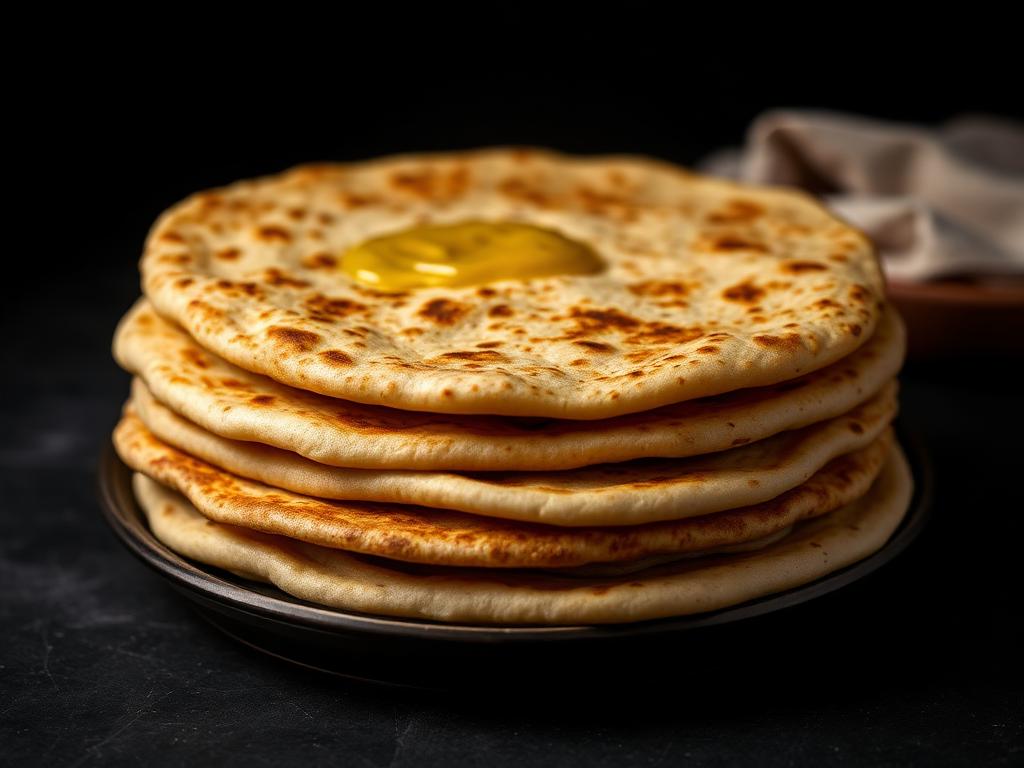
Bran-dusted Goan pocket bread with a wheaty aroma and a tender, chewy shell.
About this dish
Poee, also written poi, is a distinctive bread of Goa’s poder tradition. Its bran-coated surface and pocket-like interior set it apart from soft pao, although flour blends and shapes vary between bakeries. Traditionally fermented versions drew on locally available palm toddy, linking bread making to Goa’s coastal food economy. Poee is eaten across communities with breakfast bhaji, curries or simply a little butter.
Ingredients
Dough
- 240 g refined wheat flour or maida (2 cups, spooned and levelled)
- 120 g whole-wheat flour (1 cup, spooned and levelled)
- 250 ml lukewarm water, about 32°C (1 cup + 2 tsp)
- 4 g instant yeast (1 1/4 tsp)
- 4 g sugar (1 tsp)
- 7 g fine salt (1 1/4 tsp)
Coating and handling
- 40 g wheat bran (about 2/3 cup)
- 15 g refined wheat flour or maida (2 tbsp), for handling
- 5 ml neutral oil (1 tsp), for the bowl
Method
- 1
Hydrate the flours
Combine the refined flour and whole-wheat flour in a large bowl. Add 230 ml of the lukewarm water and mix for 3 minutes until a rough dough forms. Cover and leave at room temperature for 15 minutes to soften the whole-wheat particles.
- 2
Add the leavening
Mix the yeast and sugar with the remaining 20 ml water, then work the mixture into the rested dough. Sprinkle in the salt and squeeze and fold for 3–4 minutes until evenly distributed. The dough will initially feel slippery but should come back together as a soft mass.
- 3
Develop a supple dough
Knead for 10 minutes by hand, using minimal handling flour. The finished dough should feel supple and slightly tacky, with a smoother surface than when mixed. Do not expect a perfectly transparent windowpane, because the whole-wheat particles interrupt the gluten.
- 4
Let the dough rise
Lightly oil the bowl, return the dough and cover. Leave at 26–29°C for about 70 minutes, until expanded to roughly twice its original volume. The dough should feel aerated and gently resilient when touched, rather than loose and collapsed.
- 5
Divide and rest
Turn out the dough and divide it into 8 equal portions, approximately 78 g each. Shape into loose balls without squeezing out every bubble. Cover and rest for 10 minutes at room temperature so they flatten easily.
- 6
Flatten and coat with bran
Scatter the wheat bran over a clean tray and lightly dust the counter with the handling flour. Flatten each ball into a round about 12 cm wide and 6–7 mm thick, keeping the thickness even. Press both sides gently into the bran, using the dough’s natural tackiness to make it adhere.
- 7
Give a short final proof
Set the rounds on baking parchment, cover lightly and proof for about 15 minutes. Meanwhile, preheat a conventional oven and a heavy baking sheet or stone to 250°C for at least 35 minutes, beginning during shaping. The rounds should look a little fuller but should not become fragile or heavily inflated.
- 8
Bake on a hot surface
Slide 4 rounds onto the heated surface using parchment rated for the oven temperature, or transfer them directly with a peel. Bake at 250°C for 6–7 minutes, until puffed and lightly coloured, then repeat with the remaining rounds. The bran should smell toasted rather than burnt, and the bread should remain pliable rather than crisp.
- 9
Cool and reveal the pocket
Move the hot poee to a rack and cover loosely with a clean cloth for 10 minutes. Allow another 5 minutes before cutting an edge open with a serrated knife. Many rounds will have a clear pocket, while some will have a partly open centre with a tender, wheaty crumb.
Notes & variations
- Makes 8 small poee; cup measurements use a 240 ml cup, and bran volume varies considerably by brand.
- Goan bakeries use different proportions of refined flour, whole wheat and bran; poee is not necessarily an entirely whole-wheat bread.
- Strong bottom heat and an evenly flattened round encourage pocket formation, but a complete pocket is not guaranteed.
- Store cooled poee in a closed container for up to a day, or freeze; reheat briefly so the shell does not dry out.
Serve with
Alsanyache tonak, potato bhaji, Goan chicken xacuti or butter and hot tea.
Cook's note
Avoid rolling the centre thinner than the edges, which can prevent the two surfaces from separating evenly.