Poondu Thuvaiyal
A fiery, thick garlic chutney usually served with rice or idli.
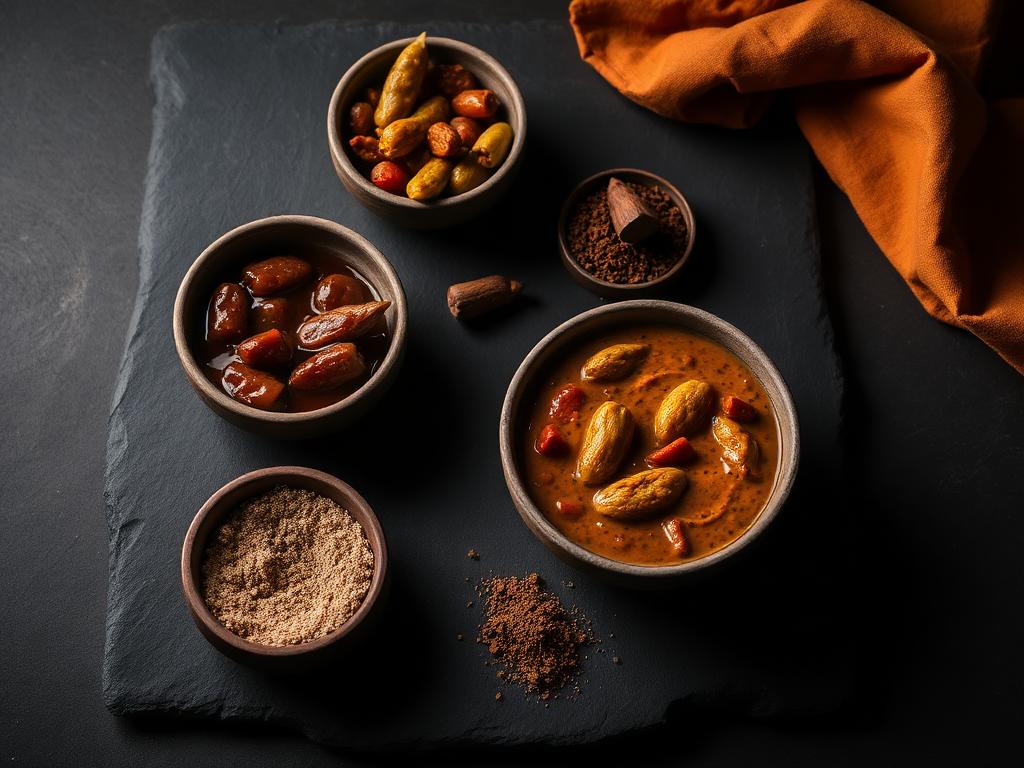
About this dish
Originating from the rural households of Tamil Nadu, this fiery garlic relish is a staple during the monsoon for its immunity-boosting properties. Unlike a runny chutney, a Thuvaiyal is thick and coarse, prepared traditionally on a 'Sil Batta' (grinding stone) to preserve the volatile oils of the garlic. It is distinct for its sharp pungency balanced by the earthy depth of slow-roasted Urad Dal and the sourness of aged tamarind.
Ingredients
Base Ingredients
- 200g (1.5 cups) Garlic cloves, peeled and halved
- 12-15 Dried Red Chilies (Guntur or Byadgi for color)
- 1 small lime-sized ball (20g) Tamarind, seeds removed
- 1 tsp Salt, or to taste
- 2 tbsp Gingelly oil (Sesame oil)
The Lentil Base
- 3 tbsp Urad Dal (Split black gram)
- 1/2 tsp Hing (Asafoetida powder)
Method
- 1
Roast the Lentils
Heat 1 tablespoon of gingelly oil in a heavy-bottomed kadai over medium-low heat. Add the urad dal and fry constantly for 3-4 minutes until it turns a deep golden brown and emits a nutty aroma. Immediately add the hing at the end, stir for 5 seconds, and transfer the dal to a plate to cool; over-browning will make the thuvaiyal bitter.
- 2
Sear the Chilies
In the same pan, add a teaspoon of oil and fry the dried red chilies. Keep the heat low and sauté for 1-2 minutes until they puff up slightly and turn a shade darker without turning black. Remove and set aside with the lentils.
- 3
Sauté the Garlic
Add the remaining oil to the pan and toss in the peeled garlic cloves. Sauté over medium heat for 6-8 minutes until the raw pungent smell vanishes and the edges turn light golden brown. The garlic should be softened but not mushy, as this preserves the shelf life and texture.
- 4
Cool and Prep Tamarind
Allow all fried ingredients to cool completely to room temperature. Meanwhile, tear the tamarind into small pieces to ensure it blends evenly without leaving large lumps in the thick paste.
- 5
Coarse Grinding
Place the roasted urad dal and red chilies in a blender or mixer jar. Pulse a few times to get a coarse powder before adding the garlic, tamarind, and salt. This ensures the lentils are broken down properly.
- 6
Achieve the Thuvaiyal Texture
Add only 1-2 tablespoons of water, just enough to move the blades. Grind into a thick, slightly coarse paste rather than a smooth puree. The texture should be gritty enough to feel the lentils and garlic bits.
- 7
Final Tempering (Optional)
If you prefer a longer shelf life, heat another teaspoon of oil with mustard seeds and curry leaves. Pour this over the ground thuvaiyal and mix well. This step adds a final layer of crunch and aroma.
- 8
Final Seasoning Check
Taste the thuvaiyal; the heat from the chilies should be prominent, followed by the tang of tamarind. Adjust salt if necessary, keeping in mind the flavors will deepen after sitting for an hour.
- 9
Storage Prep
Transfer the mixture to a clean glass jar. Use a dry spoon to prevent spoilage, as this relish is prone to fermenting if moisture is introduced.
Notes & variations
- Always use Gingelly (Sesame) oil for the authentic 'Nattu' (country) taste.
- You can add a small piece of jaggery to balance the heat if the chilies are too pungent.
- Stored in the refrigerator, this stays fresh for up to 10 days.
- If the garlic is very young, reduce the sauté time to avoid a bitter aftertaste.
Serve with
Serve with hot steamed rice and a dollop of ghee, or as a side for Curd Rice.
Cook's note
Do not add more than 3 tablespoons of water; a Thuvaiyal must be thick enough to hold its shape on a plate.